


A camera that records a clear image but sits on a weak network is a liability. An access control system that works well on one door but cannot scale across a site becomes expensive to live with. When businesses ask about the best commercial security systems, the real question is usually broader: what setup will protect the site reliably, fit daily operations, and still make sense three years from now?
That is why the strongest commercial security systems are not built around a single device category. They are designed as connected environments where CCTV, access control, intrusion detection, intercoms, monitoring, structured cabling, and network infrastructure support each other. For offices, warehouses, retail sites, schools, healthcare facilities, and mixed-use properties, the best result usually comes from integration rather than stacking separate products from different vendors and hoping they behave.
What makes the best commercial security systems
The best commercial security systems do four things well. They deter incidents, document events clearly, help staff manage access without friction, and give decision-makers usable information when something goes wrong.
That sounds straightforward, but performance depends on planning. A business may have high-resolution Dahua or Hikvision cameras, for example, yet still get poor outcomes if camera placement is wrong, storage retention is too short, or the switching and cabling infrastructure cannot support the load. The same applies to alarms and access control. Good hardware matters, but system design matters more.
A dependable commercial setup should also reflect how the building is actually used. A warehouse with after-hours deliveries has different priorities from a medical clinic handling sensitive areas, or a multi-tenant office with shared entry points. There is no single package that suits every site, which is one reason off-the-shelf recommendations often disappoint in commercial environments.
Start with risk, not with equipment
Before choosing brands or features, it helps to define the operational risks. Some businesses are mainly concerned with unauthorized entry after hours. Others need internal access permissions, visitor management, incident review, staff safety, or evidence suitable for insurance and investigations.
This step shapes the system more than most buyers expect. If shrinkage at loading docks is the issue, the camera strategy and access logging become central. If the concern is uncontrolled movement through staff-only areas, then readers, credentials, door hardware, and audit trails matter more than adding extra cameras to public spaces. If uptime is critical, network redundancy and power protection deserve as much attention as the devices themselves.
The practical point is simple: the best system is the one that addresses the highest-consequence risks first, then expands cleanly.
CCTV is only as good as the network behind it
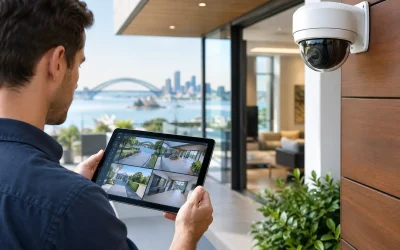
Commercial CCTV remains one of the core layers in any serious security design, but buying cameras based on resolution alone is a common mistake. Image quality, low-light performance, analytics, field of view, and retention all affect whether footage is useful.
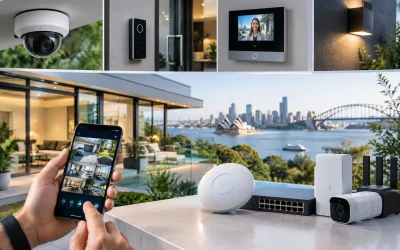
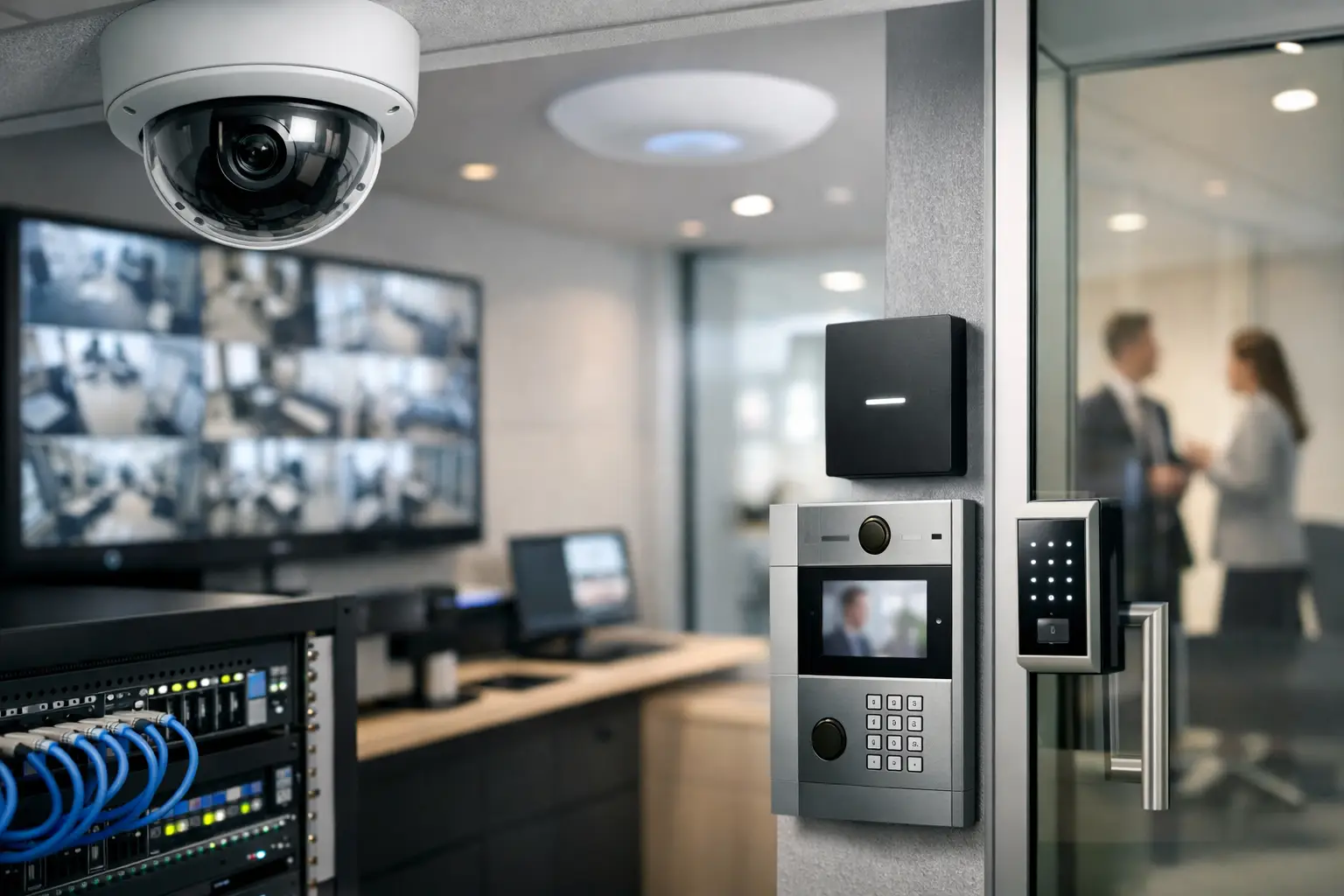
More importantly, surveillance runs on infrastructure. Proper PoE switching, structured cabling, rack organization, VLAN design, recording hardware, and remote access policies are what make a CCTV system stable over time. This is where integrated planning has a clear advantage. A UniFi network, for instance, can provide the visibility and control needed to support cameras, intercoms, access devices, and business connectivity in a more organized way, rather than treating security as an isolated bolt-on.
For larger sites, AI-assisted analytics can add real value if configured carefully. Vehicle detection, person detection, line crossing, and intrusion rules can improve response times and reduce time wasted searching footage. But analytics are not magic. Poor scene design, bad lighting, or unrealistic alert settings create noise quickly. The right approach is measured deployment in areas where alerts support a real operational workflow.
Access control is where security and daily operations meet
If CCTV tells you what happened, access control helps prevent it in the first place. For many businesses, this is the most practical upgrade because it improves security and day-to-day management at the same time.
A professionally designed access control system should let administrators control who can enter, where they can go, and when those permissions apply. It should also make changes easy. Staff turnover, contractors, delivery schedules, and changing tenancy arrangements are normal business realities. A system that is hard to update becomes a security problem.
Platforms using readers, mobile credentials, PINs, or intercom-linked entry can work well, but the right mix depends on the site. An office may benefit from clean mobile or card-based entry with audit trails. A warehouse may need stronger perimeter controls and event-linked video verification. A multi-tenant building may need intercom integration through platforms such as Akuvox, where visitor communication, remote release, and tenant convenience all matter.
This is also where door hardware, power supplies, and fire compliance become part of the conversation. Access control is never just software on a screen. It is a physical and electrical system, and reliability depends on getting those details right.
Intrusion alarms still matter, especially after hours
Alarms are sometimes treated as old-fashioned compared with smart analytics and cloud dashboards, but that misses their role. A well-designed Bosch alarm system, for example, still provides a fast, dependable way to detect unauthorized entry, secure key areas, and support monitored response.
For commercial sites, the value of an alarm system often comes from how it works with the rest of the environment. A valid event can trigger camera review, escalation procedures, and access history checks. Different arming areas can support businesses that operate across multiple tenancies or departments. Staff can arm and disarm without compromising other zones.
Back-to-base monitoring also remains relevant where there is genuine response planning in place. It is not necessary for every business, but for sites with after-hours risk, valuable stock, or reduced staff presence, it can be an important part of the overall strategy.
Why integration changes the result
The difference between an average setup and one of the best commercial security systems usually comes down to integration. Not because every feature must live inside one app, but because the entire environment should be planned to work as one practical system.
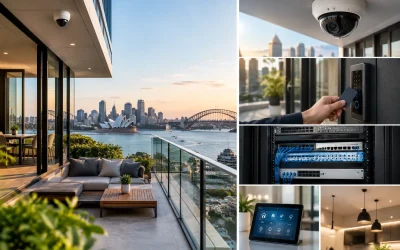
That might mean CCTV tied to access events so managers can review door activity with video context. It might mean intercoms linked to remote unlock and camera verification. It might mean cabling, switching, electrical work, and rack design being handled together so the site remains serviceable and expandable. It can even extend to lighting and automation in selected commercial settings, where occupancy, schedules, and controlled responses support both security and efficiency.
This integrated approach is especially important in new builds, fit-outs, and major refurbishments. When security, networking, and electrical infrastructure are planned together early, businesses avoid the usual compromises: cameras added after walls are finished, readers fitted without ideal cable paths, poor Wi-Fi coverage near security devices, and control equipment squeezed into unsuitable spaces.
Choosing platforms without getting trapped by them
Most business owners do not need a shopping list of model numbers. They need confidence that the chosen platform will still serve the site as needs change.
That means asking practical questions. Can the system scale from one tenancy to multiple areas? Can footage be accessed securely by authorized users without becoming an IT headache? Are spare parts, servicing, and firmware support realistic? Will the system integrate with future doors, gates, intercoms, or monitoring requirements?
Established ecosystems from Bosch, Dahua, Hikvision, Akuvox, and UniFi can each make sense in the right context. The best choice depends on site risk, operational needs, budget allocation, user expectations, and how much integration is required. There is no honest way to name one winner for every commercial property. The better goal is platform fit, not brand loyalty for its own sake.
What businesses often overlook
Many commercial security problems come from decisions made outside the security scope. Inadequate cabling pathways, poor electrical planning, weak network segmentation, and lack of maintenance all reduce performance.
Maintenance is particularly underestimated. Cameras drift out of position. Firmware ages. Door closers fall out of tolerance. Storage fills faster than expected. Credentials remain active longer than they should. A commercial system is not a set-and-forget asset, especially on busy sites.
That is why service and support matter as much as installation quality. A business does not just need devices installed neatly. It needs a system that can be maintained, documented, expanded, and supported by a provider who understands the full stack – security, networking, electrical infrastructure, and the operational reality of the site.
For businesses planning upgrades in Sydney or across larger NSW project sites, this is where an integrated provider such as Alpha Security Corp can add real value: not by pushing isolated products, but by designing systems that are practical to operate and built to grow with the property.
A better way to think about commercial security
If you are comparing options, stop looking for the most features on paper and start looking for the best fit between risk, operations, and infrastructure. The best commercial security systems are rarely the flashiest. They are the ones that record clearly, control access cleanly, stay stable on the network, and make daily management easier instead of harder.
The right system should feel deliberate. Staff know how to use it. Managers can trust the information it provides. And when the site changes, the security platform is ready to change with it.