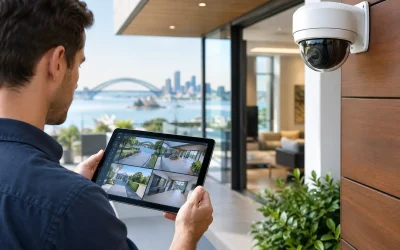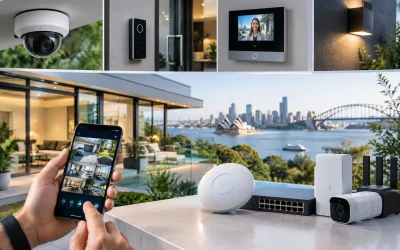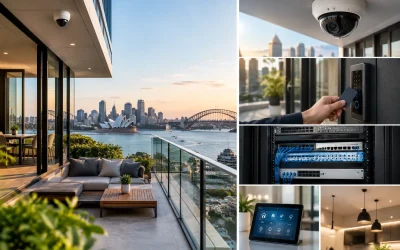



A forced door at 6:10 a.m., no usable camera angle, staff calling for access resets, and a router tucked in a comms cabinet that nobody has touched in years – this is usually how businesses discover their security setup was never really a system. When people search for commercial security systems Sydney businesses can rely on, what they often need is not another standalone product. They need a security environment that has been designed properly from the start.
For offices, warehouses, retail sites, medical practices, schools, and mixed-use properties, commercial security works best when CCTV, alarms, access control, intercoms, and network infrastructure are planned together. That is the difference between a site that simply has devices installed and one that is genuinely easier to manage, investigate, and scale.
What commercial security systems Sydney businesses actually need
The right setup depends on how the property operates day to day. A small office with ten staff has very different requirements from a warehouse with delivery access, after-hours contractors, and multiple roller doors. A retail tenancy may care most about customer-facing coverage, cash handling points, and incident review. A strata-managed commercial site may need layered access permissions, shared common-area surveillance, and service coordination across multiple stakeholders.
That is why a practical design process starts with movement, risk, and operations. Who enters the site, when do they enter, what areas need verification, and what happens after hours? Once those answers are clear, the technical choices become more straightforward.
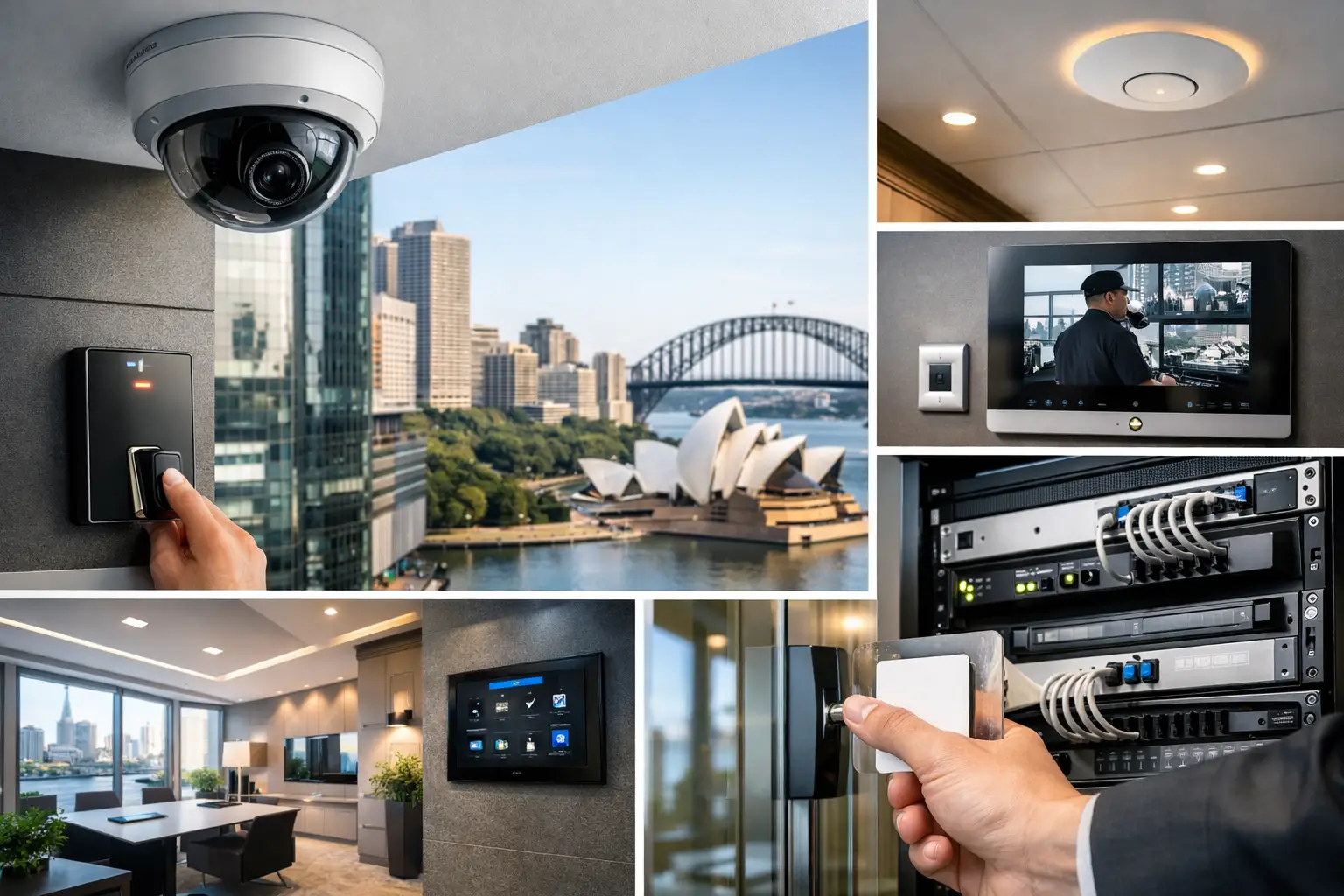
In most commercial environments, four core layers do the heavy lifting: surveillance, intrusion detection, access control, and the network that supports all of them. If one layer is weak, the others become harder to use. High-resolution cameras are less valuable if footage is unreliable. Access control is harder to trust if door hardware and cabling were treated as an afterthought. Alarm notifications lose value if nobody has built the response process around them.
Why integration matters more than individual devices
A lot of underperforming systems are not failing because the hardware is bad. They fail because each part was installed in isolation. One contractor handles alarms, another handles data, another adds a few cameras later, and no one takes responsibility for how the platform behaves as a whole.
An integrated approach changes that. CCTV can verify alarm events. Access control can show who entered a space before or after an incident. Intercoms can support managed entry without creating friction for staff. Structured cabling and switching can be sized properly so video traffic, remote access, and system uptime are not left to chance.
This is especially relevant on Sydney commercial sites where tenancy changes, after-hours access, deliveries, and compliance expectations often evolve over time. Businesses rarely stay static. Security should not be designed as if the site will never change.
A well-planned commercial system also reduces administrative drag. Staff should not have to juggle multiple apps with inconsistent permissions and poor event visibility. Site managers should be able to review footage, manage credentials, understand alerts, and coordinate service without piecing together five unrelated platforms.
The main components of a modern commercial system
CCTV that supports investigation, not just recording
Commercial CCTV should be positioned for usable evidence, not cosmetic coverage. That means matching lenses, camera locations, lighting conditions, and storage policies to the way incidents actually unfold on site. Entry points, loading areas, reception zones, corridors, cash handling areas, and perimeter lines all require different thinking.
Platforms such as Dahua and Hikvision can be configured for a wide range of commercial applications, including analytics, line crossing, and smart search functions. But analytics are only useful when they are tuned properly. If the scene is poorly designed or the network is unstable, the feature list does not help much.
Access control that matches how people move
Access control is often where businesses feel the biggest operational improvement. It removes the mess of unmanaged keys, gives visibility over who entered which area, and makes staff changes easier to handle. For many sites, this can include staff credentials, timed schedules, restricted areas, delivery entry logic, and audit trails.
The right access setup depends on building use. A single-tenant office may need straightforward door control with clean reporting. A larger property may require multiple permission groups, integration with intercoms, and different rules for management, staff, contractors, and cleaners. Hardware selection matters here, but so does the door itself, the lock type, the cable pathway, and the power design.
Intrusion detection and monitored response
Alarm systems still play a central role in commercial security, particularly where there are after-hours risks, vulnerable stock, or sections of the property that should only be accessed at defined times. Bosch remains a strong choice for many professional applications because of its reliability, scalability, and event handling.
What matters most is not just whether the system can trigger an alert. It is whether the site has been zoned correctly, whether users can arm and disarm it easily, and whether alarm events can be verified through cameras or response procedures. Back-to-base monitoring can add another layer of protection, especially for properties that are empty overnight or across weekends.
Networking and cabling as the foundation
This is the part many businesses underestimate. Commercial security systems depend on stable infrastructure. If switching, Wi-Fi, UPS planning, or structured cabling are poor, every connected service becomes less reliable.
A UniFi network, when designed properly, can provide excellent visibility and management across commercial environments, but it still needs correct switching capacity, VLAN planning, cable quality, rack organization, and documented installation standards. Security traffic should not be fighting for space on a neglected network that was never intended to carry modern video and access workloads.
How to choose the right commercial security systems in Sydney
The best decision is rarely about choosing the brand with the biggest marketing presence. It is about choosing a system design that suits the property, the users, and the long-term operational plan.
Start with the site itself. A retrofit in an occupied building has different constraints from a new build. Existing pathways, ceiling access, tenancy disruption, and legacy hardware all affect what is sensible. New construction offers more freedom, but only if security, electrical, and network planning happen early enough. Leaving those conversations until the fit-out is nearly complete usually leads to compromises.
Then look at management. Who will administer access cards or mobile credentials? Who will review incidents? Who needs remote visibility? Does the business want one platform owner internally, or will the site rely on external support? These questions influence whether the priority should be simplicity, deeper integration, or more advanced reporting.
It also helps to be realistic about growth. If a site is likely to add more doors, cameras, or remote locations, the original design should allow for that. Oversizing every system is not always necessary, but building a dead-end platform is usually more expensive in the long run.
Common mistakes businesses make
One common mistake is treating CCTV as the whole strategy. Cameras matter, but they do not control entry, structure permissions, or prevent internal confusion. Another is focusing on front-end hardware while ignoring the supporting infrastructure. The camera gets upgraded, but the cabling, storage, switching, and power remain untouched.
There is also a tendency to overcomplicate user experience. A commercial site should not require excessive training just to manage routine entry, view an event, or reset schedules. Good system design is technical behind the scenes and practical in daily use.
Finally, many sites delay maintenance until something fails. Commercial security should be tested, updated, and reviewed periodically. Door releases wear, batteries age, analytics drift, storage fills up, and business operations change. Preventive service is not glamorous, but it is what keeps a system dependable.
A better standard for commercial security planning
Businesses that get the best results usually work with a provider that can think across the whole environment – security, cabling, electrical, connectivity, and user workflow. That broader view matters because a commercial site is not just a collection of parts. It is a working property with people, schedules, risks, and operational pressure.
For that reason, integrated providers such as Alpha Security Corp can bring more value than a basic alarm installer or a general trades-only approach. When CCTV, Bosch alarms, Akuvox intercoms, access control, structured cabling, and UniFi networking are designed to work as one, the result is easier to manage and more reliable under real conditions.
If you are planning upgrades or fitting out a new site, the smartest next step is not to ask which device to buy first. It is to ask how the entire property should function when security, access, and connectivity are treated as one coordinated system.