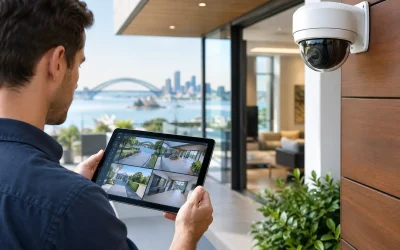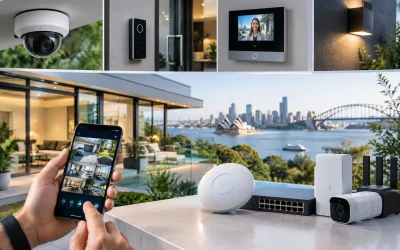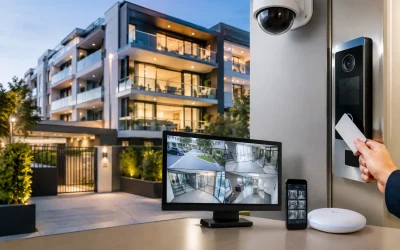



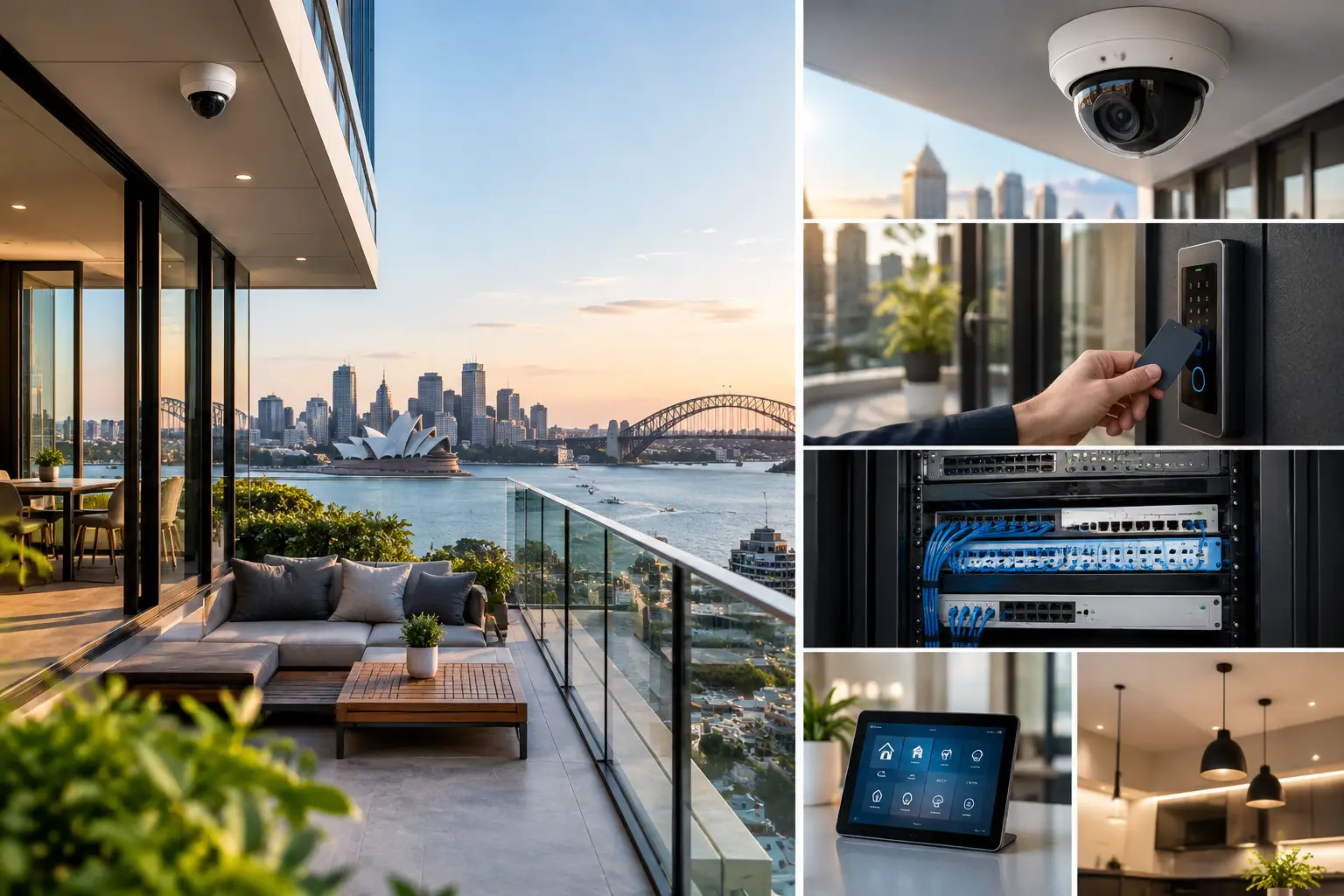
A failed fob at a vehicle gate, an intercom that cannot reach a resident, or a camera that records only a blur creates more than an inconvenience. In a strata property, it quickly becomes a management issue, a resident frustration, and sometimes a liability. A successful strata security transformation addresses these everyday failure points by treating the property as one connected environment, not a collection of separate devices installed years apart.
The objective is not to place a camera at every corner or replace every lock with an app. It is to give authorized people reliable access, give managers useful visibility, and create a system that can be maintained and expanded without disrupting the building each time ownership, tenancy, or technology changes.
Why strata security becomes difficult over time
Most strata sites do not begin with a single, coordinated security plan. A gate controller may be installed during construction, an intercom upgraded after repeated resident complaints, cameras added following an incident, and access cards introduced when keys become unmanageable. Each decision can be reasonable on its own. Over time, however, the result is often a patchwork of incompatible credentials, aging cabling, isolated apps, and unclear responsibility for support.
This creates practical risk. Building managers may need to update access in several systems when a resident moves out. Committee members may not know who still holds active credentials. A poor Wi-Fi connection can undermine an otherwise capable IP camera system. If recording is stored on equipment with no health monitoring, a failure may only be discovered after footage is needed.
The transformation question is therefore broader than, “Which camera should we buy?” It is, “How should access, video, communications, power, and network infrastructure work together for this property over the next decade?”
Start with movement through the property
The best place to plan a strata security upgrade is the resident and visitor journey. Map how different people move through the site: residents arriving by foot or vehicle, visitors using an intercom, delivery drivers entering a lobby, contractors accessing a plant room, and cleaners working outside standard hours.
This exercise reveals where the system needs to be firm and where it needs to be simple. A resident might use a mobile credential or encrypted fob for the main entry and garage, while a contractor receives time-limited access to nominated doors only. A visitor should be able to call the right apartment without gaining uncontrolled access to common areas.
Access control platforms from established manufacturers can centralize doors, gates, schedules, and audit trails. The exact platform depends on the site size, door count, existing hardware, and management requirements. What matters is that it supports clear permissions and is practical for the people responsible for issuing and revoking credentials.
Credentials should reduce administration, not create more of it
Physical keys remain useful in some settings, but they are difficult to track once copied or handed between occupants. Managed fobs, cards, PINs, and mobile credentials provide a stronger operational record. They also make it easier to remove access immediately when a tenancy changes.
There are trade-offs. Mobile credentials are convenient, but not every resident wants to rely on a phone. PINs are useful for temporary access, but they must be changed and managed carefully. Many sites are best served by a mixed approach: encrypted fobs for regular residents, mobile credentials where appropriate, and scheduled PINs or temporary credentials for contractors.
CCTV should answer real operational questions
CCTV planning should begin with scenarios, not camera quantities. Do managers need to verify a vehicle entering the garage? Identify a person at a mailroom? Review an incident near waste facilities? Monitor deliveries at the lobby? Each use case requires a different camera position, lens choice, lighting assessment, retention period, and level of detail.
A well-designed system may use Dahua, Hikvision, or Bosch cameras and recording infrastructure selected for the site’s needs. Coverage at entries, exits, elevators, garages, mail areas, and common paths is often valuable, but placement must be deliberate. A camera mounted too high or aimed into changing light can produce footage that is far less useful than its specification suggests.
AI-assisted analytics can improve the workload of reviewing video. People and vehicle detection, line crossing alerts, and intrusion zones can help reduce irrelevant notifications. They should not be treated as a substitute for good camera positioning or sensible policies. On a busy residential site, poorly configured analytics can generate alerts that staff eventually ignore.
Privacy also needs to be part of the design. Cameras should focus on legitimate common-area security purposes, with appropriate signage, controlled user permissions, and documented retention practices. Strata committees should seek advice on their obligations and establish who can access recordings and under what circumstances. Technology provides the record; governance determines whether it is handled responsibly.
The network is part of the security system
Modern intercoms, cameras, access controllers, and remote management tools rely on stable network infrastructure. Yet the network is often the missing piece in a strata upgrade. A camera system may be connected through old switches, inadequate cabling, or a shared internet connection that was never designed for security traffic.
Structured cabling and professionally designed network equipment provide the foundation for dependable operation. A UniFi network, for example, can be designed with managed switching, appropriate power delivery for PoE devices, segmented networks, and monitored connectivity. Separating security equipment from general building or resident services helps contain faults and simplifies troubleshooting.
Network segmentation is especially relevant where connected devices have different purposes. Intercoms, CCTV, access control, building management equipment, and visitor Wi-Fi should not all sit on one unmanaged network. The right configuration depends on the property and its existing infrastructure, but the principle is consistent: systems should be organized so that a fault or exposure in one area does not unnecessarily affect another.
Intercoms are the front door experience
An intercom is often the system residents notice most, because it sits at the point where convenience and security meet. A modern IP intercom, such as an Akuvox solution, can route calls to internal monitors, smartphones, or both. It can support video verification, resident directories, and integration with compatible access-controlled doors.
However, features should follow the building’s operating model. A small boutique building may value a clean, simple interface and mobile calling. A larger complex may require reception or concierge routing, multiple entrances, elevator integration, and clear procedures for directory changes. The most capable panel is not the best outcome if residents find it confusing or building staff cannot administer it confidently.
A staged strata security transformation is often smarter
Not every property needs a full replacement program at once. In fact, staged work is frequently the lower-risk choice when existing systems are still partly functional. The first phase may address critical risks such as unreliable garage access, failed cameras, or an unsupported recorder. The next phase can modernize intercoms, expand access control, or improve the network backbone.
A staged approach only works when there is a master design. Without one, each phase can introduce another proprietary system and deepen the integration problem. The design should document existing equipment, cabling pathways, power requirements, network capacity, door hardware, future expansion points, and the preferred operating platform.
This is where an integrated provider adds value. Licensed electrical work, low-voltage cabling, networking, security commissioning, and ongoing service need to align. Alpha Security Corp plans these elements as connected infrastructure, so a new intercom or camera installation does not create avoidable rework when access control, smart lighting, or common-area automation is added later.
Design for handover, maintenance, and the next committee
Strata systems outlast committee members, building managers, and sometimes the original installer. A project is not complete when devices turn on. It needs clear handover information: system diagrams, administrator access procedures, credential issuance rules, warranty details, support contacts, and a record of where critical equipment is located.
Maintenance should be planned rather than triggered by failure. Cameras need periodic checks for image quality and storage health. Intercom directories need updating. Backup power, gate operation, firmware, and network equipment need review. Remote health monitoring can identify an offline camera or storage issue before an incident exposes the gap.
The right level of maintenance depends on the site. A small low-traffic building may need a straightforward annual review, while a large mixed-use complex may benefit from scheduled testing, reporting, and responsive support arrangements. The common requirement is accountability: someone should know whether the system is functioning as designed.
A well-planned strata security transformation makes daily life quieter rather than more complicated. Residents enter without friction, visitors can be verified, managers can act on reliable information, and the building retains a documented foundation for future upgrades. That is the standard worth designing toward.