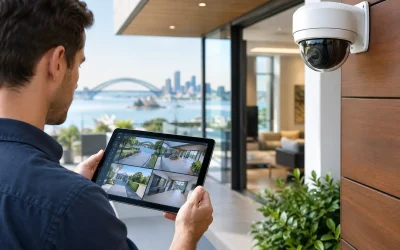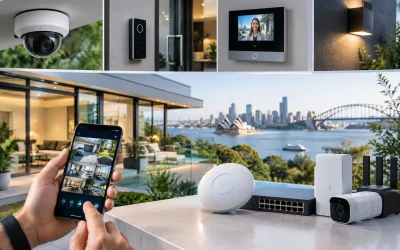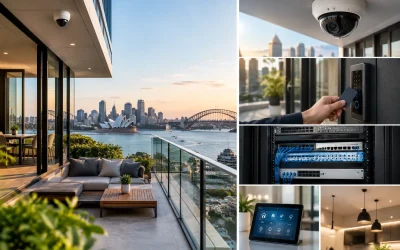



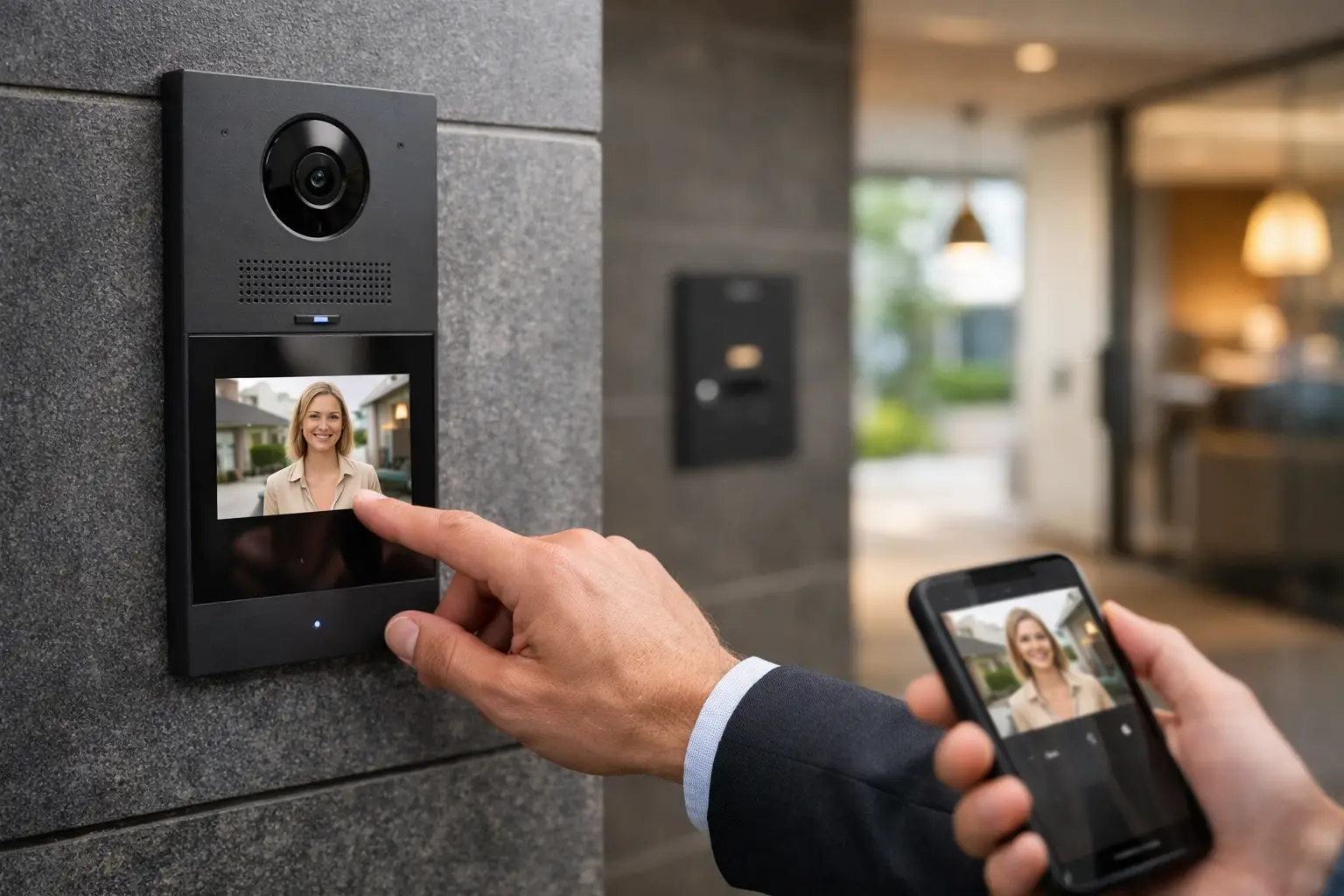
Someone presses the front gate button during a delivery window, a school pickup, or after-hours access request. That moment is where a video intercom review becomes useful – not as a gadget comparison, but as a way to judge whether the system will work reliably under daily pressure.
For most properties, the real question is not whether a video intercom can show a face on a screen. Almost all of them can. The question is whether it integrates cleanly with door release, access control, networking, mobile answering, and the broader security setup without creating delays, missed calls, or management headaches later. That difference is what separates a consumer device from a properly designed entry system.
What a video intercom review should actually assess
A lot of reviews focus on camera resolution, app screenshots, and surface-level features. Those details matter, but they rarely predict how the system performs once installed on a real property. In practice, a useful video intercom review should look at reliability, integration, user experience, and serviceability.
Reliability starts with the physical environment. Outdoor stations deal with glare, rain, heat, dust, and inconsistent lighting. A door station that looks impressive on a spec sheet can still struggle with backlighting at a west-facing front gate or produce poor audio in a noisy commercial entry. Lens quality, microphone tuning, echo handling, and build quality usually tell you more than headline megapixels.
Integration matters just as much. A video intercom should not operate like an isolated island. In a well-planned system, it can tie into electric strike release, gate automation, CCTV recording, access credentials, mobile answering, and in some cases platforms like Apple Home, Home Assistant, or broader building automation. If the intercom works well on its own but creates friction with the rest of the property, it is not a strong result.
The difference between residential and commercial expectations
Homes and businesses often ask for the same feature list, but they do not use intercoms the same way. In a residence, convenience and clarity are the priorities. The homeowner wants fast call response, clean app performance, dependable gate or door release, and a finish that suits the property. If it is a new build or premium renovation, they may also expect the intercom to sit comfortably within a broader system that includes CCTV, alarm, Wi-Fi, lighting control, and automation.
In a commercial setting, the priorities shift. Multi-user management, credential handling, event logs, remote administration, and uptime become more important. A front door station in an office, warehouse, clinic, or strata environment is part of the operational workflow. It must handle staff access, visitor screening, and after-hours control without confusion. That usually means stronger emphasis on access control integration and network design than on app polish alone.
Video intercom review criteria that matter in the field
Image quality is still important, but it should be judged in difficult conditions, not ideal ones. Day-to-night transition, strong backlight, and low-light facial recognition at the entry point are far more telling than a bright daytime sample image. Wide dynamic range and sensible camera positioning often matter more than chasing the highest resolution.
Audio quality is commonly underestimated. Clear two-way audio is often the deciding factor in whether an intercom feels professional or frustrating. Visitors speak at odd angles, wind noise affects outdoor stations, and some locations have road or mechanical noise nearby. If speech sounds thin, delayed, or distorted, user confidence drops quickly.
Call handling is another major test point. A good system should route calls quickly and predictably, whether to an indoor monitor, a mobile app, a concierge desk, or multiple users. Delays of even a few seconds can make a system feel unreliable. This is especially noticeable on larger sites where staff depend on fast response.
Door and gate release should be immediate and secure. There is no value in a polished touchscreen if the relay logic, lock compatibility, or network path creates hesitation at the moment of entry. This is where professional planning matters. Strike type, power supply design, fail-safe versus fail-secure behavior, and egress compliance all affect performance.
Platform choice makes a bigger difference than brand hype
Some manufacturers make attractive hardware but offer weak software support. Others provide strong integration options but require careful configuration to deliver a polished end result. That is why platform selection should be based on the site, not trend cycles.
Brands such as Akuvox are often strong candidates where app control, SIP capability, indoor monitor options, and access control integration need to work together in a more structured way. In the right environment, that creates a much better result than trying to retrofit a consumer-first device into a serious property. The same principle applies when pairing the intercom with Dahua or Hikvision CCTV, Bosch alarm infrastructure, or UniFi networking. The better the ecosystem fit, the fewer compromises later.
This is also where many projects go wrong. Owners compare standalone intercom features while ignoring the network backbone, power requirements, and control path. A nice-looking entry panel cannot compensate for weak Wi-Fi at the gate, poor structured cabling, or a lock release wired without proper design. The intercom only performs as well as the system around it.
Why networking is part of any honest video intercom review
On modern properties, video intercoms are network devices first and door stations second. That means switch capacity, VLAN planning, PoE budgeting, router performance, and remote access architecture all affect the end user experience. If the network is unstable, the intercom becomes unstable.
This matters even more on larger homes and commercial sites. A front entry station may need to communicate with indoor monitors, mobile devices, access control hardware, NVR recording, and automation logic at the same time. If those pathways are not designed properly, users experience dropouts, delayed notifications, or one-way audio issues that get blamed on the intercom brand when the real cause is infrastructure.
For that reason, a serious review should ask whether the system is being tested on a properly designed network. In many professional installations, UniFi or similarly well-managed network hardware gives much better visibility into device behavior and long-term reliability than ad hoc network setups.
Where integrated systems outperform isolated devices
The biggest jump in value comes when the intercom is part of a unified entry strategy. For a residence, that might mean the gate intercom triggers camera recording, sends a mobile call to the owner, releases access for a trusted user, and ties into occupancy or lighting scenes after entry. For a business, it may connect visitor calls, credential-based access, scheduled unlock periods, and audit history into one manageable framework.
This is the point many buyers miss during selection. They evaluate the intercom as a single device rather than as part of a property system. In reality, the best result often comes from designing the intercom alongside CCTV, access control, alarm, cabling, and automation. That is why integrated providers such as Alpha Security Corp approach entry systems as part of a broader platform rather than a box on the wall.
Common weak points that do not show up in simple reviews
A video intercom can test well in a showroom and still disappoint on-site. One common issue is poor entry geometry. If the panel is mounted too high, too low, or too close to a reflective surface, both camera and audio performance suffer. Another is lock hardware mismatch. Not every door station works equally well with every strike, magnetic lock, or gate operator.
App dependence is another trade-off. Some users want everything on their phone, but mobile-only operation is not always ideal. Indoor monitors still make sense in many homes, and reception-based answering points remain important in commercial settings. The right answer depends on who uses the property and how quickly they need to respond.
There is also the issue of long-term support. Firmware quality, replacement availability, and installer familiarity matter. A feature-rich product is less attractive if updates are inconsistent or service becomes difficult two years after installation.
So, what makes a video intercom worth approving?
A strong system delivers clear video, intelligible audio, fast call routing, dependable release control, and stable integration with the rest of the property. It should feel predictable for the user and manageable for the owner. That standard applies whether the project is a private home, a strata upgrade, or a business entry point.
The best choice is rarely the one with the longest feature list. It is the one that suits the site, works with the lock hardware, fits the network, and supports the way people actually enter and manage the building. If you are comparing options, judge them as part of the full environment, not as standalone tech. Entry control works best when the intercom, access, surveillance, and infrastructure are designed to work as one.