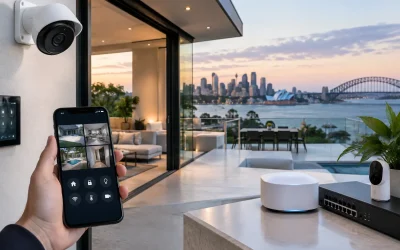



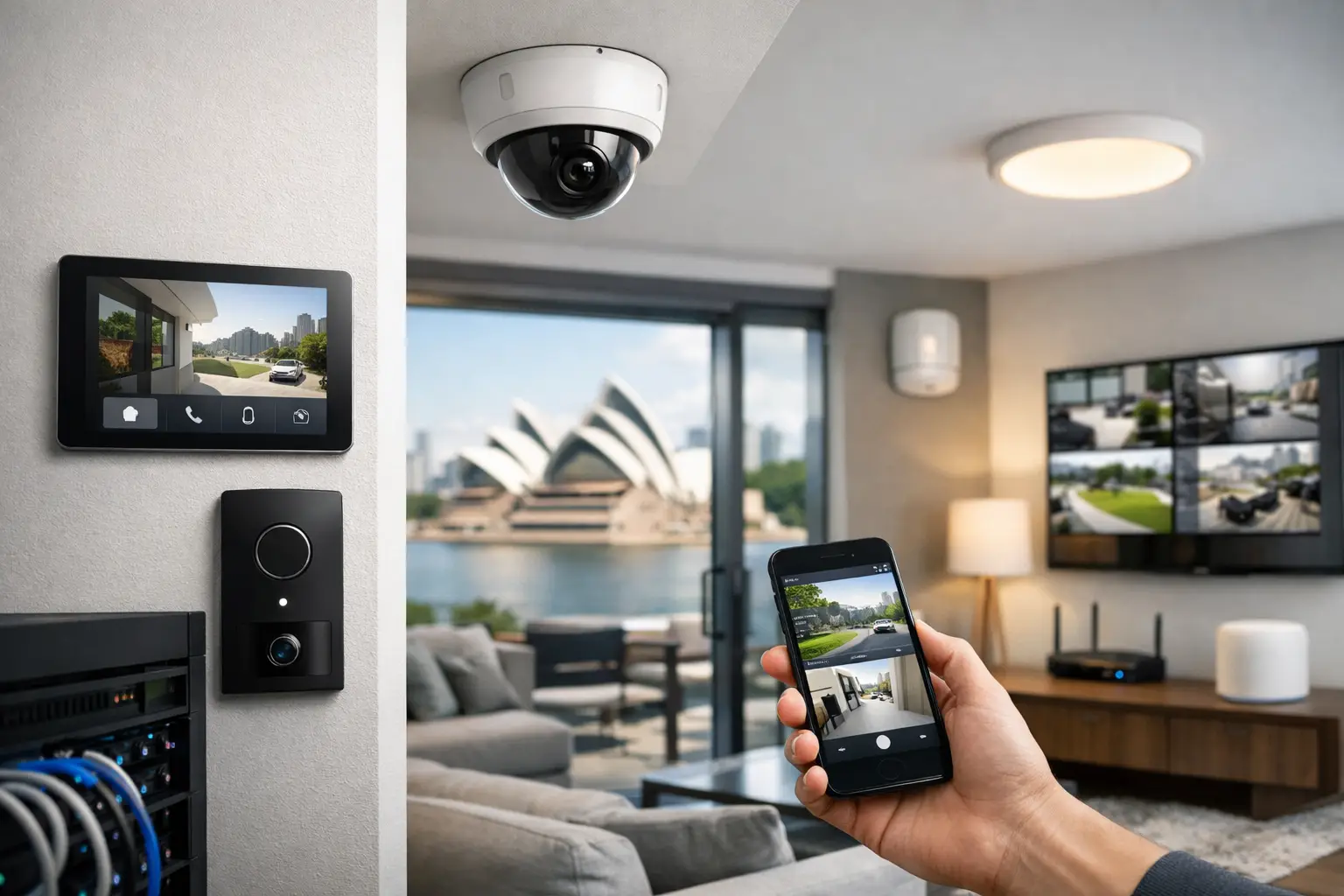
A camera notification is only useful if it arrives quickly, shows the right event, and gives the property owner a clear next action. That practical standard is shaping smart home security trends 2026 far more than novelty features. Property owners are moving away from isolated devices and toward integrated systems where CCTV, access control, alarms, lighting, intercoms, and networking are designed to support one another.
For a new build, renovation, strata property, or commercial site, the technology choice matters. The underlying design matters more. A high-resolution camera cannot compensate for poor Wi-Fi coverage, inadequate cabling, weak power planning, or an app-only setup with no reliable local operation. The most valuable systems in 2026 will be the ones that remain dependable when the property is busy, the internet connection is interrupted, or a security event needs immediate attention.
Smart Home Security Trends 2026: Integration Over Devices
The defining shift is from device ownership to system behavior. Rather than treating an alarm, intercom, cameras, and smart lighting as separate purchases, professional projects are being planned as connected property systems.
A well-designed arrival sequence is a simple example. An Akuvox intercom call can provide video verification at the entrance, trigger the appropriate access-control action, notify the resident or receptionist, and record the event through the CCTV system. At night, approved access can activate pathway lighting without turning on every light in the building. The user sees one purposeful experience, while the installer has designed the wiring, network, permissions, and automation logic behind it.
This approach also improves maintenance. When systems share a structured network and documented infrastructure, troubleshooting becomes more precise. A technician can identify whether an issue is related to the camera, PoE switching, cable path, network configuration, power supply, or automation rule instead of treating the entire installation as a collection of unrelated products.
Integration does not mean forcing every device into a single app. It means choosing the right control layer for each function. A security system should retain its core reliability and monitoring capability, while platforms such as Apple Home and Home Assistant can provide useful household control, status visibility, and carefully designed automations.
AI CCTV Becomes More Selective
Artificial intelligence in CCTV is becoming more valuable because it is becoming more specific. The goal is not simply to generate more alerts. It is to reduce irrelevant alerts and bring attention to events that deserve review.
Modern Dahua, Hikvision, and Bosch camera platforms can support person, vehicle, line-crossing, loitering, intrusion-zone, and object-based analytics, depending on the model and configuration. For a residence, that may mean distinguishing a delivery person from movement caused by trees or passing traffic. For a warehouse or commercial site, it can mean alerting staff when a vehicle enters a restricted loading area after hours.
The trade-off is that analytics need careful commissioning. Camera position, mounting height, lighting conditions, field of view, and detection zones all affect performance. A camera placed too wide may identify activity but provide little usable detail. One placed too narrow can miss the approach path entirely. AI is not a substitute for site design, and it should not be treated as an automatic decision-maker for high-risk events.
Privacy also deserves planning. Residential and commercial systems should limit views to relevant areas, define who can access footage, apply sensible retention periods, and protect recordings with user permissions. In multifamily and workplace settings, those decisions should be made before installation, not after an incident.
Network Reliability Is Now a Security Requirement
Smart security systems depend on the network, but not every security function should depend on the public internet. This distinction is becoming central to better installations.
A properly designed UniFi network with structured cabling, managed switching, PoE capacity, appropriate wireless coverage, and network segmentation creates a stable foundation for cameras, intercoms, access readers, smart lighting bridges, AV equipment, and mobile devices. It also makes future expansion more manageable. A property may start with perimeter cameras and an alarm, then add a gate station, additional access points, multiroom audio, or Home Assistant automations later.
Segmentation is particularly useful in larger homes and commercial properties. Security devices, guest Wi-Fi, business devices, building management equipment, and personal devices do not always need the same level of network access. Separating them can reduce unnecessary exposure while helping critical systems perform more predictably.
There is a practical balance to strike. Cloud access provides convenient remote notifications, firmware services, and offsite visibility. Local recording and local control provide resilience when internet service is unavailable. The stronger design usually uses both: remote access where it adds value, with core security functions that continue operating locally.
Access Control Moves Beyond the Front Door
Keys still have a role, but they do not provide an audit trail, scheduled permissions, or an easy way to revoke access after a contractor finishes work. Smart access control is therefore extending beyond the main entry to gates, side doors, garages, offices, storage areas, and shared facilities.
For homeowners, this can mean giving time-limited access to tradespeople, cleaners, or guests without circulating physical keys. For businesses and strata properties, it means assigning permissions by role, schedule, and location. A staff member may access a main office during working hours but not an IT room, warehouse cage, or after-hours entry point.
Intercoms are increasingly part of this decision process rather than standalone doorbell devices. Video calling, mobile answering, credential-based access, and integration with electric strikes, maglocks, or gate operators can improve both convenience and verification. The details matter: door hardware, emergency egress, fire requirements, backup power, and cabling must all be considered alongside the user experience.
Lighting Automation Supports Security Without Creating Friction
Security lighting works best when it is deliberate. A sudden flood of bright light can be useful at a perimeter, but it is not appropriate for every event or every part of a home. In 2026, more projects will use layered lighting responses that match the location and time of day.
A detected person at a side gate might bring selected exterior lights to a safe level, while a confirmed alarm event can activate a broader response. Inside, an after-hours door opening at a commercial site could raise corridor lighting for safer camera identification and staff response. DALI-2 lighting and control systems such as Zen Control make these scenes more practical in projects where lighting is already being designed as infrastructure.
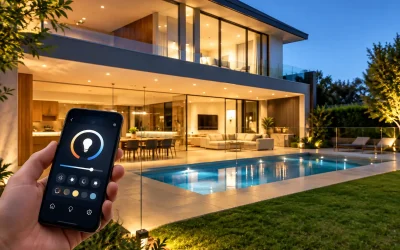
The same principle applies to residential automation through Apple Home or Home Assistant. Lighting should support daily routines as well as security. A good system can provide arrival lighting, nighttime pathways, vacation presence scenes, and alarm-linked responses without forcing residents to manage a complex set of rules.
Avoid automations that create false confidence or unnecessary disruption. Automatically unlocking a door based only on phone proximity, for example, may not suit a street-facing entry. Security-sensitive actions should use appropriate conditions, confirmation, or credential checks.
Retrofit Projects Need a Different Design Approach
Not every property has open walls, spare conduits, or a dedicated communications room. Retrofit projects require a realistic plan that prioritizes the areas with the greatest operational and security value.
Where possible, structured cabling and PoE should be used for fixed cameras, access points, intercoms, and access-control devices. Wired connections reduce reliance on batteries and variable wireless performance, especially for exterior equipment and high-traffic commercial environments. When cable routes are limited, wireless equipment can still be useful, but it should be supported by a properly surveyed and configured network rather than assumed to work from any location.
A phased approach often makes sense. Establish the network and core security platform first, then add lighting control, access points, AV, or advanced automations as the project progresses. This prevents one early product choice from limiting the wider system later.
Choose Systems That Can Be Managed for Years
The right question is not whether a device works on installation day. It is whether the property can be supported, expanded, and understood several years later. That requires clear documentation, labeled cabling, sensible naming conventions, secure credentials, available replacement pathways, and a plan for updates.
It also requires selecting platforms for the property rather than selecting features from a brochure. Apple Home may be the right daily interface for an Apple-focused household. Home Assistant may suit owners who want deeper integrations and custom logic. A professionally configured alarm platform, dedicated NVR, and access-control system may remain the right operational core even when those systems share useful status and automation signals.
The best smart security project is rarely the one with the most devices. It is the one that makes the property easier to protect, easier to operate, and easier to maintain long after the installation team has left.