



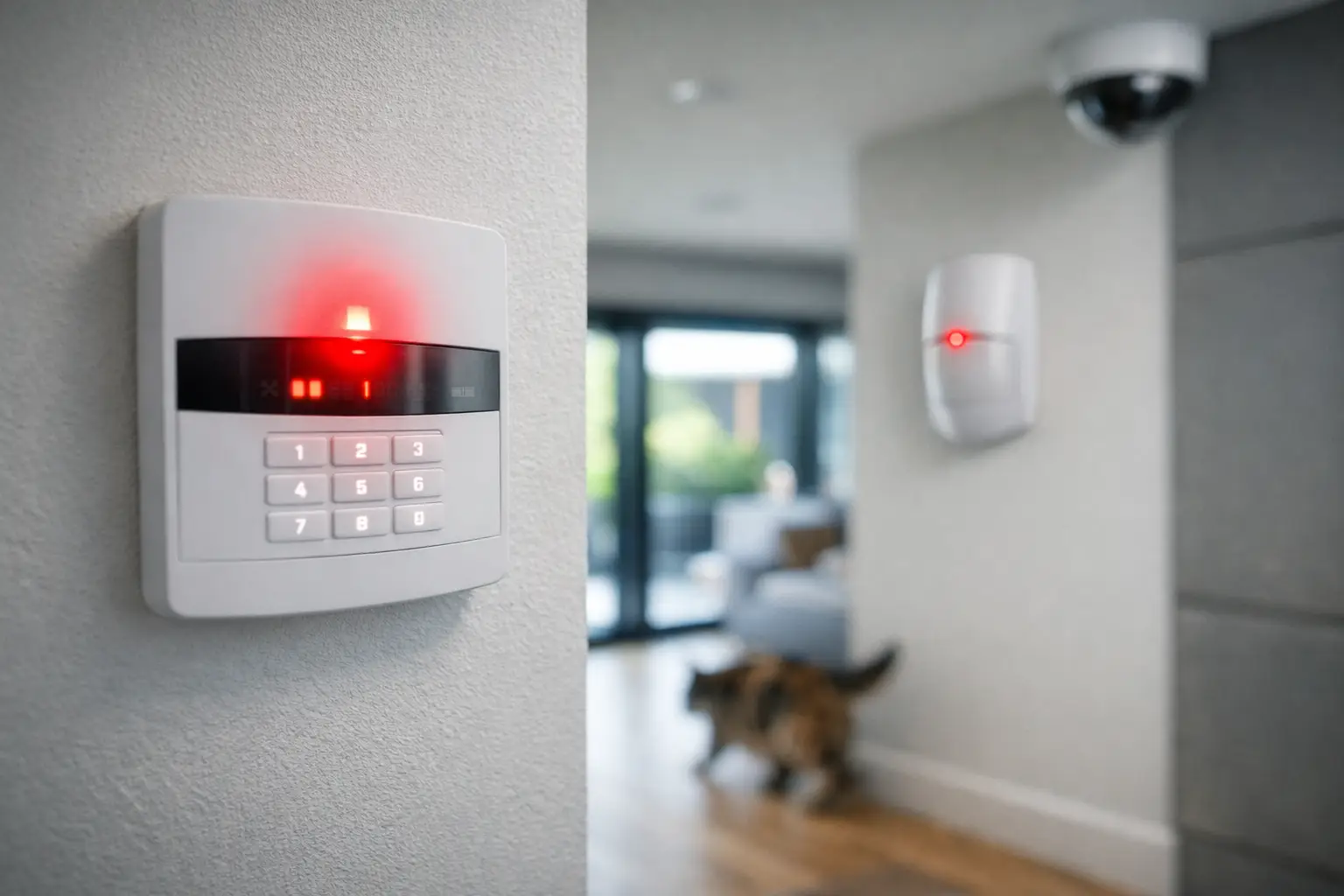
A false alarm at 2:00 a.m. is more than an inconvenience. Alarm false triggers can interrupt sleep, create unnecessary monitoring callouts, distract staff, and gradually erode trust in a security system. Once occupants begin assuming an alert is probably nothing, the system has failed at one of its most important jobs: producing a clear, credible response when something is genuinely wrong.
The answer is rarely to simply reduce sensor sensitivity or switch zones off. A dependable alarm installation balances detection accuracy with the realities of the property: pets, airflow, changing temperatures, staff movement, construction activity, electrical infrastructure, and the way the site is actually used. Getting that balance right requires diagnosis, not guesswork.
Why Alarm False Triggers Happen
False triggers usually fall into one of four categories: environmental movement, sensor or device faults, power and communication issues, and incorrect system programming. In many properties, more than one factor is involved.
A motion detector may be correctly detecting movement, but that movement is not an intrusion. Air from a duct, heat from direct sunlight, a ceiling fan, a loose blind, or a pet entering the protected area can create conditions that lead to an unwanted event. This is especially common where a detector was installed without enough consideration of the room’s layout or later changes to the space.
For example, a living room that was originally suitable for a standard motion sensor may become problematic after a renovation adds a heat source, large windows, or a pet door. In a warehouse, a detector that worked well during normal operations may start triggering after pallet racking changes airflow patterns or a roller door is left partially open overnight.
Movement Sensors Need the Right Placement
Passive infrared detectors identify changes in heat moving across their field of view. They are highly effective when selected and positioned correctly, but they are not interchangeable components that can be placed anywhere on a ceiling or wall.
A detector should not face strong sunlight, HVAC outlets, heaters, or areas where lightweight materials can move. Curtains, hanging signage, balloons, and even insects close to the detector can become factors. In commercial spaces, forklifts, after-hours cleaning, and stock movement need to be reflected in the zone design and arming schedule.
Pet immunity can help in a home, but it is not a universal solution. It depends on the size and behavior of the animal, whether it climbs on furniture, and the height and angle of the detector. A large dog crossing beneath a correctly positioned pet-immune sensor is very different from a cat jumping onto a cabinet directly below it.
Doors, Windows, and Enclosures Can Create Intermittent Events
Magnetic reed switches on doors and windows may trigger when a gap becomes too large, a frame shifts, or the magnet and contact are no longer aligned. Seasonal expansion, loose hinges, vibration, and a poorly secured gate can all turn a reliable perimeter zone into an intermittent fault.
These events can be difficult to identify because the opening may occur only during high winds, temperature changes, or when a door is slammed. A proper service inspection looks beyond the alarm panel history and checks the physical condition of the door, frame, cabling, and mounting hardware.
Tamper circuits deserve the same attention. A detector cover that is not fully seated, a damaged junction box, or a cable disturbed during painting or renovation can produce tamper alarms that appear random to the user but are entirely predictable once the physical installation is inspected.
Power Problems Often Present as Alarm Problems
Alarm systems are low-voltage systems, but they still depend on stable power. A weak backup battery, failing plug pack, poor electrical connection, or overloaded auxiliary output can cause trouble conditions and, in some cases, alarm events.
Backup batteries do not last indefinitely. As they age, they may hold enough charge to appear normal while mains power is present, then drop rapidly during a brief outage. The system can reboot, lose communication, or report low-voltage faults. Replacing a battery without checking charging voltage, load, and panel condition may only postpone the real issue.
This is one reason integrated design matters. Security equipment should be supplied from suitable electrical infrastructure and installed with appropriate separation from sources of interference. Where a property relies on networked alarm reporting, the network equipment and internet connection also need practical backup-power planning.
Communication Alerts Are Not Always Intrusion Alerts
Some reports described as false alarms are actually communication failures. A panel may be armed and physically secure, yet report a loss of IP path, cellular signal issue, or supervisory failure to a monitoring center.
These notifications should not be ignored, particularly for a business or unoccupied property. They indicate that the system may not be able to report a future event. However, they need a different response from an intrusion alarm. Clear event descriptions, correctly configured reporting paths, and routine testing prevent communication trouble from becoming a source of confusion.
Reducing Alarm False Triggers Without Reducing Protection
The fastest-looking fix is often the wrong one. Lowering sensitivity or bypassing a troublesome zone can reduce unwanted activations, but it may also create a blind spot. The better approach is to identify what the panel recorded, determine whether the event was a genuine detection or a fault, and correct the underlying condition.
Start with the event history. The alarm panel can reveal which zone triggered, the exact time, whether the system was armed in away or stay mode, and whether a power or communication issue occurred nearby. Patterns matter. A zone that triggers at the same time each afternoon points toward environmental conditions. A door contact that reports openings during wind events suggests alignment or hardware movement. Repeated events immediately after arming may indicate exit timing, user procedures, or a zone that is not settling correctly.
Match the Detector Type to the Risk
Not every protected area should use the same technology. A dual-technology detector may be appropriate where environmental conditions make single-technology detection less suitable. Glass-break detection, perimeter contacts, beam systems, and properly designed external detection can reduce reliance on one interior motion sensor for every scenario.
The right choice depends on the property and the intended operating mode. A family home may prioritize reliable perimeter protection while occupants move freely inside. A retail site may need separate zones for stock areas, offices, and entry points, with access control activity considered as part of the after-hours workflow. An industrial facility may require detector selection that accounts for height, dust, vibration, and changing operational conditions.
A professional design uses layers. Door and window contacts can confirm perimeter entry, interior detection can verify movement, and cameras can provide visual assessment where appropriate. This does not mean every room needs every device. It means the system should provide useful information rather than a single vague alarm signal.
Program the System Around Real Use
Good programming is as important as quality hardware. Entry and exit delays, stay modes, user permissions, schedules, and zone types should reflect how occupants enter, leave, and work in the building.
Consider a commercial site where staff arrive early, cleaners work late, and deliveries occur outside standard hours. If everyone uses one shared code and the same full-arm mode, false alarms become more likely and event reporting becomes less useful. Individual credentials, clear arming procedures, and appropriately configured areas create accountability while reducing avoidable mistakes.
For homes, the system should support normal routines rather than force occupants to work around it. A well-planned system can arm selected perimeter zones at night while allowing movement in designated internal areas. When integrated with platforms such as Apple Home or Home Assistant, arming status can also be part of a broader property routine, provided the automation is designed with security-grade safeguards and clear manual control.
Maintain the Infrastructure Behind the Alarm
Alarm reliability is affected by what sits around the panel: batteries, cabling, power supplies, routers, switches, cellular communicators, and, where applicable, monitoring paths. A fault in any of these components can produce confusing behavior if it is treated as an isolated alarm issue.
For network-connected systems, a stable network is essential. Professional structured cabling, correctly configured UniFi or comparable network equipment, sensible IP addressing, and backup power for critical devices support dependable reporting. Wi-Fi may be suitable for some lifestyle devices, but critical security communications should be evaluated carefully rather than assumed to be reliable because a phone has signal in the room.
Regular servicing should include testing detectors, checking battery condition, reviewing event history, confirming communication paths, and inspecting visible devices for damage or environmental changes. It is also the right time to review whether renovations, new furniture, pets, business processes, or tenant changes have altered the original assumptions behind the system design.
When a False Alarm Needs a System Review
One isolated event may have a simple explanation. Repeated events, multiple unrelated zone faults, or an alarm system that users no longer trust deserve a more thorough review.
This is particularly true after a renovation, tenancy change, network upgrade, electrical work, or change in how a site operates. Security systems are often expected to remain static while the property around them changes substantially. A detector that was correctly installed five years ago may no longer suit the room it protects.
Alpha Security Corp approaches alarm troubleshooting as part of the wider connected environment. That includes the physical security devices, electrical supply, communications path, network reliability, monitoring configuration, and the way people use the property each day. The objective is not merely fewer alerts. It is an alarm system that gives owners, occupants, and responders a reason to take every alert seriously.
A dependable alarm should be quiet when the property is secure and decisive when it is not. If unwanted activations are becoming normal, treat them as a design or maintenance signal worth resolving before a real event has to compete for attention.