


A commercial camera system is only useful when it answers the question that matters at the time: Who entered, what happened, where did it happen, and how quickly can the right person respond? The best commercial CCTV features are not simply the ones with the largest specification sheet. They are the features that produce usable evidence, reduce false alarms, support staff, and fit into the wider security and network design of a site.
For an office, retail location, warehouse, education facility, or strata property, CCTV should be planned as an operational system. Camera placement, retention periods, network capacity, lighting conditions, access control events, and remote management all affect whether the system performs when it is needed.
Best Commercial CCTV Features That Matter Most
High-resolution video with the right field of view
Resolution matters, but it is not a substitute for design. A high-resolution camera pointed broadly across a large parking area may show activity clearly while still failing to identify a face, vehicle plate, or item being handled. The practical goal is pixel density at the point where identification is required.
For example, a wide-angle camera may be appropriate for general coverage of a reception area or warehouse floor. Entrances, payment counters, loading docks, gates, and high-value storage areas often need narrower, more deliberate views. Cameras with 4K resolution can be valuable in these locations, particularly where digital zoom may be required during an investigation. However, 4K footage also increases storage and network demand.
A well-designed system usually combines camera types rather than applying one model everywhere. Fixed turret or dome cameras can cover defined zones, while varifocal cameras allow more precise adjustment during commissioning. Pan-tilt-zoom cameras can add live coverage across large external areas, but they should not be relied on as the only camera watching a critical point. When a PTZ moves, it is no longer recording the area it just left.
Low-light performance and controlled lighting
Many incidents occur outside business hours, at building entrances, around loading areas, or in poorly lit car parks. Good low-light performance is therefore one of the most valuable commercial CCTV capabilities. Cameras with quality sensors, infrared illumination, wide dynamic range, and suitable lenses can preserve useful detail where basic cameras produce blur, glare, or silhouettes.
Wide dynamic range is particularly relevant at doors, roller shutters, and vehicle entrances. It helps a camera manage scenes with intense backlight, such as a person standing in front of a bright window or a vehicle entering from daylight into a covered garage.
There is a trade-off. Infrared footage is effective for detection and general identification, but it may not provide the color detail needed for clothing, vehicles, or other evidence. In some environments, planned white-light illumination delivers better results. This is where security design and licensed electrical work should be considered together rather than as separate projects.
AI analytics that reduce noise, not awareness
Modern AI CCTV analytics can identify people, vehicles, line crossing, loitering, intrusion into a defined area, crowding, and objects left behind or removed. Used correctly, these functions make monitoring and incident review far more efficient than searching through hours of continuous footage.
The key word is correctly. Motion detection alone can be triggered by rain, shadows, insects, headlights, trees, or changes in light. AI classification can filter many of these irrelevant events by distinguishing a person or vehicle from background movement. At a commercial site, that can mean an alert when someone enters a restricted loading dock after hours, rather than a notification every time a delivery truck passes a street-facing camera.
Analytics need careful configuration and realistic testing. A warehouse with forklifts, staff in high-visibility clothing, changing stock locations, and open roller doors will need different rules from a small professional office. Excessively sensitive alerts become noise, and noise leads to alerts being ignored. The objective is meaningful notification, not a dashboard full of activity.
Fast forensic search and event-based recording
When an incident is reported, the challenge is rarely finding the camera. It is finding the relevant few minutes among days or weeks of recordings. Event-based search is one of the best commercial CCTV features because it changes that process from manual review into a targeted investigation.
A properly configured video management platform can allow authorized users to search by person, vehicle, time, direction of travel, or a defined zone. This is especially useful for theft investigations, after-hours access, workplace incidents, and site safety reviews. Bookmarks and exports should also be straightforward, with footage time-stamped and protected from unauthorized editing.
Continuous recording still has a place, particularly in active public spaces, cash-handling areas, and critical operational environments. In many cases, the best approach is continuous recording paired with analytic event markers. That preserves context before and after an event while making the important moments easier to locate.
Reliable storage sized for the real requirement
Retention is often discussed as a number of days, but the right retention period depends on camera count, resolution, frame rate, scene activity, compression, recording schedules, and regulatory or organizational requirements. A system designed for 30 days of retention can fall short if additional cameras are installed later without reassessing storage.
Commercial systems should use purpose-built recording infrastructure, health monitoring, and storage calculations completed before installation. Redundant recording options may be appropriate for higher-risk environments. For some sites, edge recording on the camera can offer a useful fallback if the network connection to the recorder is interrupted.
Cloud access can be useful for remote review and off-site resilience, but it should be selected with an understanding of bandwidth, ongoing costs, privacy obligations, and the size of the footage being retained. A hybrid design often provides the best balance: local recording for dependable performance and controlled remote access for authorized management.
Secure remote access and user permissions
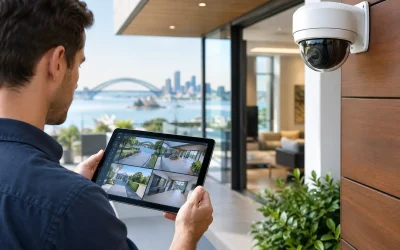
Remote viewing is now expected, but it must not expose the business to unnecessary risk. The system should use encrypted access, strong credentials, multi-factor authentication where available, and clearly defined user roles. A manager may need live views and export rights, while a contractor or concierge may only need access to selected cameras.
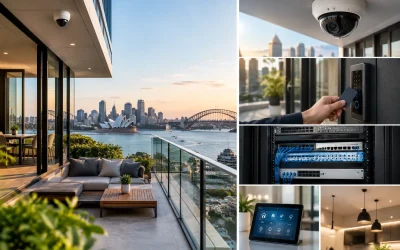
This is also a network design issue. Cameras, recorders, access control panels, and business devices should not simply share an unmanaged network. Proper structured cabling, managed switches, power-over-Ethernet capacity, VLAN segmentation, and a reliable firewall provide the foundation for stable video and controlled access.
Platforms such as UniFi can support visibility into network health and device status when designed appropriately. The benefit is practical: a camera outage, network issue, or overloaded link can be identified early instead of being discovered after footage is needed.
Integration Makes CCTV More Useful
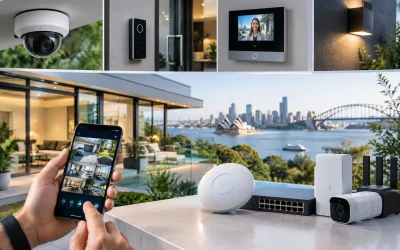
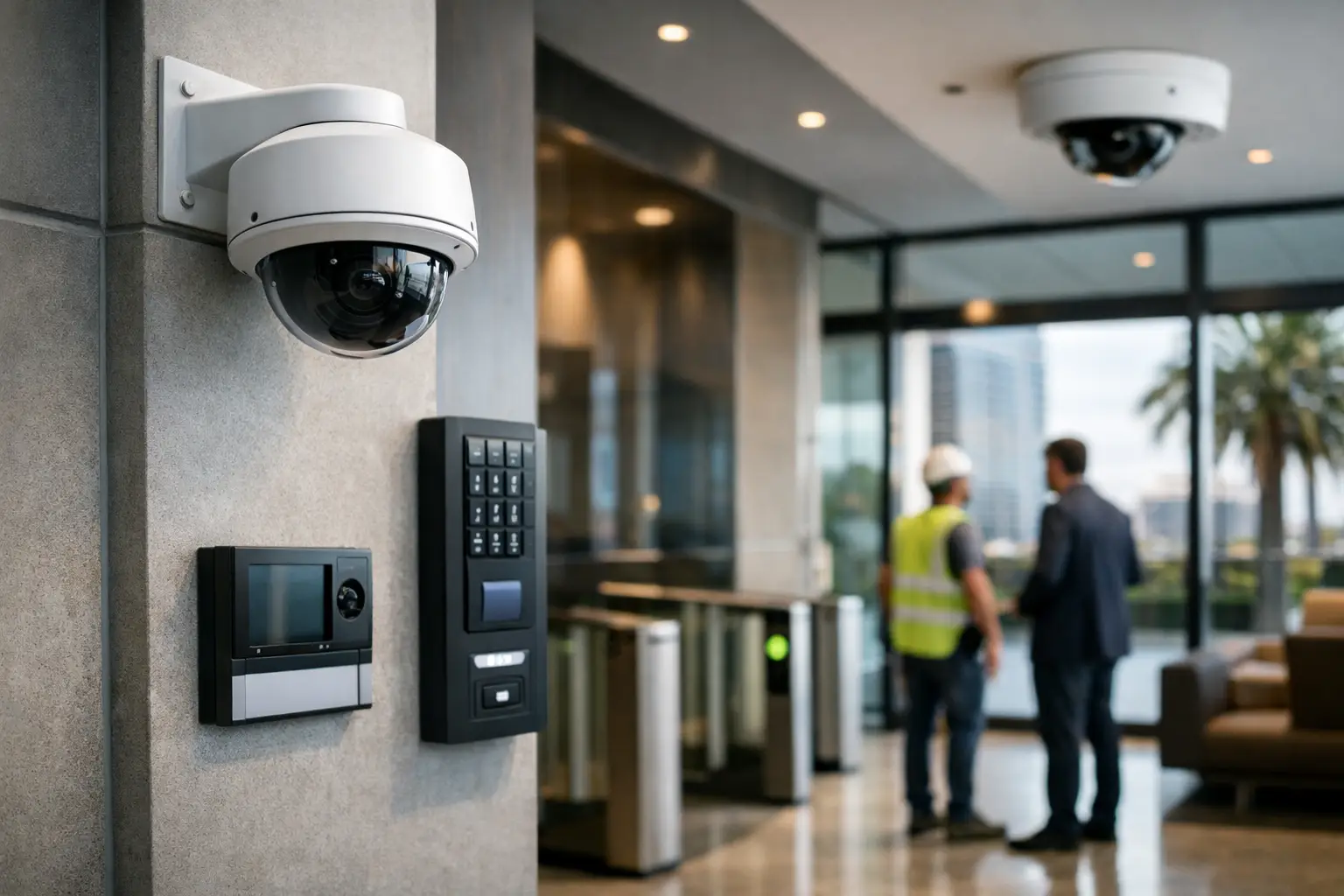
CCTV is stronger when it works with access control, alarms, intercoms, lighting, and monitoring procedures. A door-forced alarm can call up the nearest cameras. An access card event can be matched with video verification. An Akuvox intercom call at a gate can provide visual confirmation before a door or barrier is released.
At larger or more complex properties, integration can also support operational workflows. A delivery entrance may combine vehicle detection, intercom communication, access permissions, and camera recording. A restricted server room can generate an alert if access occurs outside approved hours. For strata and mixed-use buildings, shared entrances and service areas can be managed with clearer accountability while protecting resident privacy.
Integration does not mean every device needs to be automated. It means the systems should be designed to exchange useful information where it improves response, reduces manual effort, or provides a clearer audit trail.
Privacy, Compliance, and Camera Placement
Commercial CCTV must be effective without becoming intrusive. Cameras should be positioned around legitimate security, safety, and operational requirements, not installed indiscriminately. Areas such as bathrooms, changing rooms, and private staff spaces require particular care and are generally inappropriate for surveillance.
Clear signage, controlled footage access, documented retention policies, and staff awareness all contribute to responsible use. Audio recording can involve additional legal and privacy considerations, so it should not be enabled by default without advice relevant to the property and jurisdiction.
Placement should also account for practical maintenance. Cameras installed too high, too low, behind signage, near reflective surfaces, or exposed to weather without suitable housings can underperform regardless of their technical specification. Commissioning should include day and night testing, sample footage review, focus adjustment, and verification that key areas are covered as intended.
Plan for Growth, Not Just Opening Day
Commercial sites change. A tenant expands, a warehouse layout shifts, new access points are added, or an organization needs a longer retention period after an incident. Choosing a scalable CCTV platform and leaving capacity in the network, cabling pathways, switch power budget, and recording system avoids costly rework later.
This is particularly valuable during new builds and major renovations, where cabling, camera mounting points, lighting, and network cabinets can be coordinated before ceilings are closed. For existing sites, a staged upgrade can still deliver meaningful improvement by prioritizing entrances, perimeters, high-risk assets, and weak points identified through site review.
The right CCTV system should make a property easier to manage, not add another isolated screen for staff to watch. Start with the decisions your team needs to make during an incident, then design the cameras, network, storage, and integrations around those decisions. That approach produces a system that remains dependable long after installation day.