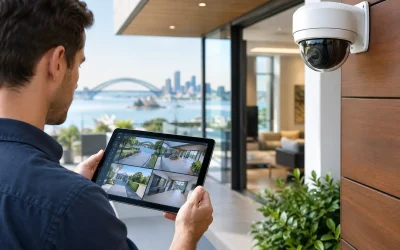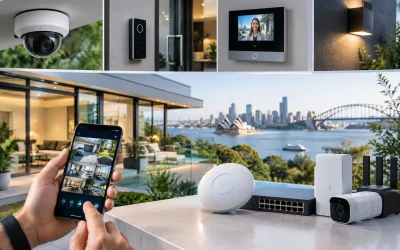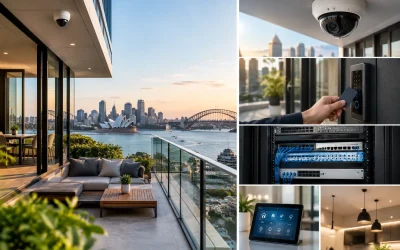



A security camera can be excellent, a UniFi network can be well specified, and an Apple Home or Home Assistant installation can be thoughtfully programmed. But if the underlying cabling was treated as an afterthought, each system inherits the same limitations: poor coverage, difficult fault finding, restricted upgrade options, and untidy additions over time.
Structured cabling is the physical framework that allows connected property systems to operate as one coordinated environment. It is more than pulling Ethernet cable from point A to point B. A properly designed installation considers where equipment will live, how it will be powered, which systems need dedicated connections, how pathways can accommodate future additions, and how every run will be identified and tested.
For homes, businesses, strata properties, and new builds, this planning creates a more reliable foundation for security, networking, AV, access control, lighting, and automation.
What Structured Cabling Actually Supports
The visible technology in a property tends to get the attention. Cameras, touch panels, wireless access points, intercoms, televisions, and smart lighting controls are easy to see. Cabling sits behind walls, above ceilings, and inside communications cabinets, but it determines how well those visible systems perform and how easy they are to maintain.
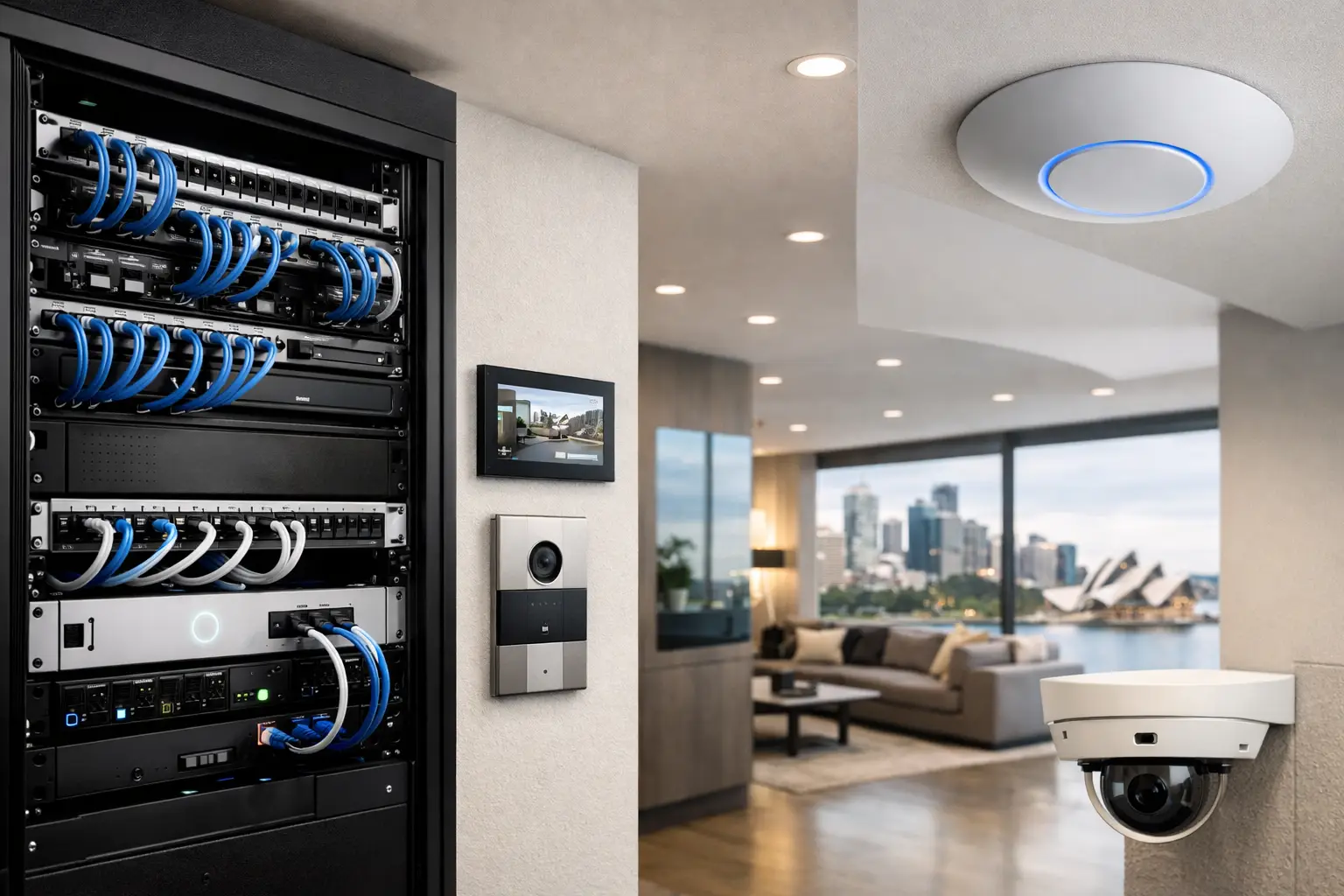
A structured cabling system typically brings copper and, where appropriate, fiber infrastructure back to a central location. This may be a communications rack, network cabinet, or dedicated equipment room. From there, patch panels, network switches, routers, power backup, and system controllers can be organized in a serviceable, documented layout.
That centralized approach matters because modern properties often rely on the same network for multiple critical functions. CCTV cameras may record to a network video recorder. Access control readers may communicate with controllers over Ethernet. Akuvox intercoms, Wi-Fi access points, audio zones, automation processors, and smart TVs all need stable connectivity. Rather than allowing these systems to grow as disconnected installations, cabling gives them a common, manageable foundation.
Why Wireless Is Not a Substitute for Cable
Wi-Fi is essential, especially for mobile devices and flexible living or work spaces. It is not a replacement for every fixed connection.
Wireless performance is affected by building materials, distance, neighboring networks, device density, and the location of access points. A professionally designed Wi-Fi system addresses these variables, but the access points themselves still need reliable wired backhaul. Cabling to the right ceiling or wall locations allows UniFi access points to deliver consistent coverage without relying on wireless repeaters.
Fixed, high-demand, or security-critical devices also benefit from wired connections. This includes AI CCTV cameras, network video recorders, access control equipment, intercoms, desktop workstations, AV distribution equipment, and automation controllers. Wired connections reduce variables and provide predictable bandwidth, particularly when several cameras are recording continuously or multiple users are working from the same network.
Power over Ethernet, commonly called PoE, adds another practical advantage. One network cable can provide both data and power to compatible cameras, access points, intercoms, and access control devices. This can reduce the need for separate local power outlets while allowing equipment to be supported by centralized backup power when required.
Planning Structured Cabling Before Walls Close
The best time to design cabling is before a new build reaches plaster, or before a major renovation closes ceilings and walls. This is when cable routes, conduit, equipment locations, and device positions can be considered without unnecessary rework.
The first decision is not simply how many data points to install. It is how the property will be used. A family room may need connections for a television, gaming console, AV receiver, and wireless access point nearby. A home office may require several network outlets, while an entry point may need provision for an intercom, access control, gate automation, and CCTV coverage. In a commercial site, reception, meeting rooms, staff workstations, stock areas, loading zones, and external perimeter points all create different requirements.
Future provision is equally valuable. Running conduit to likely camera locations, gate pillars, roof spaces, media rooms, and external areas can avoid disruptive work later. Not every conduit must be used immediately. Its value is in preserving options when a property owner decides to add a camera, access point, electric gate controller, or audio zone years after the original installation.
Selecting the Right Cable Type
Category 6 cable remains suitable for many standard data and PoE applications. Category 6A is often the stronger long-term choice where higher network speeds, demanding PoE requirements, or longer-term flexibility are priorities. The right selection depends on run length, system design, budget, heat considerations, and the performance expected over the life of the property.
Fiber is worth considering between buildings, across larger commercial sites, or where electrical isolation and high bandwidth are required. Unlike copper, fiber is not affected by electromagnetic interference in the same way and can support longer distances. It is not necessary for every project, but it can be a sensible part of a campus, warehouse, education, or multi-building design.
Cable category alone does not guarantee performance. Termination quality, bend radius, separation from electrical services, pathway design, labeling, and certification testing all matter. A high-spec cable installed carelessly can be less useful than a correctly installed system designed around the actual property.
The Communications Cabinet Is Part of the System
A well-planned cabinet is not just a place to hide a modem and tangled patch leads. It is the operational center of the connected property.
The cabinet should have enough physical space, ventilation, power, and accessible cable management for the equipment it will hold. That may include a gateway, UniFi switches, patch panels, a UPS, CCTV recorder, access control controller, automation hub, AV equipment, and network storage. In larger environments, equipment may require a dedicated rack or communications room rather than a small wall enclosure.
Location also has consequences. A cabinet in a hot, inaccessible roof space may create service and reliability problems. A more accessible utility area, office, plant room, or purpose-built communications space is usually easier to maintain. For residential projects, this needs to be balanced against appearance and available room, but the equipment should still be reachable without moving furniture or entering unsafe spaces.
Every cable should be labeled at both ends and documented. This may sound administrative, but it changes the experience of maintenance. When a camera, access point, or wall outlet needs attention, a technician can identify the relevant run quickly instead of tracing unknown cables through a cabinet. Clear labeling is especially valuable for strata and commercial properties where systems evolve across multiple tenants, contractors, or management teams.
Designing for Security, Automation, and AV Together
The greatest benefit of structured cabling appears when systems are designed together rather than added in isolation.
Consider a front entry. The same area may require an intercom, an access control reader, a door strike, a camera, exterior lighting, gate control, network connectivity, and integration with Apple Home or Home Assistant. Planning each system separately can lead to duplicated pathways, exposed cabling, incompatible power arrangements, and a crowded wall. Planning the entry as one connected zone produces a cleaner result and allows the equipment to work together logically.
The same applies to commercial spaces. Access events can be associated with camera footage. A video intercom can call designated staff or tenants. Network segmentation can separate corporate devices from cameras, guest Wi-Fi, and building systems. Centralized cabling makes these relationships easier to implement, diagnose, and expand while keeping security devices on dependable infrastructure.
Smart lighting is another example. DALI-2 and Zen Control systems may need their own control infrastructure alongside IP networking and electrical works. Coordinating these requirements early helps avoid conflicts between electrical, lighting, security, and automation trades. The objective is not to add technology for its own sake. It is to create practical control that remains understandable after handover.
When Retrofitting, Priorities Matter
Existing homes and occupied commercial properties rarely offer unrestricted access to walls and ceilings. A retrofit therefore requires a different strategy.
The priority is usually to establish the strongest backbone first: a suitable central cabinet, wired links to key access point locations, cabling for priority cameras and intercoms, and dedicated connections for critical work or AV areas. From there, the system can be expanded through accessible ceiling spaces, conduits, joinery, or external pathways where appropriate.
There are trade-offs. Some locations may be costly or impractical to cable without major building work. In those cases, a professionally designed wireless or alternative connection may be appropriate. The point is to make that choice deliberately, rather than treating wireless as the default for devices that would perform better on cable.
For property owners, the practical question is not whether every device needs a network outlet. It is which connections will reduce disruption, improve performance, and preserve options over the next five to ten years.
A connected property performs best when its infrastructure is treated as a long-term asset, not an invisible expense. Careful cabling gives security, networking, lighting, AV, and automation room to develop without turning future upgrades into a construction project.