


A former employee’s credential still works at the rear entrance. A delivery driver can enter the staff area because the intercom releases the same door. The server room has a reader, but the audit trail is never checked. These are the kinds of gaps an access control review is designed to find before they become an incident, dispute, or operational headache.
For a business, strata property, healthcare site, school, warehouse, or premium residence, access control is not simply about fitting card readers to doors. It is about defining who should be able to enter each area, at what time, under which conditions, and how that activity is recorded. A well-designed review turns those decisions into a practical system that supports daily work without leaving security dependent on keys, memory, or informal workarounds.
What an Access Control Review Should Examine
A useful review starts with the property as it actually operates, not just the floor plan. The main entrance may be well managed while a loading dock, basement lift lobby, side gate, plant room, or internal office door is effectively unmanaged. These secondary paths often create the greatest exposure because they are used regularly but receive less attention during the original installation.
The review should map each access point against its purpose. Public entry, staff entry, visitor access, restricted operational areas, after-hours access, and emergency egress all have different requirements. A reception door that needs frequent visitor release should not be governed in the same way as a records room, medication store, communications rack, or executive residence.
It should also examine the physical door hardware. A capable controller cannot compensate for a poorly aligned door, an unreliable electric strike, an inappropriate magnetic lock, or a door closer that does not latch consistently. Access control is a connected system: reader, credential, controller, lock hardware, cabling, power supply, door contact, request-to-exit device, fire interface, and software must all perform their role correctly.
Permissions, Credentials, and Offboarding
Most access risks come from permissions that have outlived their purpose. Employees change roles, contractors finish projects, tenants move, and temporary credentials remain active because nobody owns the removal process. A review identifies whether the system has clear credential categories and whether permissions are assigned by role rather than by one-off exceptions.
For example, an office may need separate access groups for general staff, management, IT, cleaners, contractors, and facilities personnel. Each group can have different door rights and schedules. That structure is more manageable than adding individual permissions whenever someone asks for access, then trying to untangle them months later.
Credential quality matters as well. Older proximity cards may still be appropriate for a lower-risk internal door, while sites with more sensitive areas may need mobile credentials, encrypted cards, PIN verification, or biometric authentication. The right choice depends on the risk, the number of users, how often credentials are issued, and the site’s privacy requirements. More authentication is not automatically better if it slows a busy entry point or encourages people to prop doors open.
Door Schedules and Real Operating Hours
Schedules should match the way a site works, including early arrivals, late finishes, cleaning shifts, deliveries, and weekend maintenance. An access control review often finds schedules that were set during commissioning and never revisited. That can lead to two poor outcomes: authorized people are locked out, or doors are left unlocked for longer than necessary to avoid complaints.
A practical setup gives appropriate users access when they genuinely need it while keeping common areas controlled outside normal hours. It can also apply temporary access windows to contractors and service teams, so access expires automatically rather than relying on someone to remember to remove it.
Access Control Review: Looking Beyond the Door
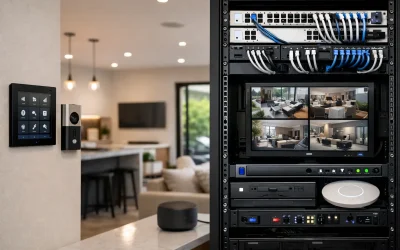
A door event becomes much more useful when it connects to the rest of the property’s security and technology infrastructure. Access control should be reviewed alongside CCTV, intercoms, alarms, network capacity, and emergency systems rather than as a standalone product.
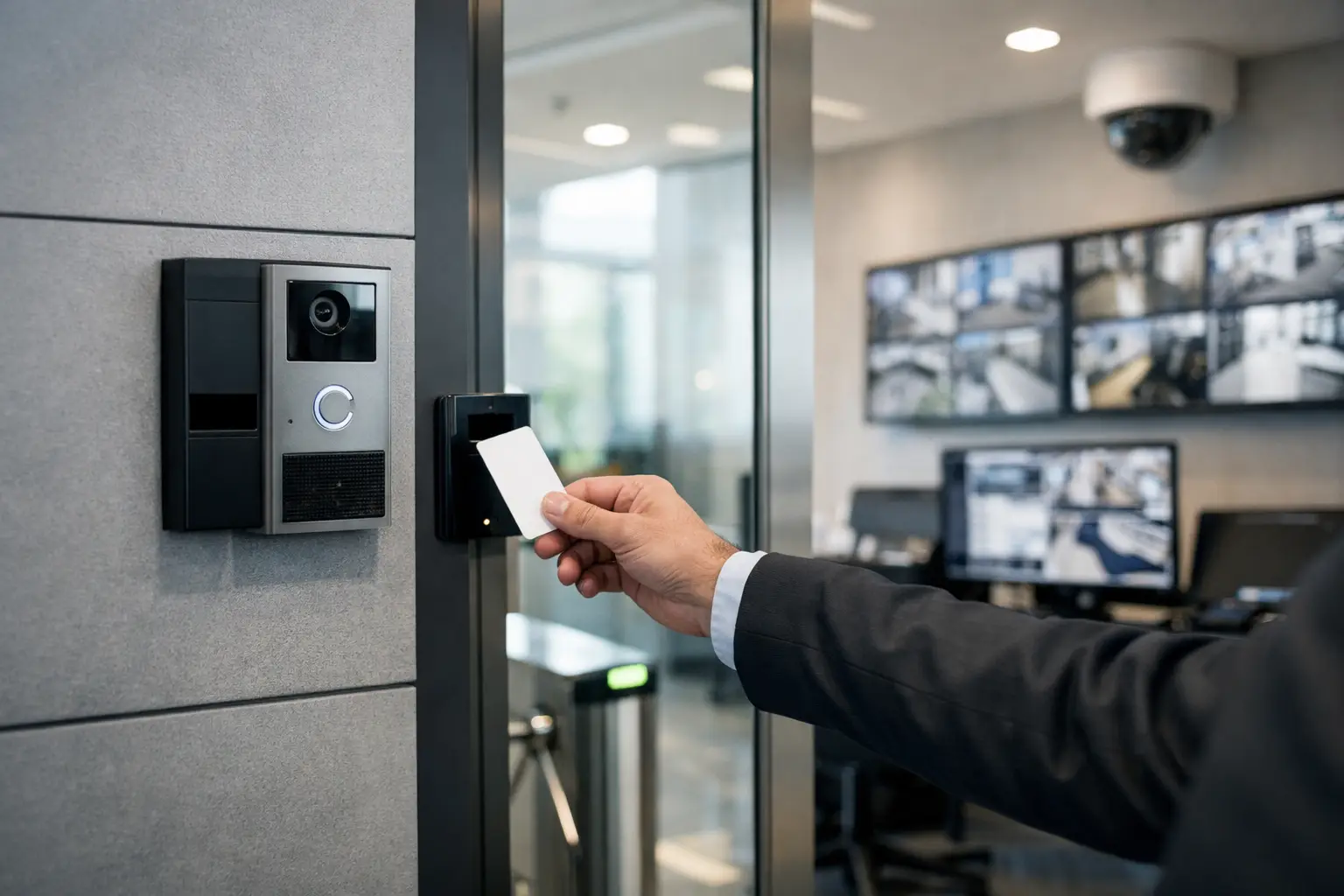
When a credential is used at a controlled entrance, a nearby camera can provide visual verification of the event. If a door is forced or held open, security staff can receive an alert with relevant video available for review. An Akuvox intercom can route a visitor call to an approved user or reception point, while the release action is recorded. These integrations reduce uncertainty without making routine access unnecessarily difficult.
Network design is part of this conversation. Door controllers, intercoms, cameras, and management workstations need dependable connectivity, secure segmentation, appropriate power backup, and properly labeled structured cabling. A system connected through an unreliable network or unsupported hardware may appear functional until an outage, software update, or urgent investigation reveals its weak points.
For larger sites, centralized management can bring separate doors, buildings, and user groups into one operational view. For a strata property, that may mean controlled entry to common spaces, garages, lifts, and plant rooms while preserving appropriate boundaries between individual residences. For commercial sites, it may mean reporting on access events, managing visitor credentials, and maintaining clear evidence when an incident occurs.
Events, Alerts, and Reporting That People Will Use
Access event history has value only when it is accurate and someone can retrieve it. A review should confirm that controller clocks are synchronized, doors are named clearly, users are identifiable, and reports can answer a real question without hours of manual interpretation.
Not every event needs an alert. A busy site can quickly create notification fatigue if every ordinary door opening triggers a message. Alerts should be reserved for conditions that require action, such as forced doors, doors held open beyond an acceptable period, access attempts outside a person’s schedule, or repeated denied entries at a sensitive location.
The response process is just as important. If a door alarm occurs at 10:00 p.m., who receives it? Can they verify the event through CCTV? Is the system monitored, and does the escalation path reflect the property’s needs? Technology provides the evidence, but an agreed response process turns evidence into security.
When to Schedule a Review
An annual review is sensible for many commercial and strata environments, but certain changes should trigger one sooner. A renovation, new tenancy, staff restructure, security incident, change in operating hours, new controller platform, or expanded CCTV deployment can all alter the access risk profile.
New builds and major refurbishments benefit from a review before walls are closed and finishes are selected. This is the point to coordinate door hardware, lock power, controller locations, cable pathways, network cabinets, intercom positions, and emergency interfaces. Retrofitting remains possible, but early planning usually produces a cleaner installation and avoids visible cabling or compromises in door design.
For homeowners, the review may be more focused: perimeter gates, garage entry, side access, service doors, guest access, and integration with an intercom or Apple Home and Home Assistant environment. The aim is not to make a home feel commercial. It is to provide controlled, reliable entry that fits the household’s routines and can be managed without a collection of disconnected apps.
Turning Findings Into a Practical Upgrade Plan
The final outcome should not be a generic checklist of weaknesses. It should be a prioritized plan based on risk, operational impact, and the condition of existing infrastructure. A faulty rear door latch or unmanaged former-staff credential deserves attention before cosmetic upgrades to an already well-protected main entrance.
Some sites need targeted corrections: remove inactive users, revise schedules, repair hardware, rename doors, or improve reporting. Others need a staged modernization, such as replacing aging controllers, adding video verification, upgrading network infrastructure, or extending access control to previously unmanaged areas. A staged approach is often the right answer when the existing system is serviceable but no longer aligned with the site’s growth or security expectations.
Alpha Security Corp approaches access control as part of the broader environment, coordinating security hardware with licensed electrical work, structured cabling, CCTV, intercoms, and network design. That integrated view helps prevent the common problem of installing capable devices on an unreliable foundation.
The best access control system is not the one with the most readers or the longest feature list. It is the one that makes authorized entry simple, makes exceptions visible, and gives property decision-makers confidence that every controlled door is doing the job it was intended to do.