


A lighting system becomes genuinely useful when it responds predictably to how a property is used: staff arriving before opening, a hallway lighting the path at night, shades lowering when a meeting starts, or an alarm event bringing selected exterior lights to full brightness. Choosing among the best smart lighting protocols is therefore not a matter of choosing the most popular app. It is an infrastructure decision that affects reliability, maintenance, energy performance, and how well lighting can work with security, access control, AV, and automation.
For a single room, many wireless products can appear interchangeable. For a new home, a strata common area, an office, or a commercial site, the differences are substantial. The right protocol depends on the building, the lighting fixtures, the control requirements, the network design, and the expected life of the installation.
Best Smart Lighting Protocols: Start With the Building
There is no universal winner. A professionally designed system often uses more than one technology, with each assigned to the job it handles best. Wired lighting control may manage the building’s primary circuits, while a wireless protocol supports retrofit areas or selected decorative fixtures. Apple Home or Home Assistant can then provide the user-facing control layer without being responsible for the critical electrical logic.
The key distinction is between a lighting control system and a smart-home ecosystem. DALI-2, KNX, 0-10V, and DMX are commonly used to control fixtures, drivers, keypads, and building functions. Zigbee, Thread, Bluetooth Mesh, and Wi-Fi are communications technologies used by many smart devices. Matter is an interoperability standard that helps supported platforms communicate, but it does not replace a properly designed lighting control architecture.
A practical design begins with several questions: Is the property a new build or retrofit? Are fittings individually addressable? Does lighting need to support emergency operation, scene control, occupancy sensing, daylight harvesting, or building-wide schedules? Does the owner need local wall control that still works if the internet is unavailable? The answers narrow the field quickly.
DALI-2 for Professional Lighting Control
DALI-2 is often the strongest choice for commercial lighting and premium residential projects where dimming quality, fixture-level control, and long-term serviceability matter. Rather than simply switching a circuit on and off, DALI-2 allows compatible drivers, sensors, and control devices to communicate on a dedicated lighting bus. Individual fixtures or groups can be addressed, configured, monitored, and included in scenes.
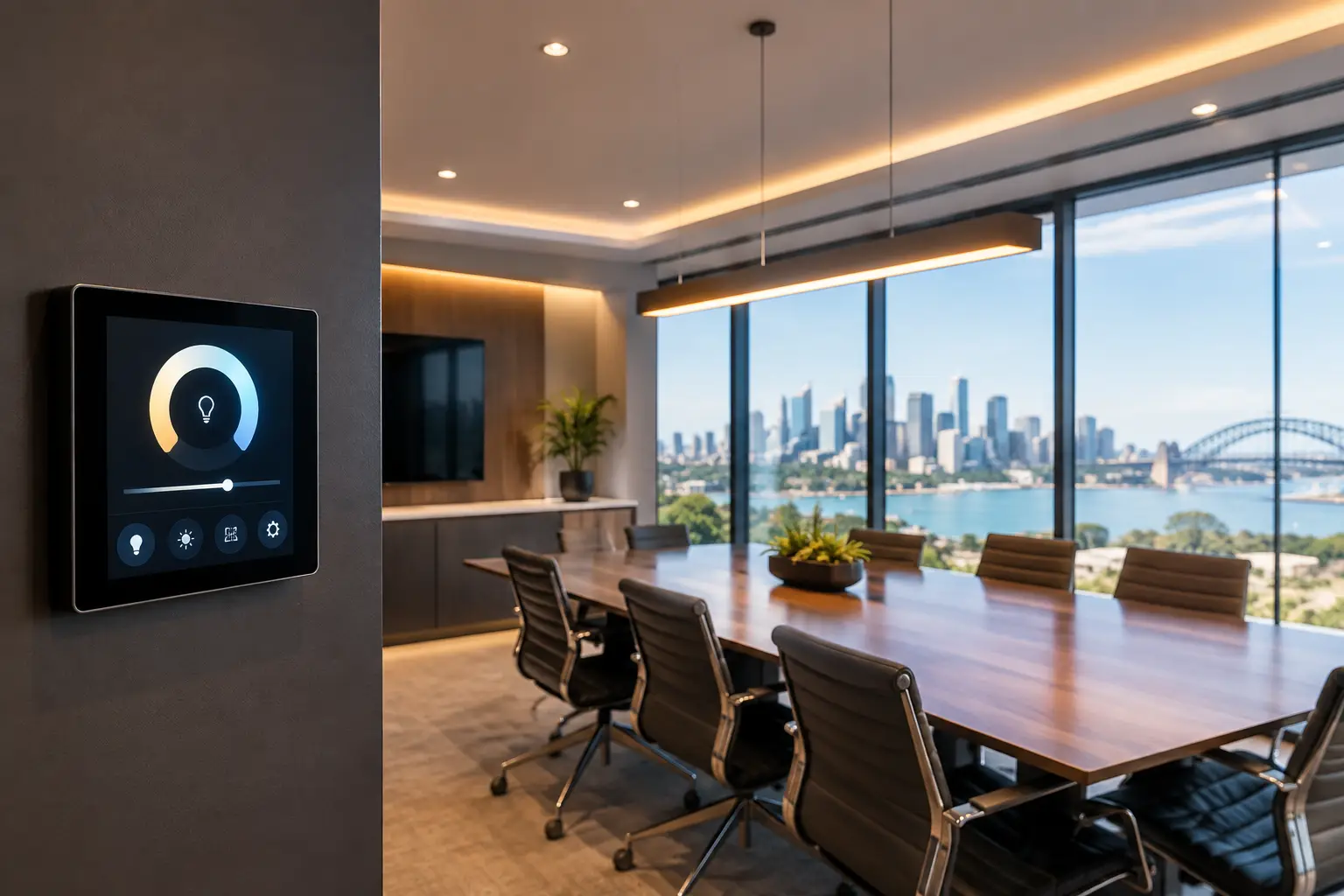
That granularity is useful in offices, education facilities, healthcare environments, retail, warehouses, and high-spec homes. A meeting room can combine scene-based lighting, occupancy response, and daylight harvesting. In a residence, a single keypad action can set the kitchen, dining, and adjacent living areas to appropriate levels without relying on a collection of disconnected smart bulbs.
DALI-2 also supports a cleaner maintenance model. When fixtures are documented and properly commissioned, a technician can identify addresses, revise groupings, and troubleshoot faults without guessing which device belongs to which circuit. Platforms such as Zen Control add practical DALI-2 commissioning and control capability for projects that need an engineered lighting solution rather than consumer-device automation.
Its trade-off is planning. DALI-2 is best specified early, alongside electrical drawings, fixture schedules, switch locations, and structured cabling. It can be used in retrofit work, but it is generally more cost-effective and flexible when designed into a new build or a significant renovation.
Where DALI-2 makes the most sense
Choose DALI-2 when fixtures need reliable dimming, extensive scenes, sensor-based control, or centralized monitoring. It is especially appropriate where lighting is an operational system: commercial premises, common areas, hospitality spaces, or larger homes with a substantial number of dimmable circuits.
KNX for Whole-Building Integration
KNX is a mature, wired building automation protocol used for lighting, shading, HVAC interfaces, metering, and other building functions. It is a strong option for properties that need distributed intelligence and a long operational lifespan. Devices communicate over a bus, so basic automation logic can continue locally without dependence on a cloud account or a single consumer hub.
For lighting, KNX is particularly effective when the discussion extends beyond lighting. Consider a building where access control status, occupancy, temperature, daylight, blinds, and lighting scenes should operate as one coordinated system. KNX can provide the backbone, while DALI-2 manages the detailed control of dimmable fixtures. This combination is common in projects where the owner wants both refined fixture control and broad building automation.
The trade-off is that KNX requires disciplined design, programming, documentation, and commissioning. It is not a plug-in solution, and it should not be treated as one. For a compact home with a modest number of lighting zones, the additional infrastructure may not be justified. For large residences, commercial premises, and multi-system projects, it can be an excellent long-term foundation.
Zigbee and Thread for Flexible Wireless Lighting
Wireless lighting has a legitimate place in professional projects, particularly where opening walls or installing new control cable is impractical. Zigbee has a long track record in smart lighting, with many lamps, sensors, remotes, and controllers available. Its mesh design allows mains-powered devices to relay signals, which can improve coverage when the network is designed carefully.
Zigbee can work well for retrofit lamps, feature lighting, selected sensors, and areas where the lighting controls are not part of the building’s critical operation. However, device compatibility, coordinator placement, radio interference, and the quality of the underlying network design all matter. A large collection of devices added over time can become difficult to support if it has not been planned as one system.
Thread is also mesh-based, but it is designed around IP networking and is increasingly relevant for Apple Home and Matter-enabled installations. Thread devices can communicate locally, and compatible border routers connect the Thread network to the wider IP network. For homeowners who want Apple Home control, Thread-supported lighting can provide a responsive, locally controlled experience.
Thread is promising, but the label alone does not guarantee interoperability or a complete lighting solution. Matter support varies by device category and manufacturer implementation. Before specifying equipment, confirm the functions that matter: dimming behavior, color control, scenes, firmware support, wall-switch operation, and integration with the selected automation platform.
Bluetooth Mesh and Wi-Fi: Useful, With Boundaries
Bluetooth Mesh, including systems such as Casambi, is well suited to certain retrofit and architectural lighting applications. It can provide flexible wireless control without requiring a traditional central controller for every function. This can be valuable for feature lighting, hospitality spaces, and renovations where control wiring is limited.
The constraints are scale, commissioning discipline, and product ecosystem. Bluetooth Mesh should be selected because it matches the fixture and project requirements, not simply because it avoids wiring.
Wi-Fi lighting is easy to understand because it connects directly to the property’s wireless network. Yet placing a large number of lighting endpoints on Wi-Fi can create support and performance concerns, especially when the network also carries CCTV, access control, AV streaming, work devices, and guest traffic. Wi-Fi can be appropriate for selected devices, but it is rarely the preferred foundation for a whole-building lighting system.
A correctly designed UniFi network, segmented for operational devices and sized for real coverage, supports integrated systems far better than an all-purpose consumer router. Network quality does not replace lighting architecture, but poor network design can undermine it.
Do Not Confuse Matter With a Lighting Protocol
Matter is valuable because it can reduce platform lock-in between compatible devices and ecosystems such as Apple Home, Home Assistant, and other controllers. It makes the user experience more coherent when supported devices are added to a property over time.
But Matter does not determine whether the fixture has high-quality dimming, whether a commercial lighting bus is properly commissioned, or whether a wall switch remains intuitive for occupants. Think of Matter as a common language at the integration layer, not a substitute for DALI-2, KNX, or a well-designed wireless lighting network.
For many premium residences, a sensible architecture is DALI-2 or another dedicated control method for primary lighting, with Apple Home or Home Assistant delivering unified scenes, voice control, dashboards, and automation. That approach preserves dependable local lighting behavior while making the property easier to use.
Choosing a Protocol That Will Still Work Years From Now
The best selection is usually the one that keeps everyday actions simple while leaving the system serviceable. Occupants should be able to use familiar wall controls. Property managers should be able to understand schedules and fault reporting. Technicians should have labeled panels, current documentation, and a clear separation between lighting, security, AV, and data systems.
For a new build or major renovation, prioritize wired infrastructure and choose DALI-2 or KNX where the scope justifies it. For retrofits, Zigbee, Thread, or Bluetooth Mesh may be appropriate when paired with a sound integration plan. For commercial projects, favor protocols that support commissioning, monitoring, documentation, and operational continuity.
Alpha Security Corp approaches lighting as part of the complete property system: electrical design, structured cabling, UniFi networking, access control, CCTV, and automation planned to work together. The result is not lighting that merely responds to a phone command, but lighting that supports how the building is actually lived in, managed, and secured.
The most useful next step is to map the real moments that lighting needs to support – arrival, access events, work modes, cleaning, after-hours security, entertainment, and emergency response – then select the protocol architecture that can handle those moments reliably.