


A security system should still protect a property when the internet drops, a resident changes phones, or a delivery arrives after dark. That practical standard is shaping the most meaningful home security trends 2026. The focus is moving away from disconnected devices and toward properly designed systems where cameras, alarms, access, lighting, intercoms, and networking support each other.
For homeowners, builders, and property managers, the question is no longer which single device has the longest feature list. It is whether the full system is reliable, private, simple to operate, and able to expand without requiring a complete replacement later.
Home security trends 2026: integration over isolated devices
The strongest trend is system integration. A camera can identify activity, but it becomes more useful when it can trigger the right response: turn on exterior lighting, send a verified alert, record the event, and provide a clear intercom view before a door is opened.
This does not mean every device needs to perform an automation every time it detects movement. Constant notifications and overly aggressive routines quickly become a nuisance. A well-designed system uses context. For example, driveway detection may activate pathway lighting after sunset, while a verified perimeter event can create a higher-priority alert and retain footage for review.
Platforms such as Apple Home, Home Assistant, DALI-2 lighting controls, and professional alarm and CCTV systems can work together when the underlying design is considered early. The goal is not a complicated control screen. It is a property that behaves predictably, with manual controls still working exactly as expected.
Security automation is becoming more purposeful
Automation is increasingly being used to reduce uncertainty rather than add novelty. Homeowners want to know that gates are closed, side doors are secured, and exterior areas are visible without checking several unrelated apps.
Useful examples include arming selected areas when the home enters an away mode, receiving a door-station call at an approved device, or having entry lighting respond to an authorized arrival. In a larger home, a gate intercom, access control system, CCTV coverage, and internal touch panels can be designed as a single visitor-management workflow.
The trade-off is complexity. More integrations create more dependencies, which is why professional configuration, clear ownership of credentials, and a documented handover matter. Automation should enhance a proven security design, not become a substitute for one.
AI CCTV is becoming more selective and operationally useful
AI-assisted CCTV is no longer limited to headline features. In 2026, its real value is in filtering events. Modern Dahua, Hikvision, and Bosch camera systems can distinguish between people, vehicles, and other activity, helping reduce false alerts caused by shadows, rain, pets, or passing traffic.
That distinction matters most when camera systems are monitored or reviewed frequently. Instead of searching through hours of footage, a homeowner or manager can investigate events categorized by person, vehicle, direction of travel, or location. For commercial sites and strata properties, this can improve incident response and make reporting more efficient.
Camera placement remains more important than artificial intelligence alone. A premium camera pointed at the wrong angle, installed too high, or exposed to poor nighttime lighting will not deliver dependable identification. Good CCTV design considers approach paths, facial detail, vehicle entry points, lighting conditions, privacy boundaries, retention requirements, and the available network capacity.
There is also a privacy consideration. Features such as facial recognition may not be appropriate for every home, shared building, or workplace. A professional design should match the technology to the actual risk and operational need, rather than enabling every available analytic by default.
The network is now part of the security system
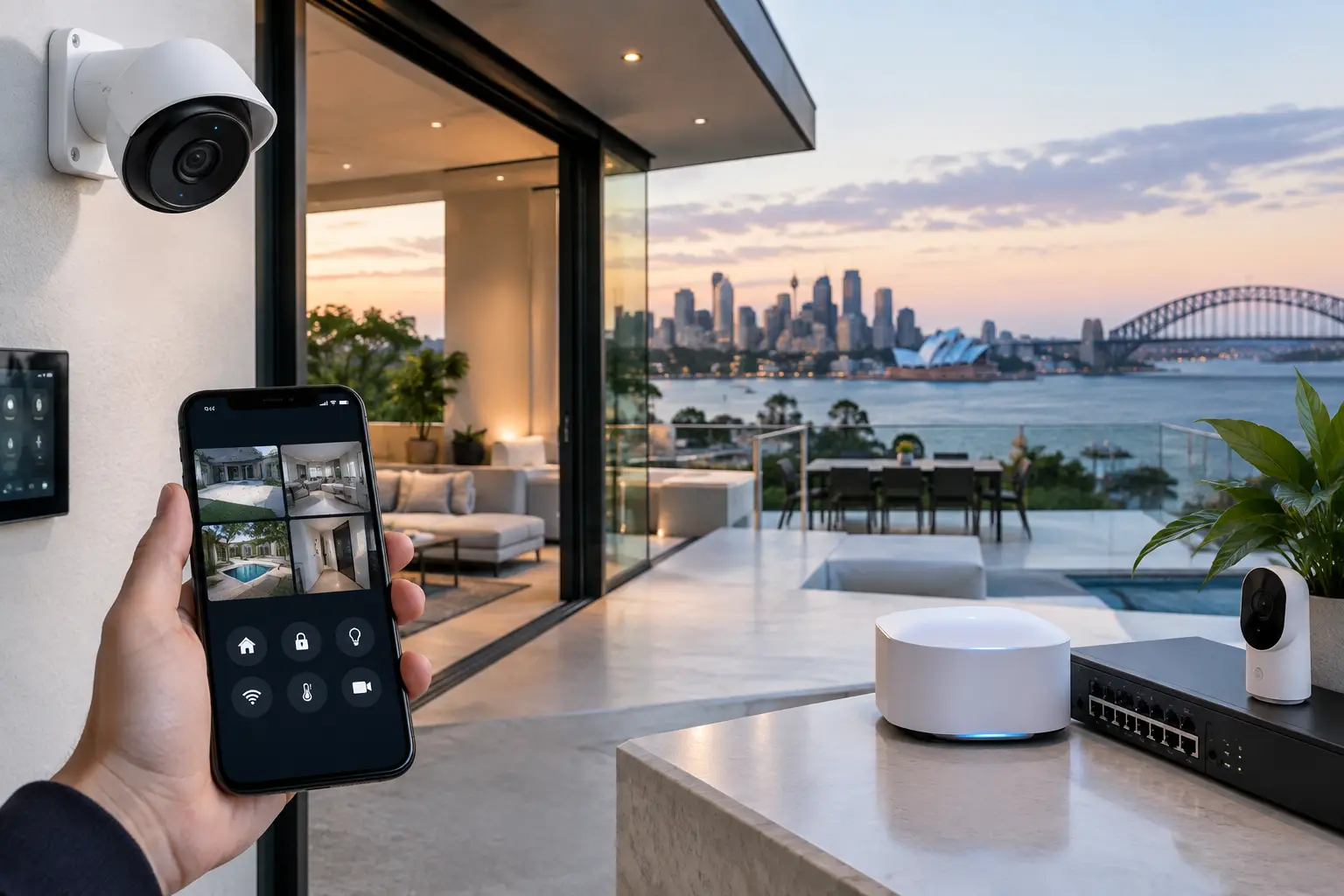
Cameras, video intercoms, smart locks, alarms, wireless devices, streaming displays, and automation controllers all rely on a stable network. As a result, one of the less visible but most important home security trends is investment in structured cabling and managed networking.
A professionally planned UniFi network, for example, can provide strong coverage across a home while separating security devices from general household traffic. This segmentation helps protect performance and limits the impact of a compromised or poorly configured device. Wired connections should be prioritized for fixed cameras, network video recorders, access controllers, wireless access points, and key automation equipment wherever practical.
Wi-Fi still has an important role, particularly in completed homes where running new cable is difficult. But it should be treated as engineered infrastructure, not a default answer for every security device. Coverage testing, access point placement, power backup, and secure remote access all influence whether a connected system performs when it is needed.
For new builds and major renovations, cabling pathways should be planned before walls and ceilings are closed. Allowing for cameras, door stations, access readers, Wi-Fi access points, AV equipment, and future controls is usually far more efficient than trying to retrofit every pathway later.
Access control is moving beyond the front door key
Physical keys remain familiar, but they offer limited visibility and are difficult to manage when lost, copied, or handed between contractors. Smart access control is expanding because it gives property owners more control over who can enter, where, and when.
For a residence, this may mean a video intercom such as Akuvox at the gate or front door, combined with a controlled electric strike, gate motor interface, and mobile or keypad credentials. For a strata or commercial environment, it can mean individual permissions for residents, staff, cleaners, trades, and delivery access, with auditable activity records.
The best access system is not always the one with the most credential options. It depends on the property. A family home may prioritize simple intercom calling and reliable gate release. A warehouse may need time schedules, restricted areas, and scalable user management. In either case, access control should continue to function locally if cloud services or internet connectivity are unavailable.
Lighting is becoming a security layer, not just an aesthetic feature
Exterior lighting has always contributed to security, but connected lighting allows it to be more responsive and less wasteful. Properly zoned pathways, entrances, side access areas, garages, and perimeter spaces can support both safe movement and camera performance after dark.
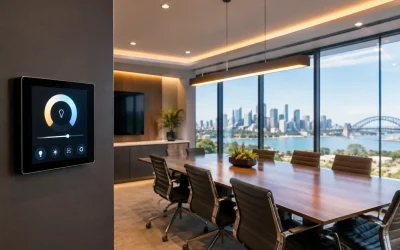
DALI-2 lighting and systems such as Zen Control are particularly valuable in larger homes and premium projects because they provide precise control, scene capability, and a structured approach to future changes. Security events can be linked to lighting where it makes sense, while everyday scenes preserve comfort and visual consistency.
The design principle is restraint. A sudden full-property lighting response may be useful for a verified perimeter alarm, but not for every movement event. Well-considered lighting automation should feel intentional to residents and noticeable to unwanted visitors.
Professional monitoring and system health are gaining importance
Security is not only about detection. It is about what happens next. Back-to-base monitoring can provide an escalation path when an alarm is triggered and nobody is available to respond. This is particularly relevant for vacant homes, frequent travelers, businesses, medical practices, and sites with valuable equipment.
Equally important is system health. Cameras can lose connection, storage can fill, batteries can degrade, and network changes can affect remote access. Ongoing maintenance identifies these issues before an incident exposes them. A system that was installed correctly five years ago may still need firmware review, credential cleanup, camera re-aiming, backup testing, or capacity upgrades.
Plan for resilience, not just remote control
Remote viewing and app control are useful, but they should not be the only way a property operates. The most dependable systems retain core local functions: recording continues on site, access can still be granted, alarm logic remains active, and lights can be controlled from normal wall switches.
This approach is especially relevant when combining Apple HomeKit or Home Assistant with professional security and electrical infrastructure. The integration can deliver a refined user experience, while the essential systems retain their own reliable operating layer.
For a new build, renovation, or significant security upgrade, start with the property’s routines and risks: who arrives, which areas need clear visibility, where packages are received, what must keep operating during an outage, and how the system may grow. The right technology follows from those answers. A connected property works best when every component is designed to work as one, without asking the owner to become its full-time technician.