


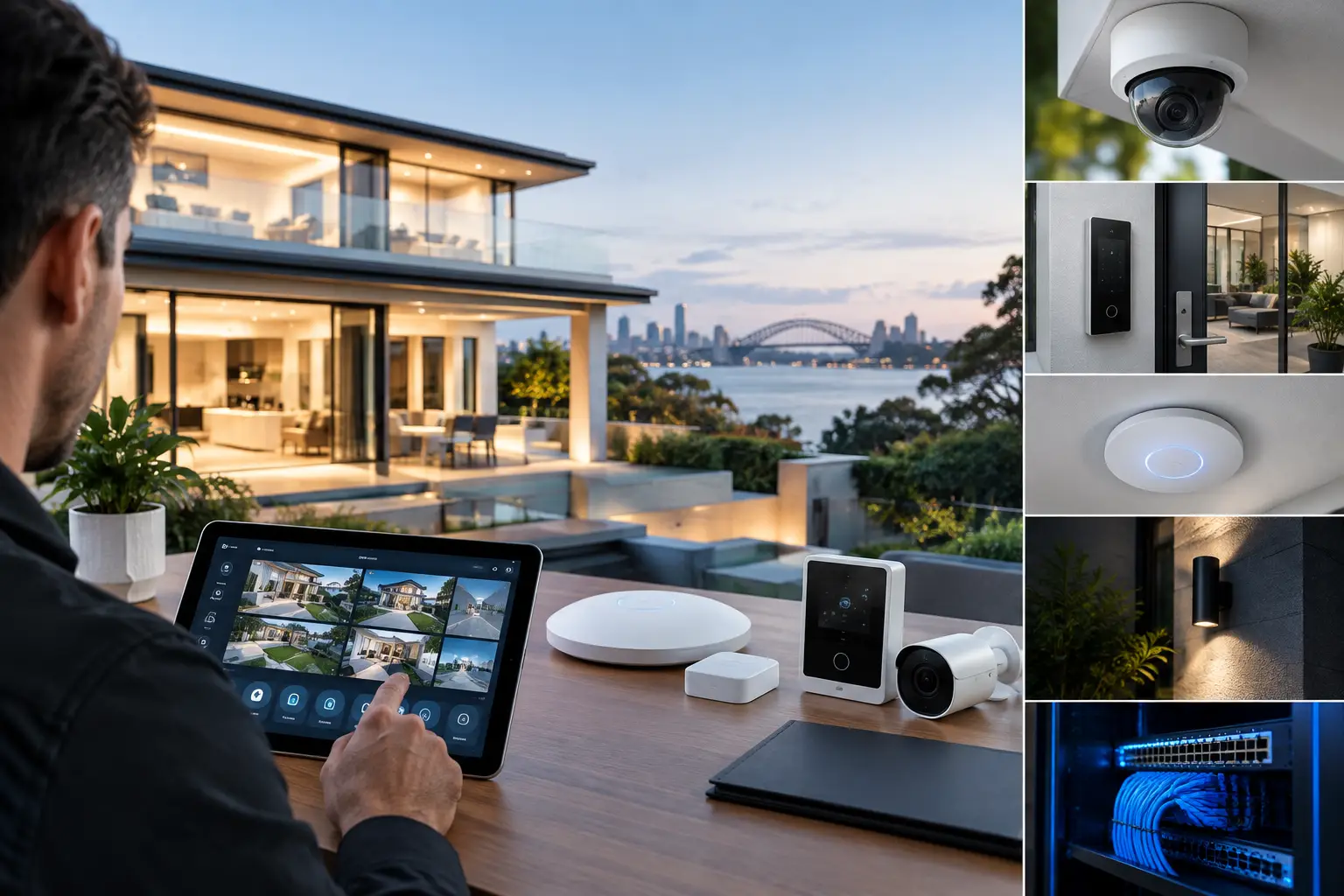
A camera above every door does not automatically create a secure property. Nor does an alarm panel, video intercom, or smart lock installed as separate projects. Knowing how to plan integrated security means designing the property as a connected environment: one where detection, access, video, network infrastructure, lighting, and notifications support clear decisions when they matter.
That planning is most valuable before walls are closed, ceilings are finished, or a business moves into a new site. It is also possible in a retrofit, but the order of decisions becomes even more important. The objective is not to add the most devices. It is to create a practical system that is dependable every day and straightforward to maintain years from now.
Start with the property, not the equipment
A strong design begins with how the property is used. A family home, medical practice, warehouse, strata building, and retail site may all need cameras and access control, but the risks and operating routines are very different.
For a residence, the focus may be on perimeter awareness, safe visitor access, driveway coverage, and a simple way to arm the alarm at night. A commercial site may need controlled staff access, delivery procedures, restricted zones, incident footage, and audit trails. In a strata environment, the design needs to distinguish between common areas, private lots, building management access, and emergency operation.
Walk through the property by asking practical questions. Where do people enter? Which doors are used after hours? What areas contain high-value assets or sensitive information? Where can someone approach without being seen? What happens when a delivery arrives, a staff member leaves late, or an alarm activates at 2:00 a.m.?
This process identifies the outcomes the system needs to deliver. It prevents a common mistake: selecting a camera model or access reader first, then trying to make it fit a problem it was not chosen to solve.
Define the response before selecting devices
Security planning is about response as much as detection. If a door is forced open, someone needs to know what happens next. Will the system notify an owner, security manager, monitoring center, or all three? Can they view relevant footage immediately? Will exterior lighting activate? Is there a procedure for verifying an event before escalating it?
The answer depends on the site. A warehouse with valuable stock may require monitored alarms, AI-enabled CCTV analytics, controlled vehicle gates, and video verification procedures. A homeowner may prioritize discreet notifications, intercom calls to a mobile device, and selected lighting scenes that improve visibility without causing unnecessary disturbance.
False alarms deserve attention at this stage. Poorly placed motion detectors, cameras aimed at busy public areas, or over-sensitive analytics can create notification fatigue. Once people stop trusting alerts, the system loses much of its value. Professional planning balances sensitivity with context, using the right detection method for each zone.
Treat cabling and networking as core security infrastructure
The most capable camera, intercom, or access control platform will only perform as well as the network and power behind it. This is where integrated planning has a clear advantage over separate installations.
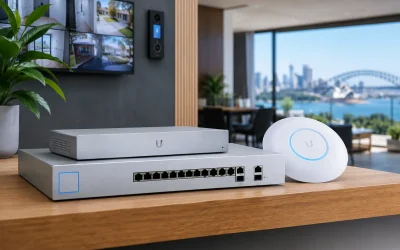
Structured cabling should be planned for cameras, wireless access points, intercoms, access readers, audiovisual equipment, automation controllers, and future expansion. Hardwired connections are generally preferable for fixed security devices because they provide stable communications and, in many cases, Power over Ethernet. They also reduce dependence on wireless coverage in critical locations.
Network design should separate operational systems where appropriate. Security cameras, access control, business devices, guest Wi-Fi, and smart-home equipment do not always need to share the same network segment. A properly configured UniFi network, for example, can support sensible segmentation, traffic management, secure remote access, and visibility into device health.
Bandwidth and storage must be considered early. High-resolution cameras produce detailed footage, but more resolution can increase network traffic and retention requirements. The right balance depends on camera placement, field of view, recording schedules, retention expectations, and the level of detail needed for identification. A wide overview camera and a tightly framed identification camera often serve different purposes.
For new builds and major renovations, allow spare conduit, cabinet space, power capacity, and cable pathways. Those provisions are modest compared with the cost and disruption of opening finished walls later. In commercial projects, equipment rooms should also account for ventilation, backup power, physical security, and service access.
Design layers that work as one
Integrated security is not a single product category. It is a set of systems designed around a shared operating outcome.
At the perimeter, CCTV can provide early awareness of activity around driveways, gates, loading zones, and external doors. Cameras from platforms such as Dahua or Hikvision can be specified according to the scene, including low-light performance, wide coverage, optical zoom, and analytics where they genuinely improve operations. Camera placement matters more than a long feature list. A poorly positioned high-resolution camera can still miss the face, vehicle, or action that matters.
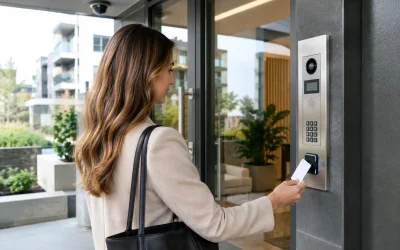
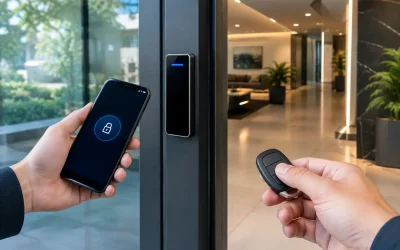
At entry points, access control determines who can enter, when, and through which door. Credentials may include cards, mobile access, PINs, or biometric options depending on the site and privacy requirements. For commercial properties, access events can provide useful accountability. For homes and premium residential developments, the priority may be a secure and convenient experience that does not require residents to manage multiple apps or keys.
Intercoms add context to access decisions. A properly located Akuvox video intercom can allow occupants to identify visitors, communicate clearly, and release a door or gate when appropriate. The intercom should be planned with gate hardware, lock type, door status monitoring, network connectivity, and power failure behavior in mind. A video call is useful, but it should not be the only consideration when the physical door hardware is poorly matched to the opening.
Alarm systems remain essential for intrusion detection, particularly in protected internal areas and after-hours commercial environments. When alarm events are integrated with cameras, selected footage can be reviewed quickly instead of relying on an alert alone. When appropriate, lighting can also respond to an event, improving visibility around the property and supporting safer verification.
Make automation useful, not distracting
Automation should reduce friction without creating unpredictable behavior. The most effective rules are often simple: arm selected areas when the building closes, notify the appropriate person if a protected door is left open, turn on exterior lighting when a verified event occurs, or present a camera feed when an intercom call arrives.
Residential systems can combine security with Apple Home or Home Assistant to provide a more unified experience. A homeowner might check gates, cameras, lighting, and selected door states from one familiar interface. In a well-planned setup, the automation platform complements dedicated security hardware rather than replacing it.
For example, an alarm panel should continue operating if a phone is unavailable, an automation server is restarting, or the internet connection is down. Security-critical functions need local resilience, while convenience features can sit on top of that dependable base. This distinction is vital when planning integrated systems.
Lighting integration also requires judgment. DALI-2 and Zen Control lighting systems can support precise scenes, scheduling, and occupancy-based behavior in suitable projects. But a security response should never leave occupants in darkness because a scene was designed for appearance rather than safety. Manual control, sensible overrides, and clear commissioning are part of the design.
Plan for daily operation and future change
A system is only integrated if the people using it understand what it does. Before installation, decide who will administer access credentials, receive alerts, review footage, test alarms, and authorize changes. Businesses should define procedures for new staff, departing staff, contractors, and lost credentials. Homeowners should know what happens during a power outage, network issue, or false alarm.
Documentation is not an afterthought. A complete handover should identify device locations, network arrangements, access permissions, recorder settings, warranty details, and service contacts. It should also record how the systems are meant to interact. Without that record, future upgrades can become unnecessarily expensive or introduce faults.
Scalability is another practical consideration. A growing business may add doors, cameras, staff, or a second tenancy. A homeowner may later add a pool gate, detached studio, solar monitoring, or multiroom AV. Selecting platforms with capacity for those changes is sensible, but buying enterprise-scale capability for a small property with no realistic expansion path is not always worthwhile. The right design matches the likely life of the building and the operational needs of its occupants.
Commission, test, and maintain the system
Installation is not the finish line. Every integrated security system needs commissioning that tests real scenarios, not just individual device power-up. A door release should be tested with the intercom, access credential, door contact, and emergency egress arrangement. Camera footage should be checked day and night. Alarm events should confirm the correct notifications, recording behavior, and monitoring response.
Maintenance keeps the original design intent intact. Cameras can become obstructed, batteries age, access permissions accumulate, network equipment needs firmware review, and building layouts change. Regular service identifies those issues before they become a problem during an incident.
The best integrated security plan is one occupants rarely have to think about. It should make entry easier for authorized people, make unusual activity easier to understand, and give owners confidence that the technology behind the property is working together for a reason.