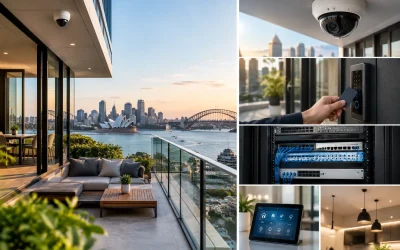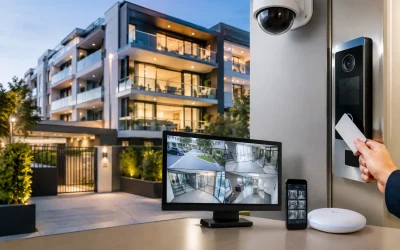



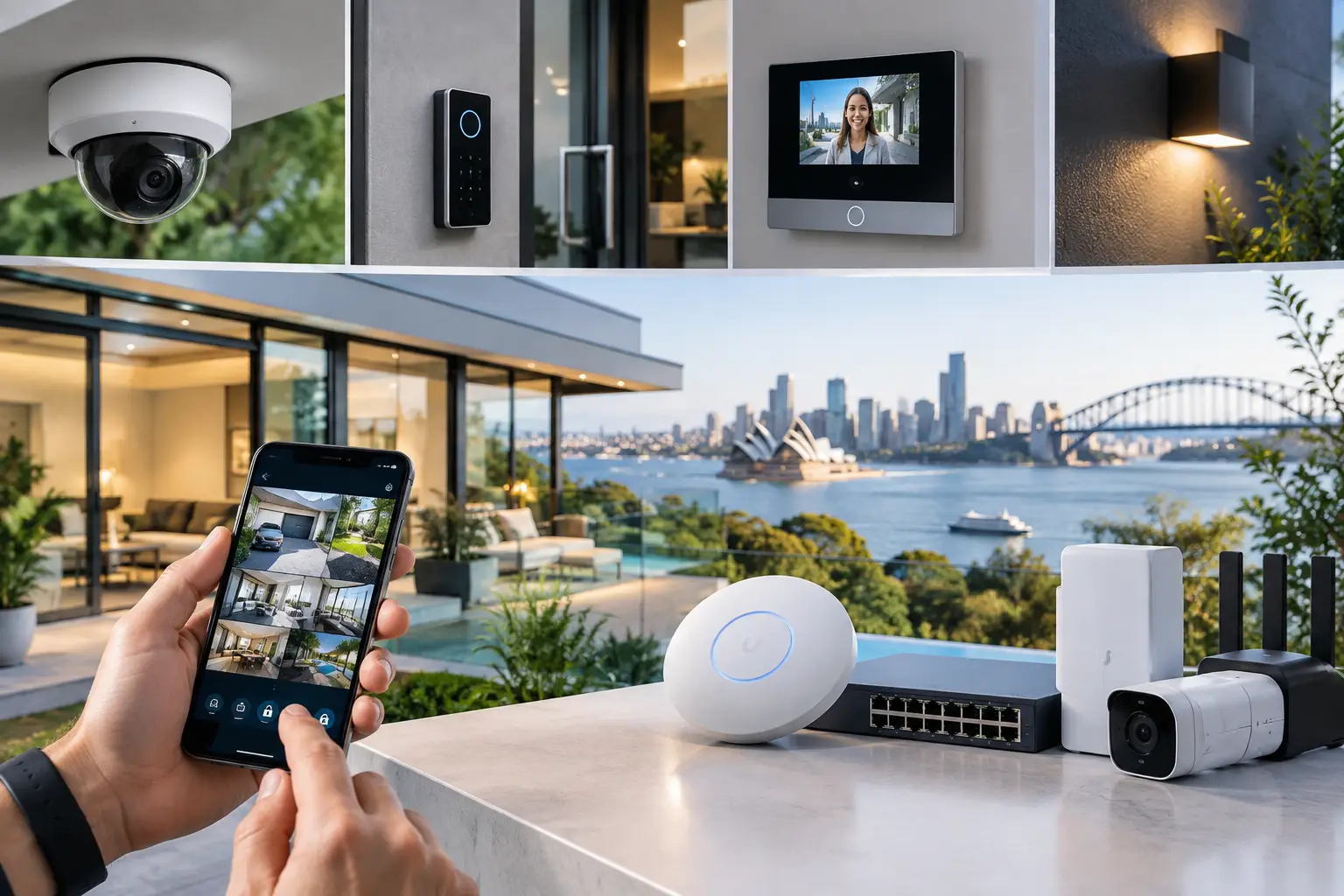
A security camera that cannot reliably reach the network, an alarm that operates separately from access control, or an intercom with no connection to the rest of the property creates more work at the moment it matters most. Effective security systems are not defined by the number of devices installed. They are defined by how well those devices work together, how clearly they support daily operations, and how reliably they continue to perform over time.
For a home, that may mean receiving a verified camera event when someone approaches the gate, then answering the intercom from a phone or wall panel. For a business, it may mean an access event, alarm status, CCTV footage, and site lighting all provide a clearer record of what happened and when. The outcome is not more technology for its own sake. It is a property that is easier to protect, manage, and use.
Why isolated security devices create problems
Many properties accumulate security equipment over years of renovations, tenancy changes, or reactive upgrades. A camera system is installed first. An alarm follows later. Access control is added for staff or contractors, then the Wi-Fi is expected to carry everything without a proper network design. Each component may work on its own, but the overall setup becomes difficult to manage and harder to troubleshoot.
This fragmentation has practical consequences. Footage may be unavailable because network capacity was never planned. A door release may fail because the intercom, power supply, and lock hardware were specified independently. A property owner may need separate applications, passwords, and service contacts for every system. When an incident occurs, time is spent moving between platforms instead of responding to useful information.
A professionally designed solution starts with the property, not a product list. It considers entry points, daily movement through the site, communication needs, available power, cable pathways, network coverage, retention requirements, and the people responsible for managing the system.
The foundation of dependable security systems
Security performance depends on infrastructure. Cameras, access control readers, intercoms, alarms, and automation controllers all need dependable power, communication pathways, and network capacity. These details are often invisible once the project is complete, yet they determine whether the system is reliable years later.
Structured cabling and electrical planning
Hardwired connections remain the preferred option for critical devices wherever practical. Structured cabling supports stable camera feeds, Power over Ethernet devices, access control panels, intercoms, and wireless access points without relying on inconsistent signal strength. It also makes future changes more straightforward, whether the property later needs additional cameras, a new door station, or expanded access control.
Electrical planning matters just as much. Security equipment needs correctly designed power supplies, protection, backup considerations, and compliant installation. In a new build or major renovation, coordinating these requirements early avoids visible cabling, compromised camera locations, and expensive alterations after finishes are complete.
A network designed for security traffic
Security devices are network devices. High-resolution CCTV streams, remote viewing, intercom calls, mobile access credentials, and cloud-connected automation all place demands on the network. A network built only around general internet use may not provide the coverage, capacity, segmentation, or resilience that a connected property requires.
A properly configured UniFi network, for example, can separate security equipment from general user devices, provide managed Wi-Fi coverage, and make it easier to identify faults. The right approach depends on the site. A large residence, warehouse, medical practice, and strata building have very different traffic patterns and operational risks. The common requirement is intentional design rather than adding devices to an already overloaded network.
CCTV should deliver useful evidence, not just video
CCTV is often the most visible part of a security installation, but camera count alone says very little about effectiveness. The right camera placement captures faces at entry points, vehicle details where relevant, movement through critical areas, and activity around vulnerable boundaries. A wide-angle view may show context, while a purpose-positioned camera provides identification.
Modern platforms from Dahua and Hikvision can provide intelligent event detection that helps reduce unnecessary recordings and alerts. Depending on the setting, analytics can distinguish people, vehicles, line-crossing events, or activity in a defined area. This is particularly valuable for commercial properties that cannot reasonably review hours of footage after every alert.
Analytics still require careful commissioning. Trees, reflections, changing light, delivery activity, and site layout can all affect detection. A system should be tuned to support the property’s real operating conditions, not simply left on default settings. Privacy, retention periods, and who can access footage also need to be defined clearly, especially in workplaces, shared buildings, healthcare, and education settings.
Access control and intercoms improve the front door experience
The entrance is where security and convenience meet. Access control can replace a loose collection of keys with managed credentials for residents, employees, visitors, cleaners, and contractors. Permissions can be assigned by person, area, and time, providing greater control over who can enter sensitive spaces.
For businesses, this can simplify staff changes and provide an audit trail for doors, gates, plant rooms, storage areas, or restricted offices. For homes and multi-unit properties, it can make everyday access easier without compromising control over the perimeter.
Intercom systems such as Akuvox add another layer of practical communication. A visitor can call a designated indoor station or mobile device, while the property owner can verify who is present before releasing a door or gate. The best intercom design considers more than the outdoor panel. It accounts for lock type, gate movement, emergency egress, network connectivity, indoor answering locations, and the way people actually enter the property.
Automation should support security, not distract from it
Integration becomes most valuable when it reduces friction during normal use and improves response during unusual events. For example, an access event after business hours could trigger appropriate lighting in a designated area. An alarm state can be visible from a central control interface. A gate intercom can appear on a wall panel, Apple Home device, or approved mobile app.
Platforms such as Apple HomeKit and Home Assistant can provide a more unified experience in residential projects, while DALI-2 lighting and Zen Control can support more sophisticated lighting logic where the project requires it. The key is restraint. Automation should be predictable, easy to override, and designed around the property owner’s routines.
Not every security function should be dependent on a broader automation platform. Core alarm, access, and life-safety-related functions need to remain dependable even if a user interface, internet connection, or third-party integration is unavailable. This is one of the most important trade-offs in integrated design: convenience is valuable, but critical protection should not be fragile.
Plan for the property you will have in five years
A good security design anticipates change. A growing business may add staff, vehicles, storage areas, or operating hours. A homeowner may add a pool area, detached studio, electric gate, or a second dwelling. A strata property may need better visitor management or an upgraded common-area camera system.
Scalability does not mean installing every possible device at the outset. It means selecting infrastructure and platforms that can expand without forcing a complete replacement. Spare cable capacity, suitable network hardware, centralized equipment locations, and documented system configuration all make future work cleaner and more cost-effective.
Maintenance also deserves attention before installation begins. Cameras need periodic checks for image quality and alignment. Backup power and recording capacity need review. Firmware, passwords, user permissions, and access credentials need ongoing management. For monitored alarm systems, communication paths and reporting arrangements should be tested on a schedule that suits the site’s risk profile.
A connected system is easier to manage
The strongest security systems are not necessarily the most complicated. They give the right people clear control, useful alerts, dependable records, and a practical way to manage the property day to day. That requires security, electrical, networking, and automation decisions to be coordinated from the beginning.
For a new build, renovation, commercial fit-out, or security upgrade, planning the connections between these systems early creates a better result than treating each one as a separate project. The useful question is not simply which devices to install, but how the entire property should respond when someone arrives, a door opens, an event occurs, or the building needs attention.