


A security system is only as capable as the decisions its alarm panel can make. The right alarm panel features determine whether a property receives meaningful alerts, whether monitoring can verify an event quickly, and whether security can coordinate with access control, cameras, lighting, and automation. For a home, strata building, or commercial site, the panel should be treated as critical infrastructure, not an afterthought behind a keypad.
A professionally specified panel does more than sound a siren. It receives information from detection devices, applies programmed rules, communicates events to users or a monitoring center, and can trigger wider building responses. The best choice depends on the building, risk profile, daily operating routines, and how much the system may need to grow.
Alarm Panel Features for Reliable Detection
The most fundamental job of an alarm panel is to know what is happening at the property. That starts with its zone capacity and the way it supports devices.
A zone is the identifiable input assigned to a door contact, motion detector, glass-break sensor, roller-door contact, smoke detector, panic button, or another detection point. Small homes may only require a modest number of hardwired zones. Larger residences, retail premises, warehouses, offices, and strata common areas often require substantially more capacity, particularly when separate areas need individual control.
Wired, wireless, and hybrid zones
Hardwired detection remains the preferred foundation where cabling can be installed or retained. It is dependable, avoids battery maintenance at each device, and is well suited to new builds, substantial renovations, and commercial projects. Structured cabling also makes future changes easier when planned early.
Wireless detection has a valid place in completed homes, heritage properties, and retrofit projects where opening walls is impractical. A quality panel should support secure supervised wireless devices, reporting low batteries, device tampering, and loss of communication rather than leaving problems unnoticed. Hybrid panels combine both approaches and are often the practical answer for staged upgrades.
Zone expandability matters as much as the initial count. A system installed for perimeter doors and a few internal detectors may later need garage protection, detached buildings, duress buttons, smoke detection, or access-controlled staff doors. Selecting a panel with a clear expansion path avoids replacing the central platform simply because the property evolved.
Partitioning and area control
Partitioning allows one alarm panel to protect multiple independently armed areas. It is particularly useful where a business has offices, a warehouse, and a reception area with different operating hours. In a larger home, it can allow the perimeter and garage to remain armed while occupants move freely inside.
For strata or mixed-use properties, partitions can separate common areas, plant rooms, storage facilities, and tenancy spaces. The detail matters: users should only be able to arm, disarm, and receive notifications for the areas they are authorized to manage. Proper partition design improves security while making daily operation less frustrating.
Communication Is a Core Security Feature
An alarm that cannot report an event is limited to local deterrence. Modern alarm panels should have reliable pathways for sending alarms, faults, and restoration signals to users and, where required, a back-to-base monitoring center.
A professionally designed setup generally considers more than one communication path. IP reporting over a stable network can be fast and efficient, but the network itself must be properly designed, powered, and protected. Cellular communication provides an independent path if site internet service is disrupted. Dual-path reporting is often appropriate for higher-risk homes and commercial sites because a cut cable, router failure, or service outage should not silently remove visibility.
Communication supervision is equally important. The panel should recognize and report when it loses its reporting path, when a communicator is tampered with, or when a device stops checking in. These conditions may not be an intrusion, but they are faults that need prompt attention.
For properties with UniFi networking or other managed network infrastructure, alarm connectivity should be planned with the same care as CCTV and access control. Appropriate network segmentation, backup power, and remote diagnostics can make the difference between a system that is merely connected and one that remains dependable during an incident.
Useful Alarm Panel Features for Daily Operation
Security is more likely to be used correctly when it fits the property’s routine. That means considering how people arm and disarm the system, who receives alerts, and what happens when a genuine event occurs.
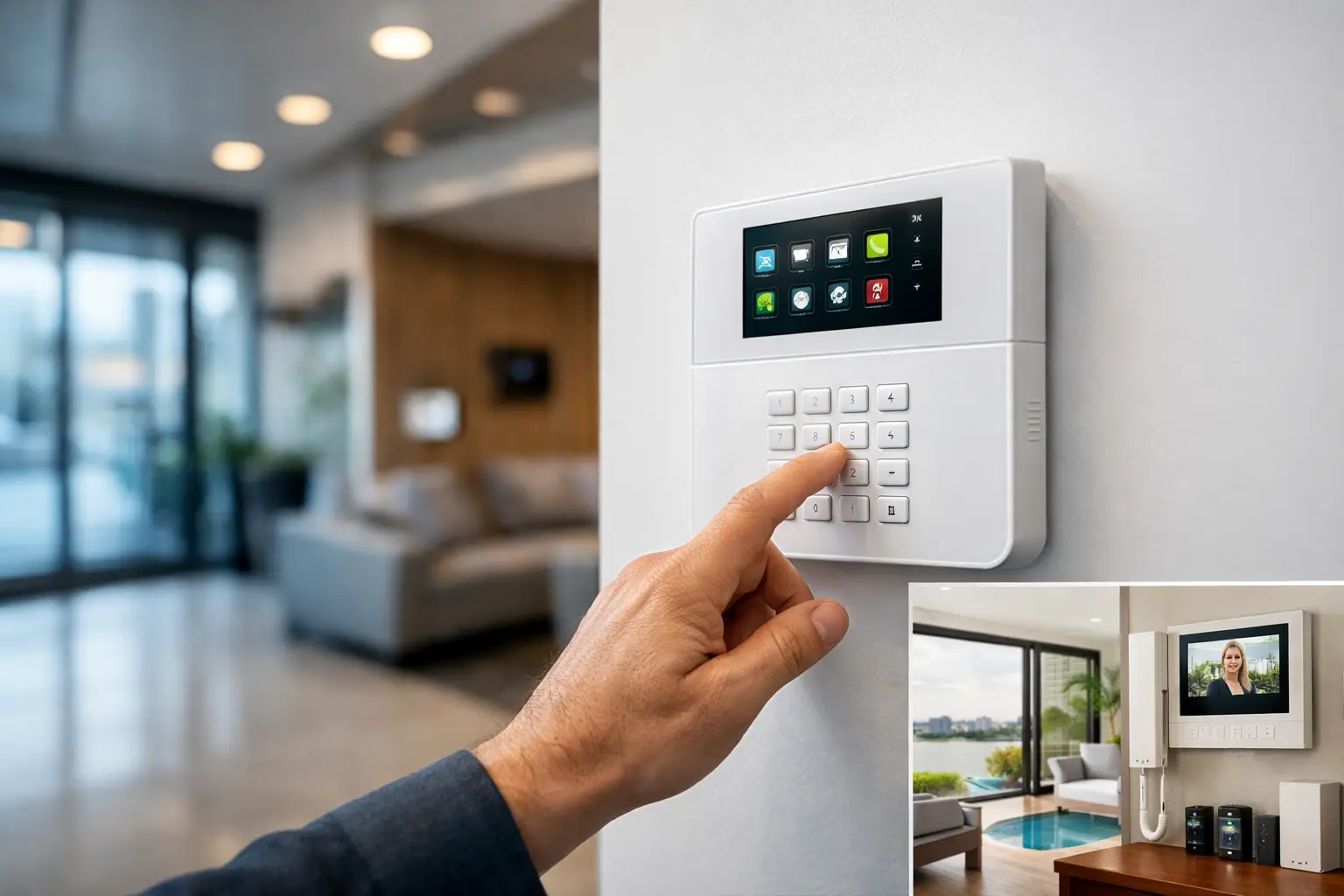
Keypads remain useful at entry points, especially where clear status indication is required. Many panels also offer secure app control, remote arming, event history, and user management. These functions are valuable, but they should not replace sound physical design. A system still needs thoughtfully located keypads, appropriate entry and exit delays, and detectors placed to reduce false alarms.
Individual user codes or credentials create accountability. Rather than sharing one code among family members, contractors, cleaners, or employees, each authorized person can receive their own access. Codes can be removed when circumstances change, while event logs show who operated the system and when.
For businesses, scheduled arming reminders and opening or closing reports can be helpful operational tools. For a vacation home or unoccupied property, notifications for power issues, low batteries, or communications faults may be just as important as intrusion alerts.
Alarm verification and false-alarm management
False alarms waste time, disrupt occupants, and can reduce confidence in the system. The right panel and programming approach can reduce nuisance events without compromising protection.
Examples include using dual-technology detectors in challenging spaces, applying sensible cross-zone logic where appropriate, and ensuring that pets, HVAC airflow, sunlight, and building layout are considered during design. A panel can also be configured to send specific alerts based on event type rather than treating every signal identically.
Verification should be approached carefully. It may involve alarm event information, video verification from appropriately positioned CCTV, or monitoring-center procedures. It is not a reason to delay response to a confirmed emergency. The objective is clearer information and better decisions, not less security.
Integration With Cameras, Access, and Automation
The strongest alarm panel features become more valuable when they work with the wider property system. Integration should be purposeful. Adding every possible automation rule can create complexity; connecting systems around real routines and risks creates practical value.
An alarm event may trigger exterior lighting, record a camera bookmark, notify a responsible user, or cause selected cameras to display on a monitoring interface. A perimeter gate or door can be monitored as part of the alarm strategy, while access control records can provide additional context around authorized entry.
In a smart home, arming the security system might switch off selected lights, adjust comfort settings, and confirm that doors or garage doors are secure. When the system is disarmed, lighting can respond to an arrival routine. Platforms such as Apple Home and Home Assistant can support useful control and visibility when integration is designed around compatible equipment and maintained correctly.
The trade-off is that security functions must remain reliable even if a convenience platform, mobile app, or home network service is unavailable. The alarm panel should retain its core detection, local alarm, battery backup, and monitored reporting functions independently. Integration should enhance the security system, not become a single point of failure.
Power Backup, Tamper Protection, and Serviceability
A panel’s performance during normal conditions is only part of the picture. It must also remain functional when power is lost or someone attempts to interfere with equipment.
A properly installed alarm panel uses a backup battery sized for its connected equipment and expected standby requirements. This becomes more significant where the panel supplies keypads, expanders, wireless receivers, communication devices, or integrated modules. Battery condition should be supervised and tested as part of regular maintenance.
Tamper monitoring helps identify attempts to open panel enclosures, remove detectors, or interfere with external equipment. Surge protection, correct earthing, secure cabinet placement, and tidy labeled wiring also matter. These details support fault finding, future upgrades, and long-term reliability.
Serviceability is often overlooked at installation time. Panels should be accessible to qualified technicians without being publicly exposed. Clear zone labeling, updated programming records, and documented user permissions allow a system to be maintained efficiently years after commissioning.
Selecting a Panel Around the Property, Not a Product List
There is no universal best alarm panel. A Bosch-based intrusion system may suit a property that needs established professional alarm architecture and monitoring capability. Another integrated design may prioritize how the panel communicates with access control, CCTV, Apple Home, or Home Assistant. The right outcome starts with the building and operating requirements rather than a feature checklist.
For new construction, early coordination with electrical, data, lighting, and network plans gives the alarm system the strongest foundation. For retrofits, a hybrid approach can preserve reliable existing wiring while extending coverage where new cable runs are unreasonable. Commercial and strata sites benefit from mapping users, areas, after-hours access, maintenance responsibilities, and escalation procedures before equipment is selected.
A well-designed panel should feel quiet when nothing is wrong and decisive when something is. That is the standard worth designing toward: security that supports the way a property operates, remains understandable for the people using it, and is ready to adapt when the building changes.