


A siren going off at 2:14 a.m. is only useful if the right people know what to do next. That is where back to base monitoring Sydney becomes more than an add-on. For homeowners, business operators, and strata decision-makers, it is the difference between an alarm that makes noise and a security system that triggers an actual response.
The gap matters more than many people expect. A modern alarm panel can detect intrusion, tamper events, duress, and even linked signals from access control, intercoms, or CCTV analytics. But without professional monitoring, those events often rely on someone seeing a phone notification, checking a camera feed, and deciding whether it is real. That may be workable in some settings. In others, it introduces delay exactly when delay is the problem.
What back to base monitoring actually does
Back to base monitoring connects your alarm system to a monitoring center that receives events in real time and acts according to an agreed response plan. If an alarm is triggered, the signal is transmitted off-site through a communication path such as 4G, IP, or a dual-path setup. Operators review the event type and follow escalation procedures, which can include contacting keyholders, verifying activity, or requesting emergency attendance where appropriate.
That sounds straightforward, but the quality of the outcome depends heavily on system design. A poorly planned alarm with vague zone naming, weak communications, or badly placed detectors creates confusion at the monitoring stage. A properly designed system does the opposite. It provides clear, meaningful event data so the response is fast and accurate.
This is why monitoring should not be treated as a standalone subscription. It works best when it is part of a broader security strategy that includes the right sensors, stable network infrastructure, backup power, and practical user workflows.
Why back to base monitoring Sydney properties often need more than a siren
Sydney properties cover a wide mix of use cases. A freestanding home, a high-end renovation, a warehouse, a medical clinic, and a mixed-use strata site all have different risk profiles. The common thread is that relying on noise alone is less effective than many owners assume.
In residential settings, neighbors may not respond to a siren, especially in dense suburbs where alarms are common. In commercial environments, an after-hours event can go unnoticed until staff arrive the next morning. For strata, common areas and shared access points complicate responsibility, and incident handling needs to be clear.
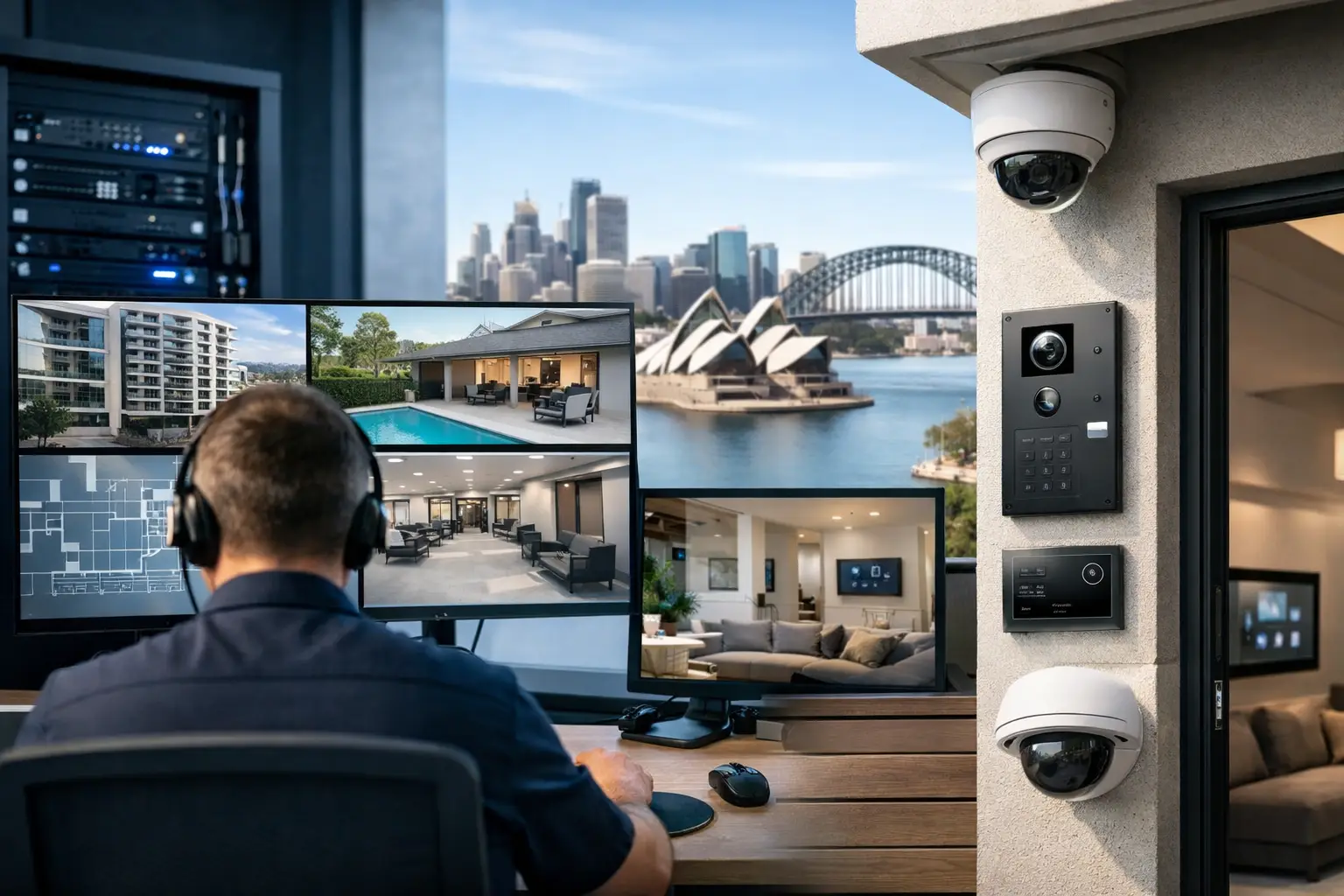
Back to base monitoring provides structure. Instead of leaving the event to chance, there is a monitored signal, a documented process, and a record of what occurred. That becomes even more valuable when the alarm is integrated with CCTV, access control, and intercom systems. If an opening is forced, a monitored event can be tied to video evidence and access logs, giving decision-makers a far clearer picture than a siren ever could.
The real value is in integration
The strongest monitoring setups are not built around a single box on the wall. They are built around how the property actually operates.
In a well-designed home, the alarm may arm in different modes, trigger perimeter alerts separately from internal movement, and coordinate with gate access, intercom calls, exterior lighting, and CCTV recording. In a commercial building, the monitored alarm may sit alongside access control schedules, restricted areas, roller door contacts, and camera analytics for after-hours movement.
That integration changes the quality of information reaching the monitoring center. A generic alarm event is one thing. A clearly labeled rear office door alarm, paired with video from a Dahua or Hikvision camera and supported by reliable network infrastructure, is another. The second scenario supports better verification and better follow-up.
This is also where a company with security, electrical, networking, and automation capability has an advantage. Monitoring performs better when cabling, device power, communication paths, and system programming are planned together rather than patched across multiple contractors.
Choosing the right communication path
One of the most overlooked parts of back to base monitoring Sydney installations is how the alarm signal actually leaves the site. Many property owners focus on sensors and keypads but spend less time considering signal transport. That is a mistake.
If the communication path is weak, the monitoring service is only as reliable as the first failure point. IP-only signaling can work well in some properties, particularly where the network is professionally designed and backed by stable hardware. But in many cases, dual-path communication is the safer approach. That might mean using both broadband and 4G so the system still reports events if one path fails.
The right choice depends on the site. A residence with strong network uptime may be different from a warehouse with harsh conditions or a strata plant room with infrastructure limitations. The point is not that one path is always best. The point is that the communication method should be selected deliberately, tested properly, and reviewed as part of the whole system.
Monitoring is only as good as the alarm design
A monitored alarm can still produce poor outcomes if the underlying design is lazy. This is where a lot of frustration begins.
If every detector is grouped into vague labels, the monitoring center sees an event but not enough context. If entry and exit delays are badly programmed, false alarms become more likely. If external doors, vulnerable windows, roof access, and plant areas are ignored, the system has obvious blind spots. If there is no consideration for pets, cleaners, shift workers, or delivery schedules, nuisance events increase and confidence drops.
Good design reduces those problems before the first alarm ever occurs. It accounts for how people move through the building, which zones need different arming behavior, and which events should trigger stronger escalation. It also considers maintenance. Batteries age, communication modules fail, detectors drift, and site use changes over time. Monitoring should be supported by regular service, not left untouched for years.
Back to base monitoring Sydney for homes, business, and strata
The reason this service works across different property types is that the principle stays consistent while the implementation changes.
For homes, the focus is usually on perimeter protection, after-hours intrusion, panic or duress options, and simple daily usability. Owners want confidence that the system is easy to arm, quick to understand, and not constantly generating false events.
For businesses, priorities often include after-hours access, restricted areas, staff safety, opening and closing reports, and the ability to coordinate alarms with CCTV and access control. The response procedure matters because multiple stakeholders may need to be notified in a specific order.
For strata, monitored systems often involve common area entry points, garages, plant rooms, comms rooms, and service spaces. The challenge is not just detection. It is accountability, documentation, and making sure the system reflects the realities of a shared property environment.
Each of these use cases benefits from the same design philosophy: build a practical system that works as one.
What to ask before you commit
If you are reviewing monitoring for a new project or upgrading an existing site, the right questions are usually more operational than technical. Ask how alarms will be transmitted, what happens if the main network goes down, how zones will be labeled, and how response procedures are documented. Ask whether the monitored system can be integrated with CCTV, intercoms, and access control, and whether the installer can support the electrical and network infrastructure behind it.
It is also worth asking how the setup will fit daily life. A sophisticated system is not useful if users avoid arming it because the process is clunky. The best monitored systems are dependable, clear, and realistic about how the property is actually used.
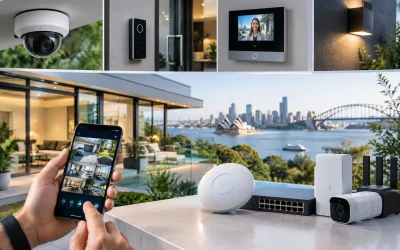
That is why many higher-performing projects are designed from the start rather than assembled from isolated products. A Bosch alarm panel, UniFi network, Akuvox intercom, and properly planned CCTV platform can deliver far better results together than they do separately when no one has considered the full workflow.
Back to base monitoring is not really about adding another service line to a quote. It is about making sure alarms lead to action, that signals remain dependable when conditions change, and that the wider system gives you useful information instead of noise. If your security setup is meant to protect a home, business, or shared property, that kind of clarity is worth designing properly from day one.