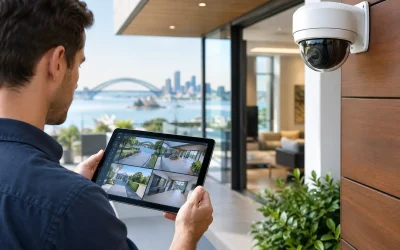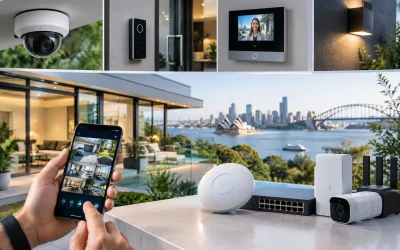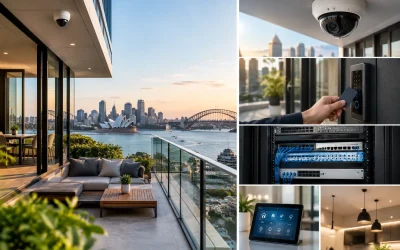



Monthly fees are where many security plans stop making sense. A homeowner may be perfectly happy to invest in quality cameras, alarms, intercoms, and smart access, then hesitate when the system depends on an ongoing app, cloud archive, or monitoring package just to stay useful. That is exactly why more property owners are asking about home security systems without subscription – not as a shortcut, but as a way to keep control of their system, their data, and their long-term costs.
The key point is this: subscription-free does not mean feature-free. It means the system is designed so core security functions continue to work without a recurring payment. For the right property, that can be a very sensible approach. But it only works well when the design is deliberate.
What home security systems without subscription actually mean
The phrase gets used loosely, and that is where people get caught out. Some systems are sold as having no subscription because live view still works, but recorded footage, smart notifications, remote access, or automation logic quietly sit behind a paid plan. Others genuinely operate on local storage, local processing, and owner-controlled apps without ongoing fees for everyday use.
In a professionally designed setup, a non-subscription security system usually means your cameras record to an NVR or local server, your alarm system works independently of the cloud, and your access or intercom functions remain operational on-site even if an external service changes pricing or terms. Remote access may still be available, but it is not the entire foundation of the system.
That distinction matters. If a product becomes a basic doorbell the moment a payment stops, it is not really a complete security system without subscription. It is a subscription product with limited fallback.
Why homeowners are moving away from recurring-fee security
For many higher-end homes and renovation projects, the concern is less about the fee itself and more about dependency. If the network is strong, the cabling is planned properly, and the equipment is selected with integration in mind, owners often prefer a system that stays under their control.
There is also a performance argument. Local recording through platforms such as Dahua, Hikvision, or a properly specified CCTV recorder can deliver continuous retention, better image quality settings, and faster playback than cloud-only consumer setups. The same applies to alarms and access control. A Bosch alarm panel, for example, is built around dependable local operation first. That approach suits clients who want their security to function as infrastructure, not as a monthly app service.
Privacy is another factor. Some property owners are comfortable with cloud-based video, while others would rather keep footage on-site or within a controlled network environment. Neither position is universally right, but for people who value data ownership, local-first architecture is appealing for obvious reasons.
Where home security systems without subscription work best
These systems make the most sense when the property is being treated as a complete environment rather than a collection of gadgets. New builds are a strong fit because cabling, power, rack space, Wi-Fi design, and device placement can all be planned early. Renovations can also work well, especially when access is available to upgrade infrastructure and avoid compromises later.
Larger homes benefit because subscription costs often multiply across cameras, video door stations, cloud storage tiers, and smart locks. A well-designed local system can scale more cleanly. Instead of paying per camera or per feature, the owner invests in the backbone once and builds on it.
This model is also attractive for clients who want security integrated with other systems. A camera event can trigger lighting scenes. An intercom can route intelligently to indoor stations and mobile devices. An alarm state can inform automation logic in Apple Home or Home Assistant. Those outcomes are often stronger when the system has stable local components and a reliable network underneath it.
The trade-offs are real
There is no point pretending subscription-free is always better. It depends on what the property needs and how the occupants expect to use it.
Cloud services can simplify setup, remote notifications, off-site backup, and software management. For some users, that convenience is worth paying for. If a homeowner wants minimal infrastructure and is comfortable with cloud dependence, a subscription product may feel easier.
A local-first system typically asks for more planning up front. Storage needs to be sized correctly. Network segmentation may need attention. Remote access should be configured properly rather than left open or improvised. Mobile app experience varies by platform, and not every locally managed system has the polish of a mass-market cloud app.
That is why design matters more than the subscription question by itself. A poor local system is still a poor system. The goal is not to avoid recurring fees at any cost. The goal is to build a practical, dependable setup that fits the property.
What to look for in a professionally designed system
If you are considering home security systems without subscription, start by asking what happens if the internet drops, if the manufacturer changes its cloud model, or if you choose not to renew any optional services. Core security functions should continue.
For CCTV, that means local recording to a recorder or server, sensible retention periods, and cameras selected for the environment rather than for marketing features alone. AI functions such as line crossing, perimeter alerts, person detection, and vehicle classification can still be available without depending entirely on a cloud platform, provided the cameras and recorder support them properly.
For alarms, it means a panel that is not reduced to a decorative keypad if the app subscription changes. For access control and intercoms, it means entry and communication remain reliable on-site, with mobile convenience layered on top rather than used as a crutch.
The network should also be treated as part of the security system. Strong UniFi switching and Wi-Fi design, correct VLAN structure, clean power delivery, and proper cabling all affect reliability. Security devices perform better when they are not competing with a patchwork home network built as an afterthought.
Integration changes the value equation
This is where many discussions go off track. People compare a subscription camera to a non-subscription camera as if the camera is the whole project. In a real home, it rarely is.
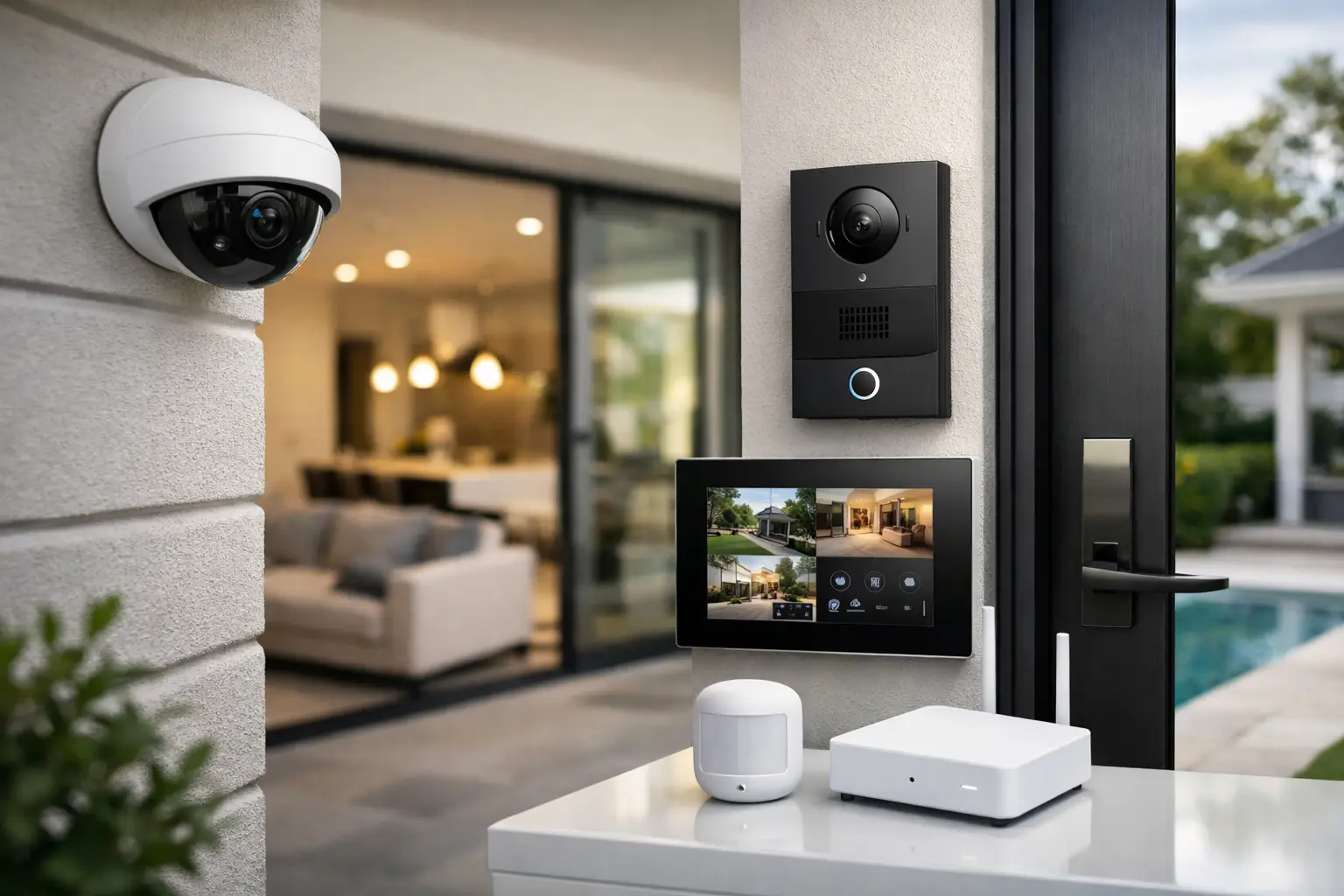
A well-planned system can connect CCTV, Bosch intrusion, Akuvox intercoms, gate or door access, exterior lighting, and smart home control into one coherent environment. Apple HomeKit and Home Assistant can provide a useful control layer for status, scenes, and daily routines, while the security hardware continues doing its primary job independently.
That matters because the best security systems are not just recorders of bad events. They shape how the property behaves. Entry lighting can respond intelligently. Occupancy states can change arming logic. Intercom events can trigger camera views on fixed touchscreens or mobile devices. When planned correctly, the result is more usable every day, not just more impressive on paper.
When subscription services still make sense
A no-subscription model does not rule out optional services. In some homes, professional monitoring is still worth having. In others, off-site backup for critical footage may be appropriate. Some owners want a hybrid arrangement where core operation stays local, but selected alerts, remote services, or redundancy sit on top.
That is often the smartest position. It avoids being locked into a recurring fee for basic operation, while still allowing specific paid services where they add real value. The difference is that the subscription becomes a choice, not a requirement.
For clients planning a new build or major renovation, this is usually the better conversation to have. Not “which app is cheapest,” but “which functions should remain local, which can benefit from cloud services, and how should the system scale over time?”
The best approach is infrastructure first
If a property is expected to support quality surveillance, dependable alarms, smart entry, strong remote access, and automation, the answer is rarely a single hero device. It is usually a combination of structured cabling, network design, electrical planning, hardware selection, and software integration.
That is why premium homes and more demanding projects tend to move toward professionally specified systems. The equipment matters, but the architecture matters more. A recorder in the right place, properly designed network paths, clean rack layout, battery-backed components, and integration between platforms do far more for reliability than a brochure promise of “no monthly fees.”
For homeowners who want control without unnecessary recurring costs, home security systems without subscription can be an excellent fit. The important part is making sure the system is designed to work that way from day one, with no hidden dependencies and no compromises disguised as simplicity.
If you are planning security for a new home, a renovation, or an upgrade to an existing property, it is worth thinking beyond the camera app and looking at the entire ecosystem. The right setup should still make sense years from now, after products, platforms, and pricing models inevitably change.