


A staff member leaves, but their key fob still opens the side entry. A delivery driver gets into a back corridor because the intercom and door release were never properly tied together. The issue with many commercial access control systems Sydney businesses inherit is not the reader on the wall – it is the lack of planning behind it.
For offices, strata buildings, retail sites, warehouses, and mixed-use properties, access control is less about the lock itself and more about how people move through the building every day. Who needs access, when do they need it, what doors should trigger an event, and how should the system interact with CCTV, alarms, intercoms, and the network? Those details determine whether a system is genuinely useful or just another platform to manage.
What businesses actually need from access control
The right system should reduce friction for authorized users while tightening control where it matters. That sounds simple, but in practice it means balancing security, convenience, compliance, and future change.
A small office may only need a few doors, mobile credentials, and clear audit trails for staff and contractors. A larger commercial site might need scheduled access levels, after-hours permissions, lift control, visitor entry, and integration with video footage. Strata and multi-tenant environments add another layer, because common areas, plant rooms, garages, and tenancy boundaries all need different rules.
This is why access control design should start with how the site operates, not with a box of hardware. A well-designed system reflects the building’s workflows. It accounts for staff entry, deliveries, cleaners, maintenance teams, tenants, and temporary visitors without making daily use cumbersome.
Why many commercial access control systems in Sydney underperform
Most problems come from fragmented installation. One contractor handles the doors, another handles the intercom, another installs cameras, and the network gets treated as someone else’s problem. The result is a set of disconnected systems that work on paper but create gaps in real use.
A door reader may function perfectly, yet event logs are meaningless if the time settings are wrong or user groups were never structured properly. An intercom may open a gate, but without camera verification and network reliability, staff are left making decisions with limited visibility. A controller cabinet might technically meet the brief, but if no allowance was made for expansion, even a small layout change becomes an expensive rework.
In commercial environments, integration matters because access events rarely happen in isolation. If a forced door event occurs, it should be possible to verify that moment through CCTV, escalate it through alarm logic if required, and review the event history without moving between several unrelated systems.
The difference between standalone and integrated design
Standalone access control can be fine for a single door or a very simple tenancy. It becomes limiting once the property has multiple users, multiple entry points, or any expectation of reporting and remote management.
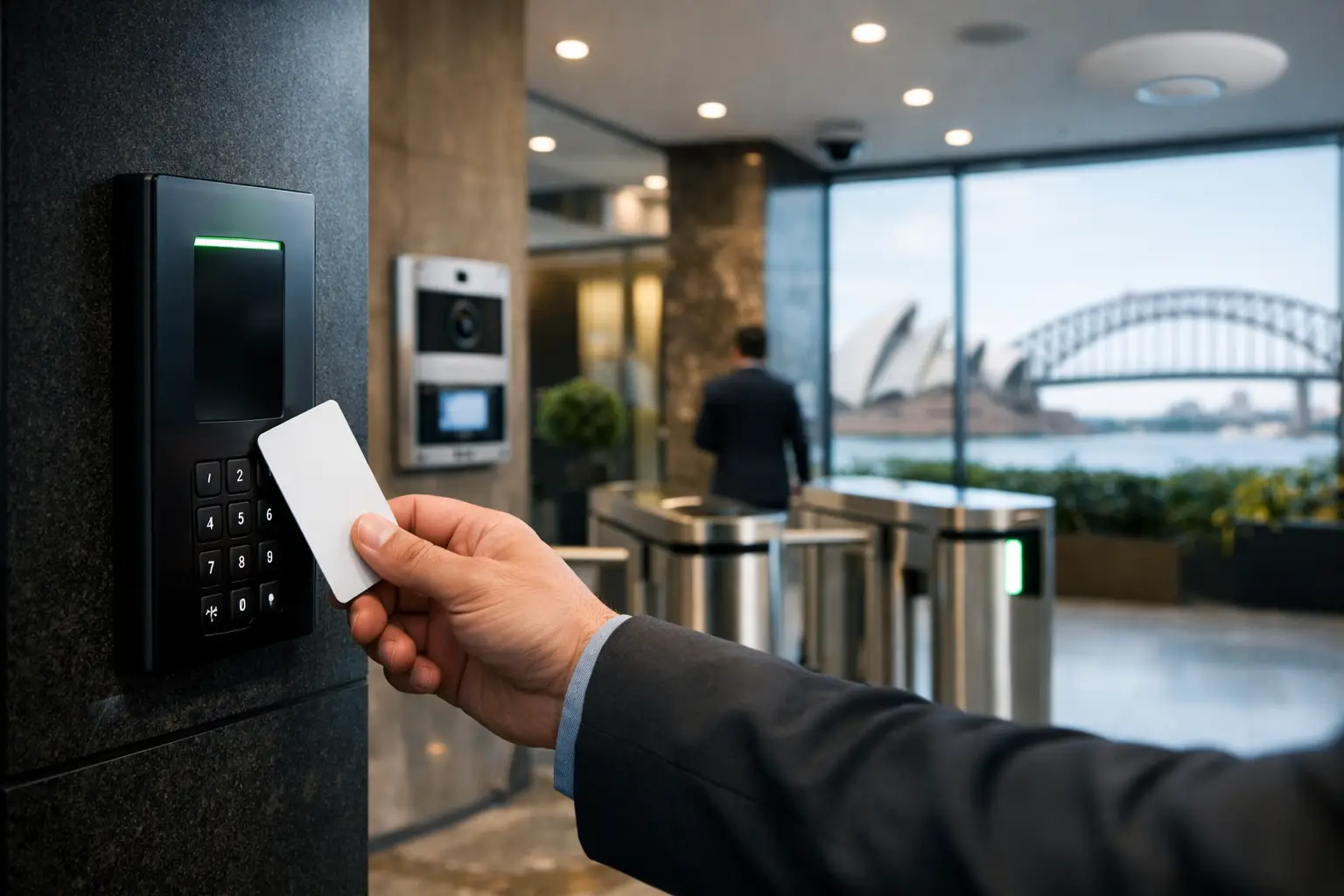
Integrated design is different. It treats access control as part of the wider property infrastructure. The readers, electric locks, intercoms, surveillance, alarm monitoring, structured cabling, and switching environment are planned to work as one system instead of competing for space, power, and network stability.
That approach is especially relevant in sites using platforms like Akuvox for intercoms, UniFi for network infrastructure, and CCTV ecosystems from Bosch, Dahua, or Hikvision. When those systems are selected and configured with compatibility in mind, operators gain a cleaner daily experience. Staff can verify entries faster, administrators can manage users more easily, and site managers have better visibility when something goes wrong.
Choosing the right credential for your site
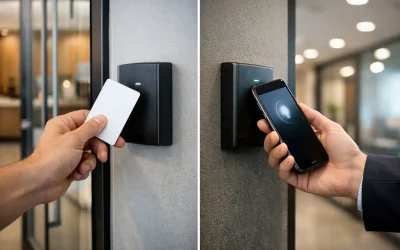
Not every building should use the same access method. Card and fob credentials remain common because they are familiar and easy to deploy. They suit many offices, common areas, and commercial tenancies where straightforward user assignment is the priority.
Mobile credentials can make more sense where staff turnover is higher or where management wants fewer physical items to issue and collect. They can also simplify temporary access for contractors or visiting personnel. The trade-off is that mobile access depends more heavily on user adoption, device compatibility, and clear onboarding.
PIN access can be useful in selected areas, especially for shared utility spaces or backup entry points, but it is rarely the best primary method for commercial sites with regular staff traffic. Biometric options may suit higher-security environments, though they need careful consideration around privacy, policy, and user acceptance.
The best choice depends on risk, user behavior, and administrative overhead. A premium system is not necessarily the one with the most features. It is the one people actually use correctly.
Door hardware and infrastructure matter more than many expect
An access control system is only as dependable as the door, frame, lock, power supply, and cabling behind it. This is where commercial projects often run into trouble, especially in retrofit environments.
Glass entries, fire-rated doors, aluminum frames, tenancy fit-outs, and older buildings all present different constraints. The electronic side of the system may be well specified, but if the locking hardware is poorly matched to the door condition or traffic volume, reliability suffers quickly. Doors need to close properly, release correctly, and remain compliant with life safety requirements.
This is also why licensed electrical and structured cabling capability matter in commercial work. Power, cable pathways, controller locations, backup arrangements, and network topology should not be treated as afterthoughts. They are part of the system design.
Where commercial access control systems Sydney projects need extra planning
Sydney sites often involve retrofit conditions, shared tenancies, strata approval layers, and evolving occupancy needs. A warehouse may later add office partitions. A retail tenancy may change its back-of-house layout. A commercial building may move from simple fob entry to tenant-specific permissions and delivery access windows.
That is why scalability should be built in from the start. It is generally wiser to allow spare controller capacity, sensible cabinet layout, and network headroom than to design to the exact minimum and rebuild later. This does not mean overengineering every job. It means understanding where growth is likely and making practical allowances.
For multi-site businesses, consistency matters as well. Standardizing user groups, naming conventions, reporting formats, and credential policies across locations makes administration far easier than running each site as its own isolated system.
Integration with CCTV, alarms, and intercoms
Access control becomes significantly more useful when tied into surrounding systems in a meaningful way. A door event with no video context only tells part of the story. A camera view with no access record does the same.
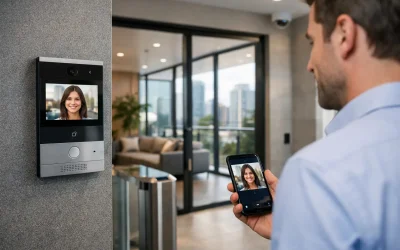
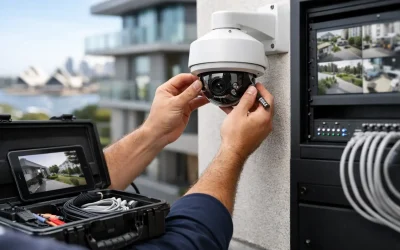
When access control and CCTV are coordinated properly, operators can review events with clear visual verification. When alarms are integrated thoughtfully, after-hours access can be managed with fewer gaps between arming states and authorized entry. Intercom integration helps front entries, gates, and tenant access work more smoothly, particularly in mixed-use and strata environments.
This is where a provider with experience across security, networking, electrical, and automation has an advantage. Instead of treating each subsystem as a separate sale, the project can be designed around how the building actually functions. Alpha Security Corp approaches commercial environments this way, which is often the difference between a system that looks complete and one that performs reliably over time.
What to ask before committing to a system
The better questions are rarely about reader style or app screenshots. Ask how user permissions will be structured, how remote management will work, and what happens when internet service drops. Ask whether the system supports clean integration with your CCTV and intercom platforms. Ask how expansion will be handled if another tenancy, gate, or internal zone is added later.
It is also worth asking who will service the system after handover. Commercial access control is not a set-and-forget category. Staff change, doors drift, credentials are lost, tenant needs evolve, and reporting requirements can shift. Ongoing support matters just as much as installation quality.
A good design should feel straightforward in daily use while being technically sound behind the scenes. That usually means fewer platforms, clearer permissions, solid infrastructure, and a layout that was thought through before hardware was ordered.
If you are reviewing commercial access control systems Sydney businesses rely on, the real benchmark is not how modern the reader looks on day one. It is whether the whole setup still makes sense after staff changes, tenancy updates, and the normal pressure of running a building. The right system should give you control without creating more admin than it saves.