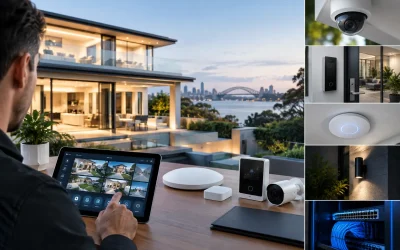



A front door camera and a phone alert are not a security system. They are single features. When homeowners start comparing the best home security systems Australia has available, that distinction matters more than the badge on the box.
The difference shows up later – when the Wi-Fi drops, the gate intercom will not trigger the entry sequence, the alarm app feels disconnected from the cameras, or a renovation makes the original setup feel patched together. A good system does more than detect movement. It gives you reliable visibility, sensible automation, and infrastructure that still makes sense five years from now.
What actually makes the best home security systems in Australia
For most properties, the best result is not a single product line. It is a properly designed combination of alarm detection, CCTV, intercom or access control where needed, stable networking, and clean integration with the rest of the home. That may include smart lighting, remote access, garage and gate control, or back-to-base monitoring depending on the risk profile and how the property is used.
This is where many comparisons go off track. They focus on camera resolution, app screenshots, or the number of sensors in a starter kit. Those details matter, but only after the core design is right. A 4K camera is not much help if it is placed poorly, running on unstable network hardware, or recording to a platform that is awkward to review when an incident actually happens.
The best systems are designed around layers. Perimeter awareness, controlled entry, internal detection, clear video evidence, dependable notifications, and practical user control all need to work together. In larger homes and premium renovations, electrical planning and cabling are just as important as the security hardware itself.
Start with the property, not the product
A freestanding family home, a waterfront build, a townhouse, and a strata apartment do not need the same solution. Neither do a new build and a retrofit. The best home security systems Australia homeowners choose are usually the ones tailored to site conditions rather than forced into a standard package.
For a detached home, the conversation often starts at the perimeter. Where are the likely approach paths? Is there side access? Can a vehicle enter without a clear line of sight to the street? Are there blind spots around alfresco areas or rear boundaries? Those answers influence camera placement, external detection, lighting scenes, and gate or door control.
In an apartment or strata setting, the priorities often shift. Entry management, intercom quality, package delivery, shared access areas, and internal alarm logic may matter more than broad perimeter coverage. In that case, integrating an apartment station, internal sensors, and selective camera coverage can make more sense than trying to replicate a suburban house layout.
New builds create the best opportunity to get infrastructure right from day one. Structured cabling, dedicated equipment locations, reliable power planning, and rack-based networking dramatically improve long-term performance. Retrofits can still achieve excellent results, but the design has to respect the limitations of the existing building fabric.
Alarms still matter – if they are part of a larger system
Alarm systems are sometimes treated as old technology because cameras get more attention. That is a mistake. A properly configured alarm remains one of the fastest ways to detect unauthorized entry and trigger immediate action.
The question is not whether you need an alarm, but how the alarm behaves within the wider environment. Bosch remains a strong choice in professionally installed systems because of its reliability, flexible zoning, and suitability for both straightforward and more advanced applications. For many homes, that means separating perimeter and internal areas so occupants can arm selected zones at night without compromising movement inside the home.
Good alarm design also considers how people actually live. Pets, late arrivals, cleaners, guests, teenage children, detached garages, and home offices all affect zone planning. A system that is technically capable but irritating to use tends to get bypassed. Reliable protection depends on realistic programming and sensible interfaces, not just hardware specifications.
CCTV is about evidence, awareness, and response
The best CCTV setups do three jobs well. They help deter opportunistic behavior, provide usable evidence when something goes wrong, and give owners a clear way to verify events in real time.
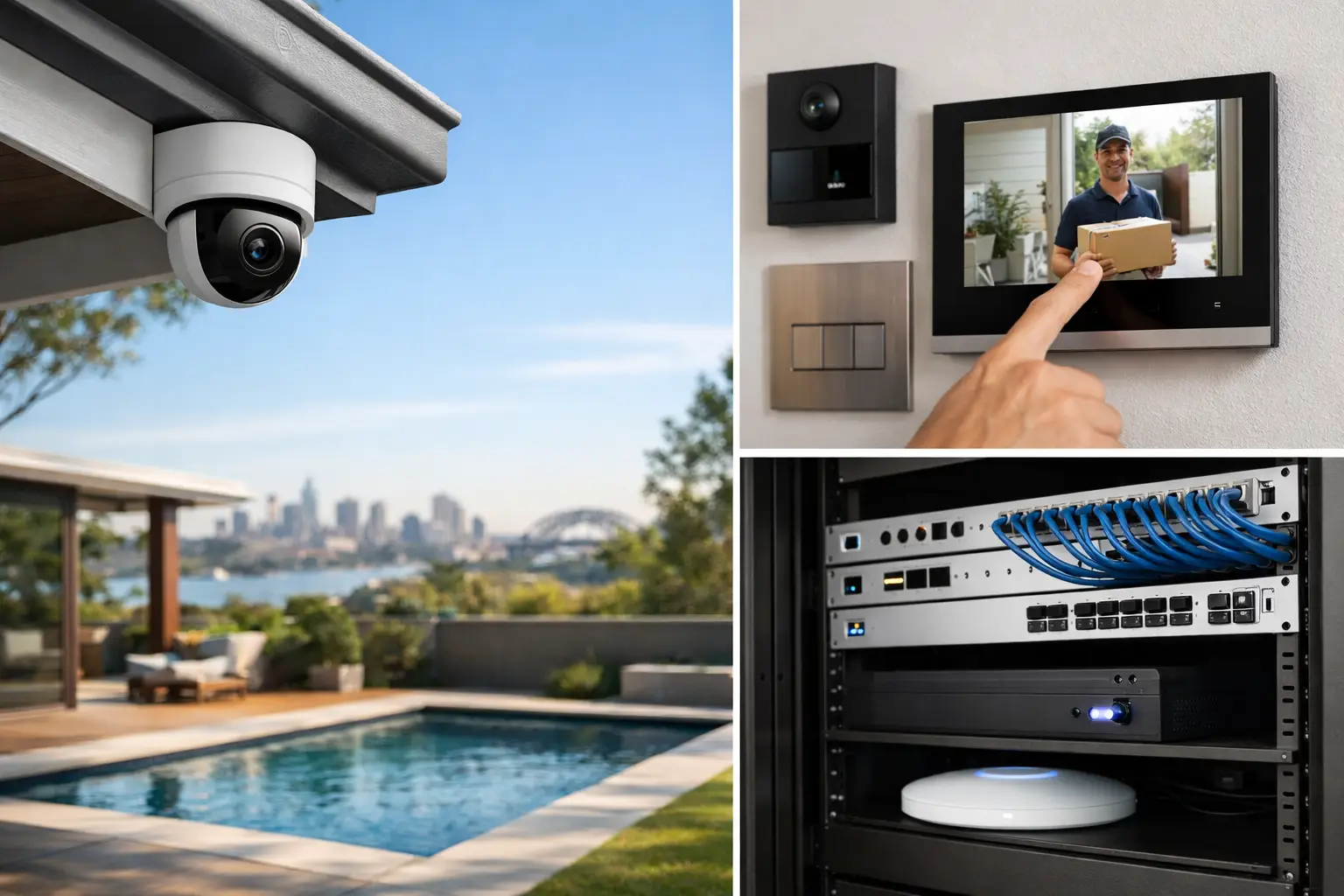
That starts with camera selection and placement. Dahua and Hikvision both offer strong options across fixed cameras, turret formats, varifocal lenses, and AI-assisted analytics. But the right result depends on the scene. A front boundary, a narrow side passage, a driveway, and a rear entertaining area all have different lighting conditions, distances, and movement patterns.
Analytics can add real value when used carefully. Human and vehicle detection, line crossing, and filtered alerts can reduce noise and make notifications more useful. But analytics should support the overall design, not replace it. If the camera angle is poor or the scene is overexposed at night, the software cannot fix a bad physical setup.
Storage also matters more than many buyers expect. Recording duration, local versus network storage, export workflows, and remote playback usability all affect whether the footage is genuinely useful after an incident. Crisp live view means very little if footage is hard to retrieve or incomplete.
The network is part of the security system
One of the most common weaknesses in residential security is not the alarm panel or the camera brand. It is the network. If your cameras, remote access, intercoms, and app control all rely on weak Wi-Fi and consumer-grade switching, reliability suffers quickly.
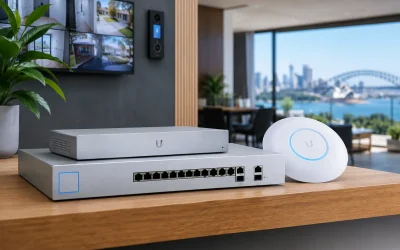
This is why professionally designed systems often include UniFi or similar business-grade networking infrastructure. Strong access point placement, proper switching, VLAN planning where appropriate, and organized rack installations create a much more stable base for connected security. The benefit is practical, not theoretical. Apps load faster, video streams more consistently, remote access works when needed, and device management becomes far more predictable.
For larger homes, home offices, and multi-level properties, networking should be planned alongside CCTV, alarm locations, TV points, intercoms, and wireless coverage. When these disciplines are coordinated, the property feels coherent rather than pieced together.
Integration is where premium systems separate themselves
This is the point many homeowners miss when comparing quotes. Two proposals can both include cameras, an alarm, and an intercom, but one may behave like three unrelated systems while the other is designed to work as one.
That difference shows up in daily use. You arrive home, the gate opens, selected exterior lights activate, the intercom call routes correctly, and the security status is easy to check from a single interface. Or you leave for a trip, arm the house, receive meaningful alerts, and review recorded footage without jumping between awkward apps.
Apple Home, Home Assistant, and carefully selected third-party integrations can play a valuable role here, especially in high-end homes where owners want practical control rather than novelty automation. Smart lighting platforms such as DALI-2 with Zen Control can also support security outcomes by linking occupancy logic, schedules, pathways, and panic scenes into the wider environment.
The trade-off is that integration needs discipline. Not every device should be connected to every platform. A stable core system with selective, well-tested integrations is usually better than an overcomplicated setup built around app compatibility alone.
Monitoring, access, and long-term service
For some homes, app notifications are enough. For others, especially larger residences, vacant properties, or homes with travel-heavy owners, back-to-base monitoring adds another level of response. Whether that is worthwhile depends on occupancy patterns, risk tolerance, and how quickly someone can verify an event.
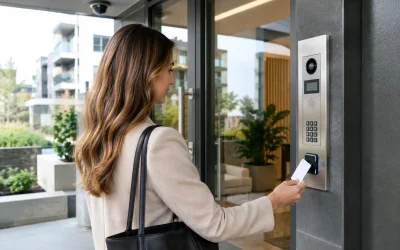
Access control and intercoms also deserve more attention in residential projects than they often get. An Akuvox intercom, electric strike, smart gate release, or controlled side entry can reduce friction for family access while improving security around deliveries and visitors. This is particularly valuable on larger blocks, dual occupancy sites, and homes with detached entries.
Long-term service is the final piece. Security systems are not static. Firmware changes, network updates, renovation stages, changing family routines, and new access needs all affect performance over time. The best system is not just installed well. It is documented, supportable, and capable of being upgraded without starting again.
How to judge the right provider
If you are evaluating options, ask whether the provider is solving the whole environment or only supplying devices. A proper design-install-service approach should cover security logic, camera coverage, networking, power, cabling, integration, user experience, and ongoing support.
That is especially relevant in Sydney and similar premium residential markets where larger homes, renovations, and mixed technology requirements are common. A provider that can coordinate CCTV, alarms, intercoms, electrical work, structured cabling, and automation will usually produce a cleaner outcome than separate trades making isolated decisions.
Alpha Security Corp works in that integrated model, which is often what higher-spec homes and complex retrofits actually require.
The best home security systems Australia offers are not the ones with the longest feature list. They are the ones that fit the property, work reliably every day, and stay coherent as the home evolves. If you begin with that standard, the right system tends to become much clearer.