


A siren can scare someone off. It can also be ignored in minutes.
That is the gap a back to base monitoring guide needs to address. If your alarm only makes noise on site, your security outcome depends on who hears it, who takes it seriously, and whether anyone acts fast enough. Back-to-base monitoring changes that by sending alarm events to a professional monitoring center, where signals are assessed and escalated according to the plan for your property.
For homeowners, that can mean faster awareness when the property is empty or when everyone is asleep. For businesses, strata sites, schools, warehouses, and offices, it means the alarm system becomes part of an operational process rather than a standalone device on the wall. The details matter, though. Not every monitored alarm is configured well, and not every site needs the same response model.
What back-to-base monitoring actually does
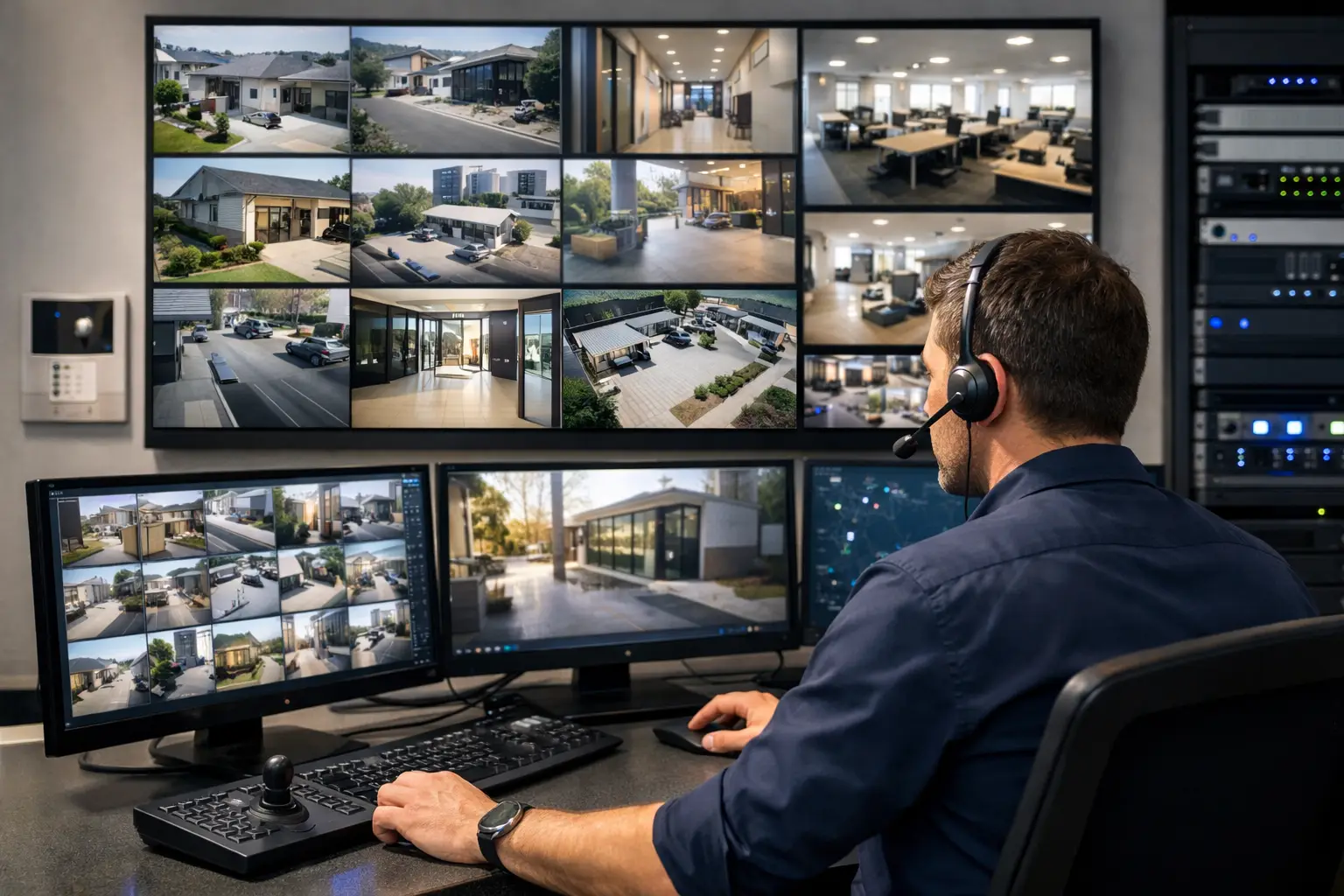
Back-to-base monitoring is the process of transmitting alarm events from your premises to an off-site monitoring center. When the system detects an event such as an intrusion alarm, panic alarm, tamper, fire input, or supervisory fault, the panel communicates that event through a designated path. The monitoring center receives it, follows the agreed instructions, and contacts keyholders, guards, or emergency services where appropriate.
The value is not just that someone sees the signal. It is that the signal is handled within a structured workflow. That includes event classification, response instructions, site notes, after-hours contact logic, and escalation rules. A well-designed monitoring setup turns an alarm panel into part of a managed response framework.
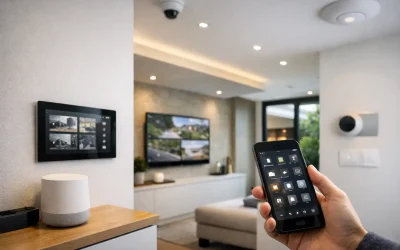
This is especially relevant when a property has multiple systems working together. If your alarm, CCTV, intercom, access control, and network are designed as one environment, monitoring can sit inside a much clearer picture of what is happening on site. An alarm signal supported by camera verification, door status, and event history gives more context than a siren alone ever could.
A back to base monitoring guide to the signal path
The most overlooked part of monitored security is how the signal gets out of the building. If the reporting path is unreliable, the rest of the setup looks better on paper than it performs in practice.
Many modern systems use IP reporting over the site internet connection, cellular reporting over 4G, or dual-path communication that uses both. Dual-path setups are usually the better choice for serious applications because they reduce single points of failure. If the internet service drops, the cellular path can still report. If the network equipment loses power and there is no battery-backed infrastructure, the panel may still communicate over cellular if it has its own supervised communicator.
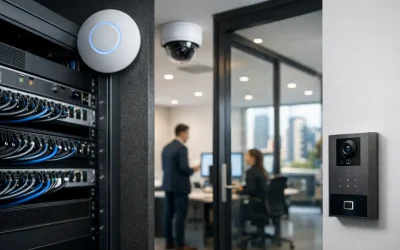
This is where integrated design matters. A good installer does not look at the alarm panel in isolation. They look at switch locations, rack power, UPS capacity, router resilience, structured cabling, and how networked devices behave during an outage. On a commercial site, those details affect whether alarm reporting, CCTV remote access, intercom calling, and access control all stay usable under fault conditions.
There is a trade-off, of course. More resilient signaling and battery-backed infrastructure cost more upfront. But if the property has high consequence after-hours risk, expensive assets, or limited occupancy, the extra resilience is usually justified.
Who benefits most from back-to-base monitoring
The short answer is not everybody in exactly the same way.
A primary residence may benefit from monitored intrusion, panic, and smoke-related events because the owners want a response path even when they are traveling or asleep. A second home or vacant property often benefits even more, because no one is there to hear anything or check alerts.
Commercial sites usually see stronger operational value. Offices, retail spaces, medical practices, warehouses, and mixed-use sites often need after-hours coverage, opening and closing reporting, and a clear keyholder process. In strata environments, monitored common-area alarms and plant-space security can reduce uncertainty when incidents occur outside business hours.
For some properties, app notifications alone are not enough. They rely on the owner seeing the alert, having mobile coverage, understanding what the event means, and deciding what to do next. Professional monitoring adds a layer of action and accountability. That does not mean every event requires emergency dispatch. In many cases, the real advantage is consistent triage.
The response plan matters as much as the hardware
A good alarm panel with poor response instructions can still create a messy outcome. That is why any serious back to base monitoring guide should focus on procedures, not just equipment.
The monitoring center needs accurate site information, clear contact hierarchies, and instructions for different alarm types. A burglary alarm at 2:00 a.m. may require a different sequence than a duress event during business hours or a tamper event on a communications cabinet. If the site has restricted access areas, dogs, shift workers, or shared tenancy arrangements, that should be documented properly.
False alarms are another reason response planning matters. Poor detector placement, unstable power, bad programming, and rushed user training can create nuisance signals. That wastes time and erodes confidence in the system. The fix is rarely to remove monitoring. The fix is to design and commission the system correctly, then review event history and user behavior.
This is one reason integrated providers tend to deliver better long-term outcomes. When the same team understands the alarm panel, the electrical infrastructure, the network, and the surrounding systems, troubleshooting gets more precise.
Integration makes monitoring more useful
Monitoring becomes far more effective when it is supported by the rest of the security stack.
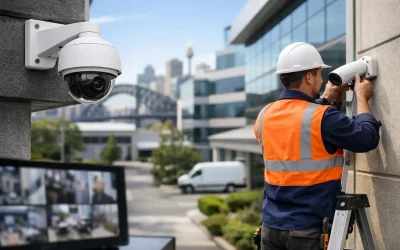
If a Bosch alarm reports an after-hours intrusion and the site also has Dahua or Hikvision CCTV with well-positioned cameras, there may be a way to verify activity quickly. If access control shows a valid credential at a door moments earlier, that may change how the event is interpreted. If intercom and gate activity are part of the same property workflow, the event timeline becomes clearer.
For higher-end homes and smart properties, integration can also improve the owner experience without turning the system into a novelty. Lighting scenes can respond to armed states. Exterior lighting can be triggered by validated events. Notifications can be routed in a way that makes sense for how the occupants actually use Apple Home or Home Assistant. The point is not flashy automation. The point is a practical system that behaves predictably under real conditions.
That same thinking applies to commercial environments. A monitored alarm system should not fight with access schedules, staff movement, delivery windows, or cleaning access. It should fit the way the site operates.
Choosing the right monitoring setup
The right setup depends on risk, occupancy, and how the building is used. A small office with reliable staffing and low after-hours exposure may need something different from a warehouse with valuable stock and long unoccupied periods. A custom home with gates, detached structures, and premium AV and networking infrastructure may justify a more layered design than a simple apartment.
When assessing options, look at the panel platform, communication paths, event categories, battery backup, app experience, and service support. Also ask how the system will be tested, who handles faults, how changes to keyholders are managed, and whether the monitoring plan aligns with your actual routines.
This is where product selection should stay secondary to system design. Bosch, Akuvox, UniFi, Home Assistant, Apple Home, DALI-2 lighting, and other platforms each have strengths, but the bigger question is whether they are being implemented as one coherent environment. Good security is rarely about a single device choice.
Common mistakes to avoid
One of the biggest mistakes is assuming monitoring will compensate for weak system design. It will not. If detectors are badly placed, communications are fragile, and users are not trained, the monitoring center ends up handling noise instead of meaningful events.
Another mistake is choosing a response model that sounds comprehensive but does not fit the site. For some clients, too many notifications and too many escalation layers create confusion. For others, minimal handling leaves obvious gaps. It depends on how the property is occupied, who can respond, and how critical continuity really is.
The third mistake is failing to review the setup after handover. Properties change. Staff change. Renovations happen. Networks get replaced. A monitoring arrangement should be reviewed whenever there are major changes to tenancy, floor plans, internet services, access control, or site operations.
What a well-planned system looks like
A well-planned monitored system is predictable. Signals transmit reliably. Users know how to arm and disarm correctly. Keyholder instructions are current. CCTV coverage supports alarm zones where verification matters. Power backup is sized realistically. Network dependencies are understood rather than assumed.
That kind of outcome usually comes from proper planning at the start, especially on new builds, major renovations, and commercial fit-outs. It is easier to design monitoring, security, networking, and electrical infrastructure together than to retrofit around missed decisions later. In Sydney and across complex residential and commercial projects, that integrated approach is often the difference between a system that simply exists and one that performs properly under pressure.
If you are comparing monitored security options, focus less on the headline feature list and more on how the response path is designed end to end. The best setup is the one that still makes sense at 3:00 a.m., when a real event occurs and everyone expects the system to do exactly what it was built to do.