


A business alarm is only useful if someone can act when the site is closed, the manager is in a meeting, or an incident occurs outside normal hours. Alarm monitoring for business premises turns an alarm panel from an isolated warning device into a managed response process – one that can notify the right people, escalate according to an agreed plan, and provide the information needed to make a sound decision.
For offices, warehouses, retail sites, healthcare facilities, and strata common areas, the question is not simply whether an alarm can make noise. It is whether the security system can distinguish a meaningful event, communicate reliably, and support an appropriate response without creating unnecessary disruption.
Monitoring is a response framework, not just a phone call
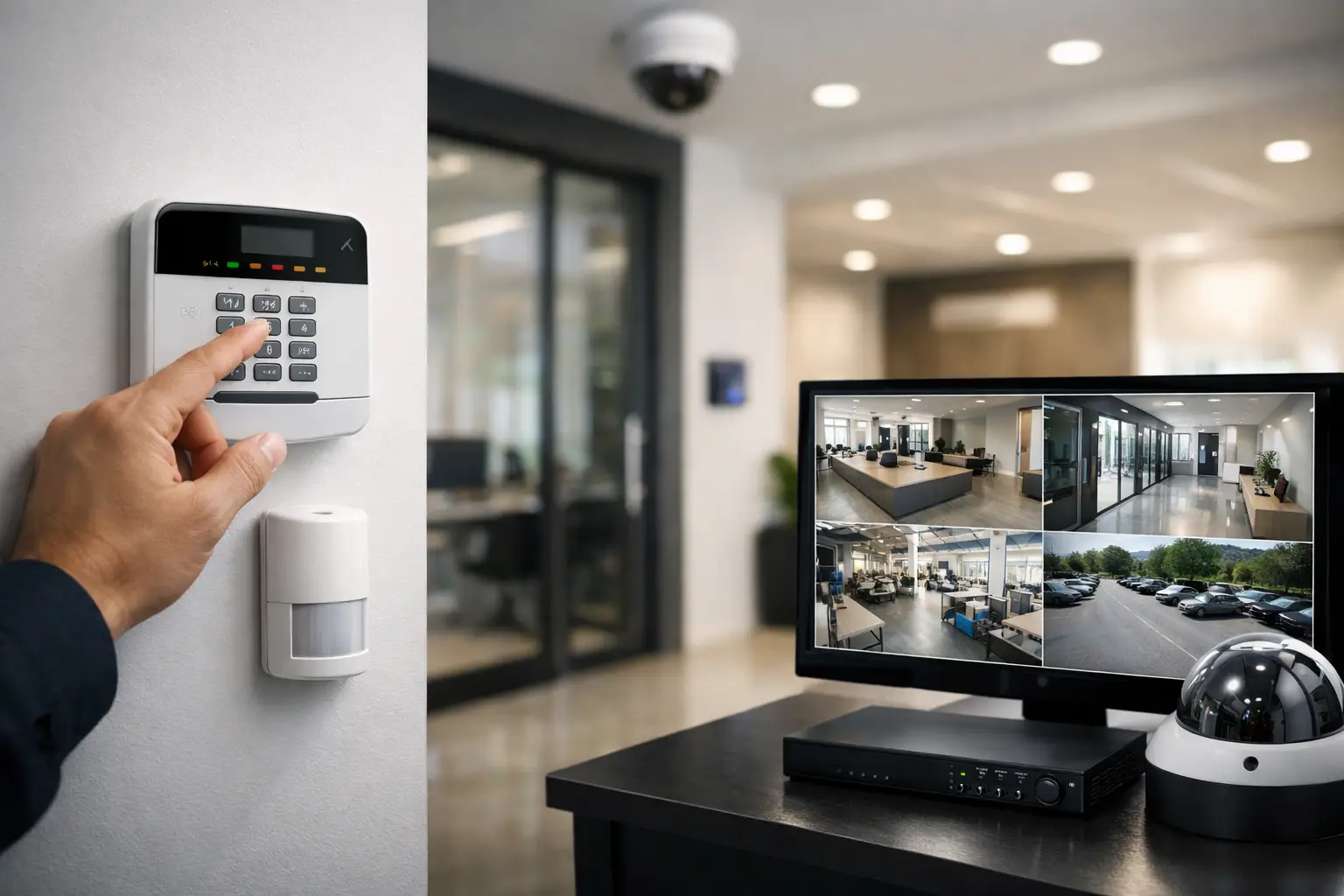
Back-to-base monitoring means alarm events are transmitted from the premises to a professional monitoring center. Operators follow a site-specific response plan that may involve calling nominated contacts, dispatching a patrol service where arranged, or escalating to emergency services when the event and local procedures warrant it.
The response plan matters as much as the panel itself. A warehouse with valuable stock may require different rules from a medical practice holding sensitive records. A retail tenancy might need opening and closing alerts, while a multi-tenant office building may need separate authority levels for individual suites, common areas, and plant rooms.
A properly designed system identifies which events should trigger action. These can include intrusion zones, panic alarms, duress codes, loss of communication, low battery conditions, power failure, or tamper events. Treating every notification the same can overwhelm site contacts and lead to alert fatigue. Treating too few as meaningful leaves gaps where response is needed.
Why signal reliability deserves early attention
An alarm panel must have a dependable path to the monitoring center. The communications method should be considered during design, particularly for sites where outages, construction activity, metal-framed structures, or poor cellular reception can affect connectivity.
Many commercial installations use IP communication over a business-grade network, often with cellular backup. This approach provides redundancy: if the primary internet connection fails, the system can continue reporting through the alternate path. The specific configuration depends on the site, available infrastructure, risk profile, and insurer or compliance requirements.
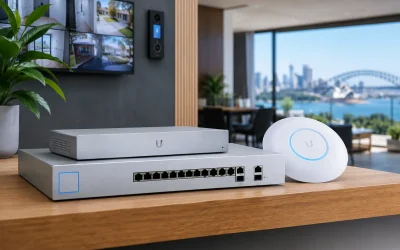
This is where security design and network design need to meet. An alarm communicator connected to an unstable consumer-grade router is a weak point, regardless of the quality of the detector hardware. Structured cabling, correctly segmented networks, managed switches, and professionally configured UniFi infrastructure can give connected security systems a more reliable foundation. Critical equipment should also be considered alongside appropriate power backup, so a brief outage does not remove communication at the same moment the premises becomes vulnerable.
Better alarm events begin with better system design
False alarms are not an unavoidable cost of monitored security. They are often the result of rushed detector placement, unsuitable device selection, incomplete commissioning, or a system that does not reflect how people actually use the premises.
A commercial alarm design should account for building layout, access points, staff traffic, air-conditioning movement, pets or pests where relevant, high-value rooms, and the way the business opens and closes each day. A Bosch alarm platform, for example, can be configured around individual areas and user permissions rather than forcing the entire building into a single armed or disarmed state.
Partitioning is particularly valuable in mixed-use or multi-tenant properties. The office can be armed after hours while a cleaner accesses an approved area. A warehouse can remain protected while an authorized delivery is handled at a loading zone. Managers gain practical control without requiring broad access or repeatedly disabling security for routine activity.
The system should also be easy for authorized users to operate. Keypads, secure credentials, mobile control where suitable, and clear procedures reduce the temptation to share codes or leave areas unarmed. Ease of use is not a convenience feature alone – it is part of the security outcome.
Integrating CCTV adds context to alarm monitoring
Monitoring works best when an alarm event can be assessed with context. CCTV does not replace intrusion detection, and an alarm does not replace video surveillance. Together, they give site managers and responders a clearer picture of what is happening.
When an alarm activates at a rear door, a correctly positioned Dahua or Hikvision camera can show whether the event appears to be an attempted entry, an employee arriving outside expected hours, or an environmental cause requiring maintenance. AI-enabled analytics can further reduce noise by identifying people or vehicles in defined areas instead of treating every movement as equally significant.
That said, integration must be designed carefully. Video verification can improve decision-making, but it relies on adequate camera coverage, lighting, network bandwidth, retention settings, and secure remote access. A camera pointed generally toward a parking lot is not necessarily useful for verifying an alarm at a specific gate. The detail of the design determines the value of the integration.
For some sites, access control adds another layer of evidence. A valid credential event at a door near the time of an alarm may help explain activity. A forced-door event without a credential record may require immediate escalation. Systems should be planned so alarm, access control, CCTV, and intercom events support one another rather than generating disconnected notifications across several apps.
Set response rules before an incident tests them
A monitored alarm needs named contacts, but it also needs clear decision rules. Who receives the first call? Who can authorize a patrol? Who has keys or access credentials? What happens if the primary contact cannot be reached? These questions should be settled during commissioning, then reviewed when staff, operating hours, or tenancy arrangements change.
For a business with multiple decision-makers, it is sensible to nominate contacts in an escalation order and document their responsibilities. The person who receives a low-battery notice may not be the person equipped to attend a suspected break-in at 2 a.m. Likewise, building managers, tenants, and security providers should understand where their obligations begin and end.
A response plan should include four practical elements:
- the events that require immediate operator action;
- the order and contact details for escalation;
- instructions for patrol attendance, keyholding, and emergency access; and
- procedures for testing, false alarm review, and system faults.
Local requirements, insurance conditions, and emergency-service policies can affect how alarms are handled. A professional security provider can help align system programming and response instructions with those realities, but business owners should still ensure their internal procedures are current and understood.
Maintenance protects the investment after installation
Commercial premises change. Stock moves, partitions are built, tenants rotate, doors are replaced, Wi-Fi equipment is upgraded, and staff roles change. Each alteration can affect an alarm system that once worked perfectly.
Regular maintenance provides an opportunity to test detectors, batteries, communication paths, sirens, tamper circuits, and reporting. It also confirms that users who have left the organization no longer have active codes or credentials. In an integrated environment, maintenance should include the supporting network and power infrastructure, not only the alarm panel.
Event history is useful here. Repeated alarms from one zone may indicate a detector issue, an environmental problem, or a process failure. Frequent after-hours access could point to a need for better partitioning or revised schedules. Security reporting should inform operational improvements, not merely record incidents after the fact.
Choosing the right level of monitoring
Not every business requires the same response arrangement. A small professional office may primarily need after-hours intrusion monitoring and dependable fault reporting. A distribution facility with high-value inventory may need multiple partitions, monitored perimeter points, video verification, access control integration, and a defined patrol response. A strata property may need a shared framework that preserves accountability across common areas and individual occupants.
The right approach depends on risk, operations, building design, and the consequences of delayed response. The objective is not to add technology for its own sake. It is to build a practical system that gives the right people reliable information and a clear next step when the premises needs attention.
Alpha Security Corp designs connected commercial systems with this broader view in mind, bringing alarm monitoring, CCTV, access control, structured cabling, networking, and licensed electrical work into one coordinated plan. When those foundations are considered together, monitoring becomes less about reacting to an alarm and more about keeping the business prepared for the moments that cannot wait.