


Package theft, missed deliveries, and unknown visitors are everyday problems in apartment buildings. Smart intercom systems for apartments address all three, but the real value is not just video calling at the front door. It is how the intercom fits into the broader access, security, and network infrastructure of the property.
For building owners, strata committees, and developers, that distinction matters. A standalone intercom may handle visitor calls, but a properly designed system can also support managed access credentials, remote tenant communication, audit trails, elevator permissions, CCTV verification, and cleaner long-term administration. In apartment environments, the best result usually comes from treating the intercom as part of an integrated building system rather than a single device on the wall.
What smart intercom systems for apartments actually solve
A traditional audio intercom solved one problem: letting a resident speak to a visitor before pressing a release button. That model no longer matches how most apartment buildings operate. Residents are often away from home, deliveries happen throughout the day, and building managers need better visibility over who accessed which door and when.
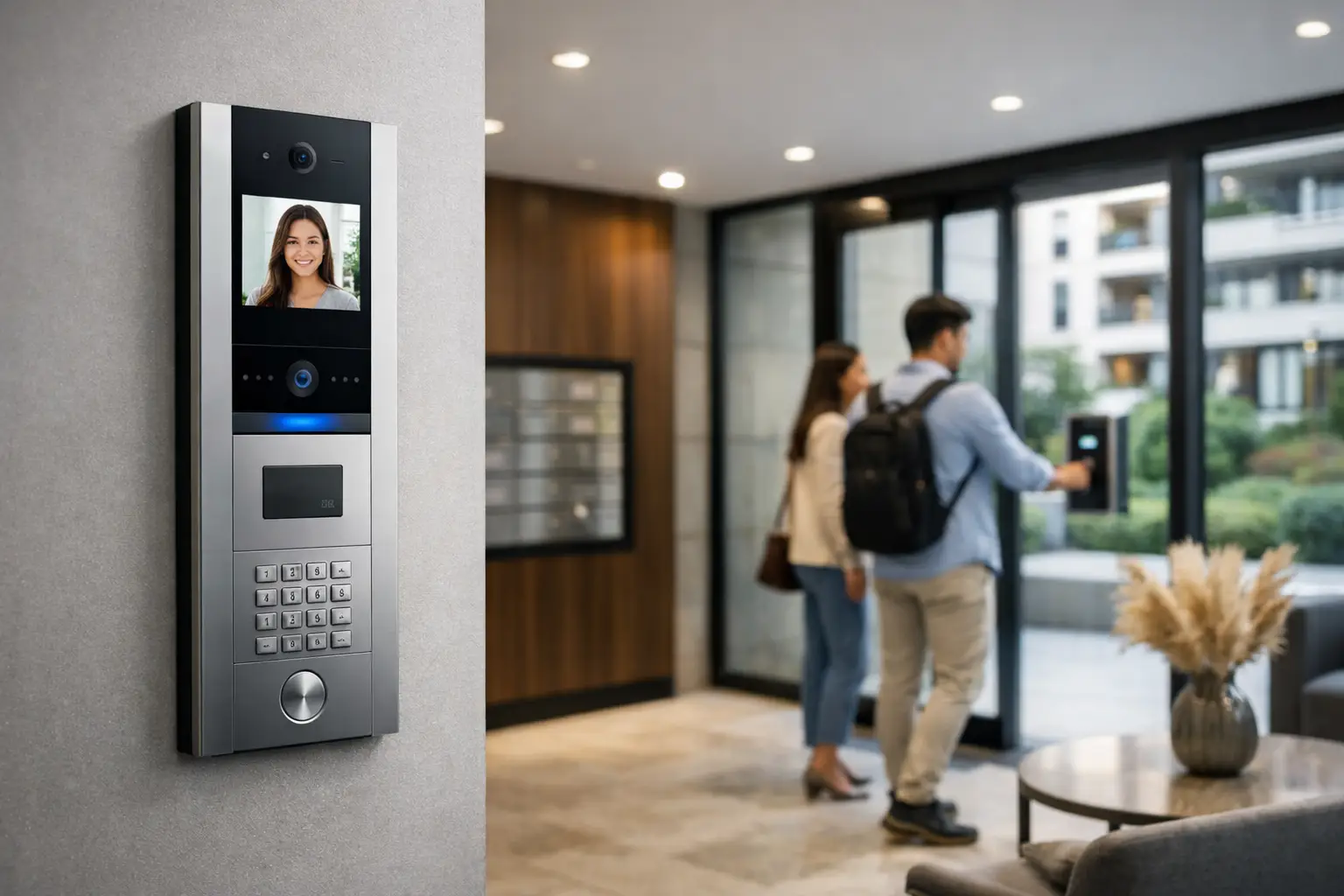
Smart intercom systems expand that function. Video calling to a resident’s phone, app-based entry, PIN credentials, fob support, and cloud or network-based management give the property more control and the resident more flexibility. A visitor can be verified visually. A tenant can answer from work. A delivery driver can be granted access to a controlled area without exposing the whole building.
That said, not every apartment building needs every feature. A ten-unit walk-up has very different operational needs from a multi-entrance high-rise with elevators, parking access, and separate resident amenities. Good system design starts with traffic flow, tenancy turnover, after-hours access patterns, and how the property will actually be managed day to day.
The features that matter most in apartment use
The most useful intercom features are usually the least flashy. Reliable mobile call routing is a good example. Residents expect to receive calls consistently, with clear audio and fast response times. If app notifications lag or calls fail on poor cellular coverage, confidence in the whole system drops quickly.
Video verification is another major upgrade, especially in buildings where unauthorized tailgating or parcel theft is an issue. Seeing who is at the entry point is often the difference between a confident remote unlock and a resident ignoring the call entirely. In practice, camera quality, low-light performance, and viewing angle matter more than headline specs.
Credential flexibility is equally important. Apartment buildings rarely operate well with a single access method. Residents may want phone-based entry, but trades, cleaners, family members, and property managers often need fobs, cards, PINs, or time-based permissions. The best systems support multiple credential types without creating administrative chaos.
Then there is directory management. In buildings with tenant turnover, the intercom must be easy to update. If name changes require specialized programming or on-site service every time a resident moves out, the system becomes a burden. Modern platforms can simplify this considerably, but only when the setup has been planned properly from the start.
Integration is where smart intercom systems for apartments become more valuable
An intercom on its own is useful. An intercom integrated with access control, CCTV, and the building network is far more effective.
For example, if a visitor calls from the lobby panel, building management may want the event tied to camera footage at the entry door. If a resident credential is used after hours, that event can sit alongside door access logs and video records. If a contractor needs temporary access to a service entrance, permissions can be scheduled rather than manually supervised.
This is where platform choice matters. Systems from manufacturers such as Akuvox can be strong options when the goal is modern apartment intercom capability with broader integration potential. But the hardware is only part of the outcome. The network design, door hardware, power requirements, cable pathways, and management model all affect reliability.
In higher-spec buildings, the intercom can also interact with elevator access, gate control, common area doors, and resident automation environments. In the right setup, a resident can answer a building call from their phone, unlock the lobby, and still have the event recorded within the wider security system. That is very different from installing a smart doorbell and hoping it behaves like a commercial-grade entry platform.
Network quality is often the hidden success factor
Many intercom problems are really network problems. Choppy video, delayed notifications, unavailable indoor monitors, or unstable remote access often trace back to weak switching, poor Wi-Fi design, lack of VLAN planning, or inadequate structured cabling.
In apartment buildings, smart intercom systems should sit on dependable infrastructure. Hardwired connections are generally preferred for door stations, indoor monitors, and core network equipment. If the building relies heavily on wireless links in difficult locations, performance can become inconsistent, especially across concrete structures or busy RF environments.
This is one reason integrated providers have an advantage. If the same team understands intercoms, access control, structured cabling, switching, and site-wide networking, the end result is usually more stable. Platforms such as UniFi can play a useful role in the broader network layer, but they need to be implemented with the intercom traffic, security priorities, and remote management requirements in mind.
Retrofit versus new construction
The right intercom design depends heavily on whether the property is being built, renovated, or upgraded in place.
In new construction, there is far more freedom to plan cable routes, door hardware, riser pathways, power supplies, and integration points before walls are closed. That makes it easier to deliver a cleaner system with better device placement and fewer compromises. Developers and builders also have the chance to coordinate the intercom with access control, CCTV, electrical, and network infrastructure from the start.
Retrofit projects require a different mindset. Existing apartments may have legacy wiring, limited conduit space, old door stations, and resident expectations shaped by the current system. In those cases, the best answer is not always a full rip-and-replace. Sometimes the smarter approach is staged modernization, preserving workable infrastructure while improving tenant experience and management capability where it matters most.
The trade-off is that retrofits demand tighter design discipline. You need to know what can be reused safely, what will create support issues later, and whether the building can handle newer mobile-first workflows without confusing residents.
Choosing a system for the building, not the brochure
Apartment decision-makers are often shown feature-heavy demonstrations that look great in isolation. The real test is operational fit.
A good system should match the size of the property, expected resident turnover, staffing model, and security profile. Buildings with concierge support may prioritize control-room visibility and event management. Smaller strata properties may care more about straightforward resident access and low-friction administration. Premium residential projects may want intercom functions aligned with smart home environments, while mixed-use sites may need stronger partitioning between residential and commercial access zones.
Vendor support, firmware stability, spare parts access, and installer familiarity all matter as much as the front-end interface. A polished touchscreen directory is useful, but not if the building struggles to get updates, support, or competent service five years later.
This is also where property owners should be realistic about app-only systems. Mobile access is valuable, but phone loss, dead batteries, and user preference still make alternative credentials important. Redundancy is not old-fashioned. In shared buildings, it is good operational planning.
Administration, security, and resident experience
The best apartment intercoms reduce friction for everyone involved. Residents want quick answers, simple access, and confidence that the front entry is controlled properly. Building managers want easy updates, clear event records, and fewer service headaches. Owners want a system that protects the asset and still feels current in a competitive property market.
That balance comes from practical design decisions. Door release times should be appropriate to the site. Credential permissions should reflect actual building rules. Camera placement should support verification without creating blind spots. Admin access should be secure, and not passed casually between multiple parties with poor documentation.
For multifamily properties, a smart intercom is part security platform and part daily convenience tool. If either side is neglected, the system feels incomplete.
A well-planned intercom does more than let people in. It sets the tone for how the building operates every day, and that is why the smartest choice is usually the one designed to work as part of the whole property, not as a gadget added at the end.