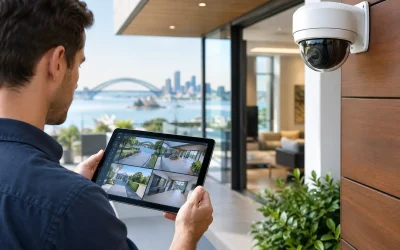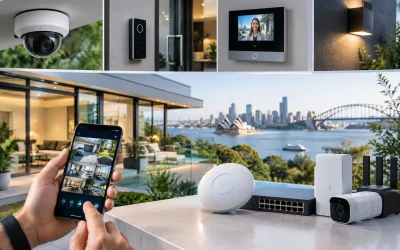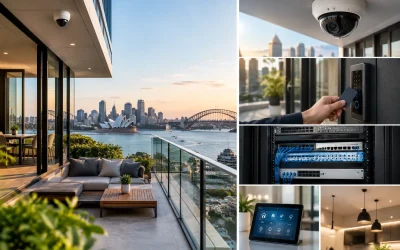



A camera over the wrong door can give you a false sense of security. You may have clear footage of a delivery driver and still miss the person who actually accessed the side gate, walked through a blind spot, or approached a rear sliding door that was never covered. That is why the best CCTV camera locations for homes are not just about coverage. They are about how people really move around a property, where incidents are most likely to start, and how the camera system works with lighting, alarms, intercoms, and the home network.
For most homes, the goal is not to put a camera on every wall. It is to create overlapping visibility at the points that matter most. A professionally designed system will account for approach paths, facial capture, vehicle identification, nighttime performance, and the practical realities of cabling, storage, notifications, and app access.
Best CCTV camera locations for homes start with entry points
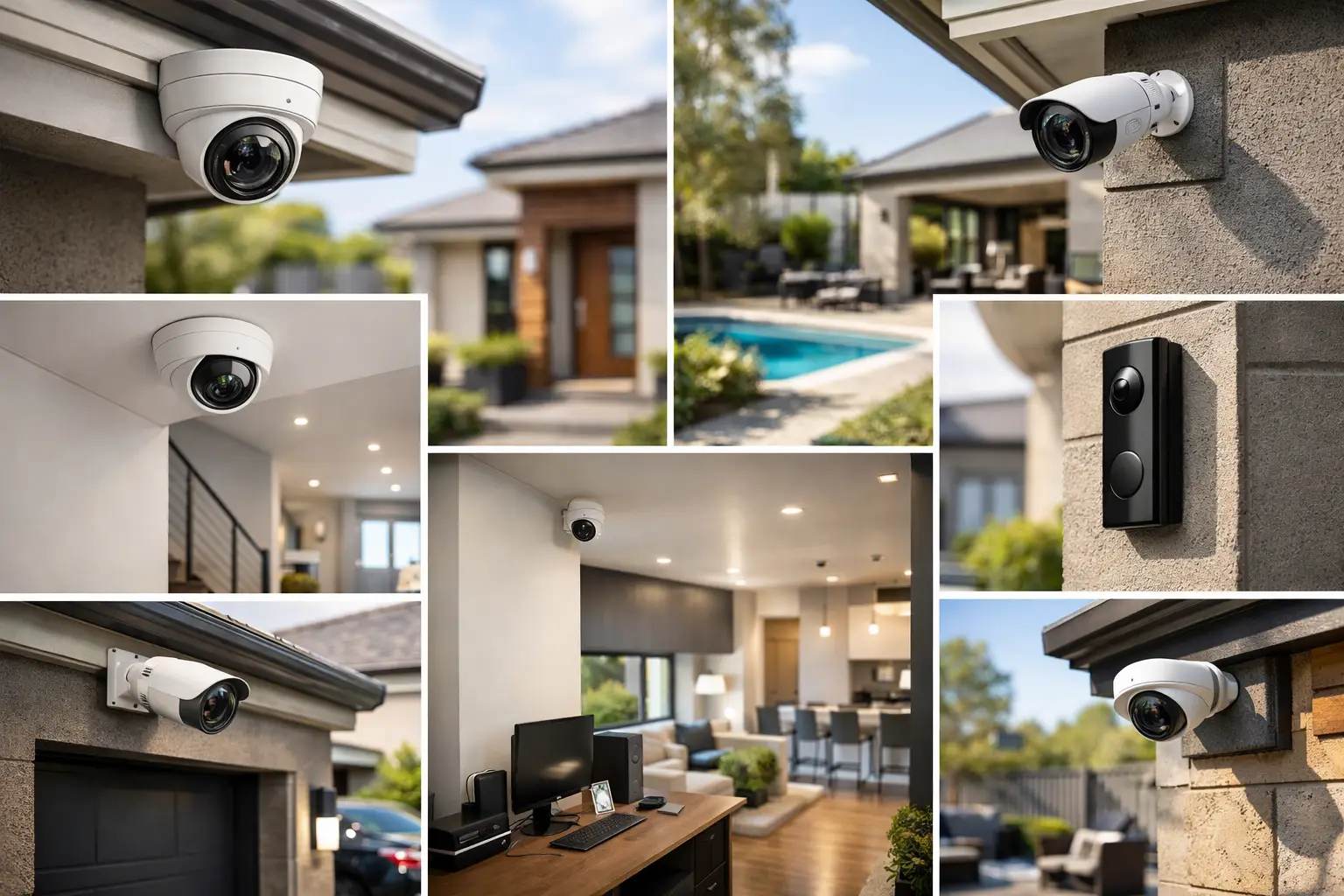
The front door remains one of the highest-value camera positions because it captures both expected and unexpected activity. Deliveries, visitors, door-knocking, and attempted entry all happen here. A camera at the front door should be positioned to capture faces on approach, not just the top of someone’s head once they are standing under the eave.
This is where placement matters more than many homeowners expect. Mounting too high can widen the view but reduce useful facial detail. Mounting too low can make the camera vulnerable to tampering and glare from nearby lighting. In some homes, a dedicated front entry camera paired with an intercom provides better results than asking one wide-angle camera to do everything.
If the home uses an Akuvox intercom, Bosch alarm, or Apple Home-compatible automation setup, the front entry becomes even more valuable. A visitor event can trigger recording, notifications, porch lighting, or a quick view from a phone or wall-mounted control point. That kind of integration turns a basic camera position into a more usable security layer.
Driveway and street-facing coverage
A driveway camera does a different job from a front door camera. It should capture vehicle movement, people arriving on foot, and activity around parked cars or garage access points. In many homes, this is where incidents start. Someone enters the driveway, tests a car door, checks the garage, or approaches the side of the house without ever going near the front entry.
The best result usually comes from aiming the camera to capture movement across the frame rather than directly toward approaching headlights. That improves image consistency at night and reduces washout. If license plate capture is important, that often requires a more specialized angle and camera setup than general overview coverage.
A wide driveway shot is useful, but it should not be the only shot. Wide images help with situational awareness. Tighter images help with identification. In higher-end residential projects, it is common to use one camera for the overall scene and another for more detailed capture near the garage or front boundary.
Garage doors and internal garage access
Garages are often treated as secondary spaces, but they are one of the most common weak points in residential security. A camera watching the garage door can show vehicle access and after-hours movement, while a second view covering the internal door between the garage and house can be just as important.
This matters especially in larger homes where the garage is used as the real day-to-day entry. If family members, trades, and deliveries all move through that zone, it becomes a key point for both convenience and security review. With the right system design, garage activity can also be tied into alarms, lighting scenes, and push alerts in a way that feels practical rather than intrusive.
Side paths and gates are often the real blind spots
If there is one area routinely under-covered, it is the side access path. Many intrusions do not begin at the front door. They begin with someone moving along the side of the home, checking windows, gates, utility areas, or rear access points. A side path camera closes off one of the most common blind spots in residential layouts.
The challenge is that side passages are often narrow, shaded, and difficult to light. They can also be hard for Wi-Fi-based consumer gear, which is one reason hardwired CCTV remains the preferred approach for reliable recording. A properly mounted camera with the right lens width can cover the path without being defeated by harsh contrast, fence reflections, or a nearby floodlight.
Where side access includes a gate, camera placement should capture both the approach to the gate and what happens after someone passes through it. If the gate leads to a backyard, pool area, or detached structure, that path deserves more attention than homeowners usually give it.
Backyard and rear doors deserve equal priority
Rear sliding doors, alfresco entries, and backyard-facing doors are frequently more vulnerable than the front of the house. They are less visible from the street, often more private, and in many properties easier to approach without being noticed. Yet these doors are still missed in many camera layouts.
The right backyard camera position depends on the size and use of the outdoor area. A compact courtyard may only need one camera covering the rear door and yard entry. A larger backyard may need separate coverage for the rear facade, lawn or pool zone, and any side gate connection.
It also depends on how the space is lit at night. Landscape lighting, eave lighting, and sensor lighting all affect image quality. This is one reason integrated design matters. When CCTV, outdoor lighting, and electrical planning are considered together, you get more than better visibility. You get more reliable footage.
Pool areas, detached studios, and external assets
Not every backyard needs broad surveillance, but if the property includes a pool, guest house, detached office, workshop, or outdoor equipment area, those zones may justify targeted coverage. The purpose is not to over-camera the property. It is to protect areas that carry higher risk, value, or liability.
For example, a detached studio may need coverage of the approach path and door rather than continuous wide-angle recording of the entire yard. A pool area may need a camera position that supports after-hours awareness and perimeter review without compromising the way the space is enjoyed during the day. Good design always balances security with how the home is actually lived in.
Best CCTV camera locations for homes also depend on indoor transitions
Outdoor coverage does most of the heavy lifting, but there are cases where strategic indoor cameras make sense. The most useful indoor positions are usually transitional spaces such as an entry hall, stair landing, or main circulation route from a garage or rear door. These are stronger choices than placing cameras in general living areas.
For homes with staff access, frequent trade activity, secondary wings, or separate guest accommodations, indoor cameras can add an extra layer of event verification. The key is to use them selectively and with privacy in mind. A professionally planned system should make clear where indoor recording is appropriate, where it is not, and how users control access to footage.
Placement is only half the job
Even the best camera location can underperform if the supporting infrastructure is weak. Resolution alone will not fix poor mounting height, a bad viewing angle, or unstable networking. In larger homes especially, camera performance depends on structured cabling, switching capacity, recorder configuration, and reliable remote access.
That is why camera planning should not happen in isolation. If a project also includes UniFi networking, alarm integration, smart lighting, or Home Assistant and Apple Home control, the CCTV design should sit inside that wider plan. Motion events can trigger lights. Intercom calls can pull up live views. Alarm events can bookmark footage for faster review. Those details change how useful the system feels every day.
There is also a difference between detecting motion and identifying a person. Wide perimeter coverage is good for awareness. Identification requires more deliberate placement. In many homes, the best outcome comes from combining overview cameras with a few tighter, more intentional positions at critical access points.
A practical residential CCTV design usually starts with the front door, driveway, side access, rear doors, and garage. From there, the layout should respond to the property itself – its approach lines, landscaping, lighting, daily routines, and any high-value external areas. That is where a generic package falls short and a designed system performs better over time.
If you are planning cameras for a new build or renovation, think beyond where a camera can physically fit. Think about where you will actually need clear footage, what events you want to verify quickly, and how the cameras should work with the rest of the property. The right locations do more than record incidents. They help the home respond well before a situation escalates.